Story Sundays: “Earl Grey” by Sharon Millar

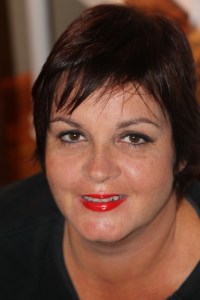
Sharon Millar
Sharon Millar

When we meet Leah, the central figure of Sharon Millar’s short story, “Earl Grey”, she is trying to keep her thoughts well below room temperature. The room she’s in is the sweltering, westward-facing kitchen of a Santa Cruz cocoa estate house on the mend, run by Leah and her comparatively unruffled husband, Henri. Leah isn’t given to a coolness of touch, most times, but it matters more than mildly now that she create a perfect quiche, because Henri’s mother, Sally, is visiting the estate for the first time, to have tea. To Leah’s mind, the formidable Sally, a matriarch of tea parties that manage to be both inventive and exquisite, will be expecting nothing less than perfection, and a cool-handedness that Leah hasn’t previously been able to plate up. According to Henri, all his mother will require boils down to far less than what Leah imagines. As the hour of Sally’s arrival looms closer, and Leah’s quiche takes a less-than-savoury turn for the worse, the question of what the mother in law will receive begins to linger as oppressively as the midafternoon Trinidad sun.

Sharon Millar’s writing is as necessary and brutal as a matador witnessing his first bullfight, which seems an odd analogy given the apparent domesticity of a story like “Earl Grey”. Culinary and cultivating notions infuse the narrative: Leah follows (and detracts) from a quiche recipe primed for the sublime; she savours this science of cooking far less than the pleasure of a fresh cocoa pod, brought to her by Henri as a palliative against his mother’s arrival. These ideas of growth and fruition permeate the text, signalling that the relationships between what can be harvested, and what might be prepared, aren’t always seamless or simpatico. We can engage in food-artistry that turns the stomach, even if it appears from the oven like a master-quiche maker’s dream.

Leah’s relationship with her mother-in-law both embodies and transcends the expectations of well-chronicled bacchanal surrounding two women who pick at the same and separate ribs of a man, tugging for prominence on either side. Millar conducts these palpable and unseen tensions so convincingly that we feel we’ve rather taken the measure of the sublimely awful Sally without having heard her own voice on the page. We feel for Leah, with her earnest, pathetic quiche-wrangling, whether or not we’ve got crotchety husband-or-wife-mothers of our own, lurking in the recesses of our every misstep, judging while offering platitudes that are barely half-baked. Leah’s expectations, projected onto the surface of the pastry that has not yet disappointed her, are clearly defined islands of hurt, bound up with good intentions. In her anticipations for the serene procession of the evening’s events, one reads the dismantling of past attempts at graceful encounters, of the dogged desire to be thought useful, presentable, well-manicured.

“She imagines the quiche, perfectly fluted at the edges, the pastry lightly browned, the bacon, spinach, and tomatoes in layers of green and brown and red. She has become a woman who can make a quiche and this woman has cool hands. She will serve the quiche to her mother-in-law. They will sit on the lawn. Leah will be careful to invite Sally to sit in the garden, not the yard. She will chat amicably about the small joys of the farm, the pleasures of seeing the cocoa move from jewel coloured pod to rich dark chocolate.”

What stings the worst (and therefore, the best) about “Earl Grey” that it’s a short story obliquely about cooking but persistently about failure. As Leah is forced to consider, the burnt edges of our incompatibilities with others will pursue us, even in the places we feel comfortable, even in land that’s our own to claim proudly. Nowhere, and nowhere, are we immune to the smoother, sharper hands of another, telling us all we need to know about ourselves by embodying everything that we ourselves are not. That Millar reigns in this modulated torment in even swathes of unerring exposition is a semaphore to her rich, bruising talent. The story hurts and compels, and we want more. We want to see what lies on the other side of ruined savouries and reanimated cocoa estates, what beats in the hearts of complex, guarded women offering up too much of themselves in the service of wrongsided idols. “Earl Grey” reads briskly, the length, perhaps, of a tightly palmed cup of chai, but if your pulse is attuned to short fiction that navigates delicate terrain searingly,  then you will need to read it again, with several cups of tea and many aching wonderments within arm’s reach.

You can read “Earl Grey” by Sharon Millar here. (Draconian Switch, .pdf – allow a minute or two for full issue to load.) Author photograph by Ross Millar.

Story Sundays was created by Fat Books and Thin Women as a way to share appreciation and engage in discussion on the short fiction, which often receives less attention than full-length novels. All stories discussed are available to read free, online. Here’s Fat Books and Thin Women’s Story Sunday archive, and here’s mine.
The 2013 NGC Bocas Lit Fest – A Blogger’s Logbook [Day Two]

Those who weren’t involved in the second day of Bocas activities this year, but were in Port of Spain as afternoon dripped into evening, will likely remember it as “that time it rained semi-profusely, and Town flooded”. (My friend and colleague Kevin Hosein blogged briefly about Bocas, and more indepthly about the extreme floodiness of the day, over at his Tumblog, Little Jumbie.) Admittedly, the gushing grey rivers of drainwater looping around the traffic-clogged roads prompted minor alterations to the Bocas schedule’s last few events of the day, since a handful of scheduled panelists were trapped within their hotels, unable to reach the National Library for neither love nor pirogue access.

Despite this, Day Two of #bocas2013 was as engaging and imaginatively challenging as Day One. The Bocas team donned their (mostly metaphorical) galoshes and steered the festival participants and attendees through the evening’s dampness — if you were already at the Library by the time the rains hit, I’ll wager it was one of the few places in Town where the spirits were enthusiastically treading water and clamouring for more words.

Here’s my Blogger’s Logbook, Day Two. Click on the summary titles in bold to go to the full posts on the official Bocas website!

One on One – Marina Warner

Marina Warner responds to a question from the audience, during her panel.

Writer and mythographer, Marina Warner, in conversation with novelist Lawrence Scott (author of the 2013 OCM Bocas Prize longlisted Light Falling on Bamboo.) Warner spoke principally of her seminal, recently reissued work, Alone of All Her Sex: The Myth and the Cult of the Virgin Mary, as well as her 2011 book, Stranger Magic: Charmed States & the Arabian Nights.

New Talent Showcase – Sonia Farmer

Sonia Farmer, with Loretta Collins Klobah's 2012 OCM Bocas Poetry prizewinning collection, The Twelve Foot Neon Woman.
Sonia Farmer, with Loretta Collins Klobah’s 2012 OCM Bocas Poetry prizewinning collection, The Twelve Foot Neon Woman.

The second of this year’s New Talent Showcase readers, Bahamian poet and publisher Sonia Farmer shared selections of her writing. She also displayed stunning handcrafted and letterpressed titles released by her small press, Poinciana Paper Press.

One on One with Olive Senior

Olive Senior addresses her rapt audience during her One on One session.

The veteran Jamaican writer held court — if you were there, and witnessed not a solitary free seat to be acquired, you know what I mean! — on her poetry; on the experience of writing a novel later on in her life; on inspiration and advice for young writers, and many other gems, in conversation with Michael Bucknor.

One on One – Irvine Welsh

Scottish author Irvine Welsh, engaging with a question at the Bocas Lit Fest.

The author of Trainspotting; Skagboys and several other novels; short fiction collections and plays, talked with BC Pires about the “spectacularity” of failure and the ways in which the publishing world has evolved — not necessarily wholly for the better. (Also, kudos were given to Margaret Thatcher.)

Next up – Day Three of the Blogger’s Logbook!

Previous entries:
Blogger’s Logbook, Day One.

All photographs by Maria Nunes, Official Festival Photographer.

The 2013 NGC Bocas Lit Fest – A Blogger’s Logbook [Day One]

For the first time this week, when I woke up this morning I didn’t feel compelled to race into Port of Spain with my notebook at the ready and a blue Staff Badge slung around my neck. Goodness, I thought, it’s over. This year’s Bocas is actually over. 

Anyone who’s been behind the scenes at a literary festival can likely understand my simultaneous physical and mental exhaustion-elation combo. The Bocas Lit Fest continues to be a whirling dervish of an institution, picking up momentum and reach with each passing year. This was the festival’s third, and I’m thrilled to have reprised my role as Festival Blogger and Social Media Coordinator, which means I spent each of the four festival days (April 25th to 28th) mad-enthusiastically livetweeting and liveFacebooking. Now that the literary dust is beginning to settle, I’ve begun my comprehensive post-festival blog coverage. Today was Blogger’s Logbook Day One! Here’s a tidy breakdown of what I covered — click on the summary titles in bold to go to the full posts on the official Bocas website!

Festival Welcome – Writers vs. Politicians

Festival foundress Marina Salandy-Brown gives the official Festival Welcome address!

This was the festival’s first official event, which served to set the tone for one of our Edinburgh World Writers’ Conference panels on Day Three, titled “Should Literature be Political?” (more of that on Day Three’s coverage!). Four local luminaries read excerpts from politically-charged passages of fiction, written by four Caribbean authors.

Father Figures – Colin Grant and Hannah Lowe

Poet Hannah Lowe reads from her collection, Chick.

A panel of poetry and memoir, featuring the work of Hannah Lowe and Colin Grant, both writing about their Jamaican-British fathers, as well as the complicatedness of family life and the experience of enacting remembrance through writing.

New Talent Showcase – Danielle Boodoo-Fortuné

Danielle Boodoo-Fortuné reads a selection of her prizewinning poems.

Each year, Bocas selects three emerging writers of great promise who are close to completing their first manuscript of work. This year, Trinidadian poet (and my friend) Danielle Boodoo-Fortuné was the first to be featured. I wax lyrical and occasionally mushy in my blog post, so to hear me gush over her brilliant and heartstopping verse, go there!

Fiction – Courttia Newland and Ifeona Fulani

Courttia Newland, author of The Gospel According to Cane, responds to a question.

Two fiction writers, Courttia Newland and Ifeona Fulani, read from their newly released books and discuss technique; form and dialogue use in their own narratives, as well as in the stories of others.

Join me tomorrow, as I wrap up Day One’s blogs, and cover a cross-section of panels, readings and events from Day Two!

All photographs by Maria Nunes, Official Festival Photographer.