Fictive Folk with Whole Words: A Reading Project

The title, admittedly, might need some work, but I’ve had this essential premise brewing for some time now: exploring books read by your favourite television and/or film characters, who may or may not be based on characters from books themselves. Fictional men and women reading fiction (or non-fiction, too) — the thought alone opens up endless possibilities for interpretation. For instance, how much can we glean about the character of True Blood‘s Tara Thornton, when in our first glimpse of her, she’s reading The Shock Doctrine by Naomi Klein, and studiously ignoring an admittedly-obnoxious customer at the Super-Sav-A-Bunch?

She’s not messing around, either — that’s a hardcover.

The genesis for this idea probably began stirring with my teenaged Gilmore Girls obssession. I wanted to read everything Rory had ever read, and it secretly pleased me that, in fact, so much of her library was *my* library, too. I wouldn’t dare try to claim this as an original concept: a simple Google search for “Rory Gilmore Reads” will return several well-conceived book blog challenges and meticulously-moderated reading lists. It’s heartening, in fact, to see how we flesh and bone bibliophiles adore and support the reading habits of our fictionalized archetypes, wherever we may find them.

Rory Gilmore reads James Joyce’s Ulysses, and The Unabridged Journals of Sylvia Plath. What would hook me, back then (and even now) were the rapt looks of concentration on her face — like there was truly nowhere she’d rather be, but there with the pages and print. 

I don’t know just yet the specific form that this reading project will take, but it feels freshly promising to embark on it, in the fine company of all you Novel Nichers. Feel free to shower me with suggestions, or links to images of your favourite fictional characters cuddled up to their treasured tomes.

If you were a character in a film or episodic series, what book would you most want to be caught reading?

Links of Interest:
Tumblr: Fictional Characters Reading Books
The Reading Lists of Your Favourite Fictional Characters – Flavorwire
What’s on Rory Gilmore’s Bookshelf? – Bust Magazine
What Does Don Draper Read? – Black Book
♣ Tumblr: The Lisa Simpson Book Club
♣ 10 Fictional Bookworms And What They Imply about Real Bookworms – L.B. Gale

Jess Mariano reads Gabriel García Márquez’s One Hundred Years of Solitude at a moment in the Gilmore Girls plot that’s poignantly apt. He was, admittedly, a first class bumscullion, but his earnest devotion to literature made him well-nigh irresistible. That, and Milo Ventimiglia is gorgeous.

Books, Bites and The Allen Prize

The official event flyer.

The Allen Prize for Young Writers hosted a fundraiser sale last Saturday at Alice Yard. I was pleased to volunteer my time and expert novice sign-making abilities, but I confess straightaway that I had ulterior motives. (Books. Used, delicious books.)

I interviewed Lisa Allen-Agostini, founder and chair of the Allen Prize, in the midst of a packed 2012 Bocas Lit Fest schedule. It was only then that I realized properly how indispensable the foundation has been to fledgling young writers, particularly those who receive no other recognition for their work. The Allen Prize is a not-for-profit organization, dependent on goodwill and the revenue generated by events such as these. The first of these baked goods and used book fundraisers was held in late August, and one can hope (dream?) that the Trini bibliophile crowd will be treated to a third before year’s end, or early in 2013.

Customers linger thoughtfully in front of the Literary Fiction section.

I browsed. I taped up price lists and endeavoured to respond helpfully to patron queries. I shamelessly hid books I’d earmarked for myself minutes before customers wandered in. (I paid for all my books, okay.) I had brilliant conversations about all manner of bookish topics, and I avoided throwing myself upon the delectable pastries. There are distinct things I love about used book sales: the rich multiple-partner marriage of tomes from so many households, each title telling not just the story in print, but the funny, weird, moving stories of their previous owners. We learn so much about books and the people who loved or loathed them, through margin scribblings, dedications, curious bookmarks, a dogeared page or much-creased spine.

(L) Joshua Sammy, the 2012 Allen Prize Young Writer of The Year, in conversation with children’s storyteller Auntie Thea and romance writer, Heather Rodney-Diaz. (R) A patron browses selections in Caribbean fiction.

The Allen Prize posse knows how to host a seriously addictive second-hand book sale. That’s good news for the talented young writers who benefit from the worthy fundraising, and equally happy tidings for those in love with all things literary.

 My shameless, shameless haul.  

For more information on the work that The Allen Prize for Young Writers does, visit their official website, as well as their frequently-updated Facebook page. Event photographs courtesy Lisa Allen-Agostini.
Photo collages created with Pixlr. 

38. Midnight in Your Arms by Morgan Kelly

Published in 2012 by Avon Impulse.

“Her dreams would take her there, and she would run through its sunlit, eerie halls as free as a little deer in the wood. It was the first time she understood that sunlight did not dispel terror, any more than terror was wholly unenjoyable. Rather, she found she liked being terrified. It was a feeling so pure, so deep, that everything else quite paled in comparison. Stonecross was both her worst nightmare and her deepest wish fulfilled. It was with her in every season, at any time of day or night. She need only close her eyes, and step into her dreams, like Alice through the looking glass.”

Laura Dearborn is no stranger to ghosts. They have whispered their secrets, grievances and regrets into her ears for much of her life. It is only in the aftermath of World War I that necessity impels her to use these skills for sustenance. The burden of collecting shillings for a psychic medium’s soul-wearying work swiftly takes its toll, so when Laura receives word of a most startling inheritance, she wastes little time. Bound and determined to embrace Stonecross Hall as her own — as she has long felt in her bones, reason be damned, that it must be hers — she finds herself thrown into the non-corporeal arms of Alaric Storm III, a Crimean war veteran who reigned and brooded behind Stonecross’ fine mullioned windows … some sixty years’ hence.

There is a well-stocked arsenal of reasons why Midnight in Your Arms could spoil one for regular romance reading, not least of which is its ornate attention to detail. Many writers in this genre seem to consider that a surfeit of heaving bosoms and undone cummerbunds will compensate for meagre plotting and substandard research — not so with Morgan Kelly’s debut novel. Multiple nods to architectural awareness are made in every description of Stonecross Hall, which, by the end of this supernaturally delightful read, will feel legitimately like a character in its own right. The accoutrements of Laura’s trade; the sharp contrast of fiercely beautiful moorland terrain with soot-choked London’s ennui: these are rendered so convincingly that we taste the sea-salt spray; we see the spirit board’s planchette move with or without the guidance of our shaking fingers.

War stalks the pages of the novel, and the memories of those who have known its bitter draught. Laura and Alaric are haunted by far more than pleasing, maddening glances of each other. They have both seen too much, lived through more than they can forget. As Laura muses, during her first night within Stonecross’ alternately comforting and goosebump-inducing walls,

“She wanted a man who wanted her. So few of the men who had returned seemed to want anything, and she certainly could not see herself with a man who had not fought. It seemed to her that there would be something essential missing, a sort of joint, generational understanding. No one who hadn’t been on the front line could fully understand her. She needed a man who knew what it was like to live with ghosts.”

Our hero and heroine have been tempered by more than cotillions and cocktail parties; theirs are irreversibly wounded lives in which the knowing of each other is an unlooked for bridge of solace — a beacon across dark water that assures with each glinting semaphore, you are not alone. 

That the two lovers should cross paths almost instantaneously seems to be a hallmark of popular contemporary bodicerippers. Midnight in Your Arms shies away from this. Instead of sending Laura and Alaric careening into each other’s clutches on the first page, the writer takes time to establish each of them in their separate, individual worlds. This might not curry favour with readers used to more immediate gratification. In truth, it strikes one as a calculated, bold move — a statement that assures even the most seasoned of romance readers that not everything allegedly outside the realm of ‘serious fiction’ is a foregone conclusion. Kelly’s careful world-establishment, of Laura in the 1920s and Alaric in the 1860s, is a nod to considerate stage setting, infrequently seen in titles of this ilk.

For the ways in which this tale charts new territory for romance writing, it plumbs depths that resound at the heart of any intense love story — that notion of two souls finding their fate in the other. We rarely read romance to be reasoned with, and Kelly’s contemplation of the lengths to which men and women can go to find unison with that truest, unflinching other part of themselves makes for an immensely gratifying, toe-curling read. This story offers us one of the most spectacular leaps of reason, the idea of time that bends to the will of era-crossed inamoratos. It makes it less suited to those who prefer their romance cut and dry, dressed up in business suits and stuffed with dirty martinis. An ideal adorer of Laura and Alaric’s adventure is more likely to be found mapping the constellations and dreaming of Dr. Who, fancying herself at home in the novels of Diana Gabaldon and Ursula K. LeGuin — or one who challenges himself with questions of how Ennis and Jack might have fared as gunslinging vaqueros with robotic arms in 2027.

Laura herself triumphantly declares to Alaric, when their twinned future seems most tenebrous, “Time isn’t what we think it is. It’s something so much more. It’s infinite. This moment is endless. We will be here like this forever, even after we are both dead and gone.” 

Morgan Kelly, with her inaugural Charleston in that vast, glittering ballroom of romantic fiction, made me think of quantum physics side by side with ardent kisses. This, and other her glass-ceiling-shattering feats of talented composition in any genre, makes Midnight in Your Arms an oft-astonishing pleasure. Immediately upon finishing it, I clasped my Kindle tight to my chest, and thought, “I would so love to ask Laura Dearborn on a date… that is, if Alaric Storm III could be prevailed upon to spare her for one dance.” He probably wouldn’t, but, as the best romance reminds us over and over again, stargazing is not merely admissible, but perfectly necessary.

A free electronic copy of this novel was provided by Morgan Kelly, through Avon/ Harper Voyager/ HarperCollinsPublishers for review. The opinions expressed in this review are entirely my own, and are not influenced by her generous gift of gratuitous literature.

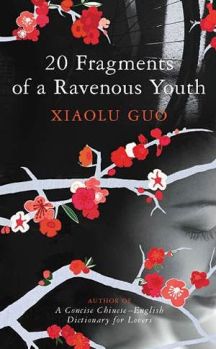
37. 20 Fragments of a Ravenous Youth by Xiaolu Guo

Published in 2008 by Chatto & Windus.

Longlisted for the 2007 Man Asian Literary Prize.

Translated from the Chinese by Rebecca Morris, with revisions by Pamela Casey.

“You can check any Chinese dictionary, there’s no word for romance. We say ‘Lo Man’, copying the English pronunciation. What the fuck use was a word like romance to me, anyway? There wasn’t much of it about in China, and Beijing was the least romantic place in the whole universe.”

Fenfang is, all things considered, probably not the kind of girl a good boy would take home to his mother. After all, she skipped out on her staid household in Ginger Hill Village, at the tender age of seventeen, for a taste of life in Beijing. When we meet her at the slightly more inured state of twenty-one, she has cast her luck in the world of acting, filling out a form that shows a list of her accomplishments and defining characteristics in stark, unsatisfying relief. Cast in a series of semi-regular but anonymous roles, she soon tires of a career built on playing extras, and longs for what she terms “the shiny things in life”. When advice on a new career path is offered from an unlikely source, Fenfang balks, not thinking herself clever or experienced enough for the challenge. Faced with the monotony of her hand-to-mouth, cramped existence, however, she embarks on a project that might well alter the course of her cockroach and ramen-populated Beijing existence.

For the best chances of success, if 20 Fragments of a Ravenous Youth were entered in an Olympic sporting event, I’d say it merits inclusion in the hundred metre sprint. Here is a novel ideal for those who favour the fast, vaguely dirty, edifying read: an elevator tryst in terms of fiction, to be sure, but one that will leave you thoughtful, with a few other ideas for follow-up titles. The storyline is neatly chopped into the twenty aforementioned segments, each tasting like tart, indulgent sections of orange, or, if you prefer, twenty separate pulls on an extra-long clove cigarette. This form suits the tale being told: longer chapters, plump with detail and context, would lend themselves to the depiction of a full life, but the reader isn’t meant to see the protagonist that long. We catch glimpses of her in what she reveals, and how she reveals it — with irrepressibly funny, often-exasperating singularity.

Just how singular is the singularity of Fenfang’s personality, though? Certainly, she seems erratic, by turns impetuously in love and out of sorts with Beijing’s electric charms. On the one hand, her perspective could, one surmises, be not dissimilar to that of any nomadic, headstrong teenager, eager to cut ties with a provincial upbringing, falling over themselves in the giddy gaucheries of self-discovery.

On the other hand, there is the distinct impression, conveyed by the author’s canny sleights-of-hand and sensitive immersion in the world of her leading lady, that we want no other narrator but Fenfang on this journey. We become interested in her hilarious struggles with surprising expediency. Indeed, her struggles become hilarious because of the manner in which she documents them, with a child’s o-faced wonder and an old woman’s absurdist resolve. For instance, she describes the saga of cockroach infestation as though recollecting the hues a pretty, if unsanitary portrait — and the results are side-splittingly funny.

“I’ve been blessed with cockroaches in every place I’ve lived in Beijing, but it was in the Chinese Rose Garden that I was truly anointed. My apartment was their Mecca. […] They lingered on the rims of cups, sat in my rice cooker pondering the meaning of life. The thing about my cockroaches, they were very cinematic, like the birds in that Alfred Hitchcock film. I was under constant attack.”

Through Fenfang’s eyes, the reader is able to experience Beijing as it time-lapses across a decade. Referring to herself several times as a mere peasant, she finds an array of manners no more refined than the behaviour to which she was accustomed in the sweet potato fields of home. In fact, her brief New Years’ visit to her parents provides a glimpse of more kindness than she receives at the hands of brusque police officers, supercilious old crones, vengeful ex-boyfriends and leering, patronizing producers. The irony is not lost in Guo’s unblinking prose: in many ways, communist corridors of draconian morality prevent Fenfang from embracing the freedom she has travelled so far to savour. Beijing is a city open to the young adventuress, to be certain, but its rapidly-morphing ideals and jumbled cultural syncretism throw up a gauntlet of obstacles.

While hardly a novel that could champion a sexual revolution, the writer gives Fenfang the reins of autonomy in choosing her lovers. Whether our protagonist does so with discernment or not is for the reader to discover; what is worth remarking upon is that she makes her own choices. Her relationships with two markedly different men are equally telling: Xiaolin, the long-term lover who proves himself capable of literally shattering acts, and Ben, the Ph.D candidate who inveigles his way into her affections with an ailing scarlet lily. From these romantic affairs, what is perhaps most encouraging is the manner in which the narrator glimpses herself, how she perceives the tenuous yet resolute tendrils of growth that emerge from loving and making related messes.

We may not be able to trust in the wisdom of this chronicler’s every act, but any person who has longed to be away from what stifles them can trust this unlikely heroine’s hunger for escape. “I was 17 when I left that shithole for good,” she reports, without a smudge of shame. “Thank you, Heavenly Bastard in the Sky. Everything about that day is so vivid still: the stretch of the sky, the pull of the wind, the endless, tangled fields, the silent little village and how it burnt itself into my heart as I ran.”

Perhaps Fenfang and her curiously-composed story aren’t allowed enough screen time to win a permanent place in the reader’s heart. Those who prefer meatier, gently undulating parables will be stung by the fictive taxi ride that 20 Fragments of a Ravenous Youth represents. The tale is like a chance encounter on a train platform, an hour’s recollection over fennel dumplings at some fantastically-named dive of a restaurant. It’s easy enough to lose in one’s memory, but for stories like these, all it takes is a precise plume of smoke, a disastrous flirtation with a cockroach or a glance at a Tennessee Williams play to send the reminders flooding back. Here’s to girls who seize their uncertain futures through whatever means necessary: because they don’t much fancy meeting the mothers of those good boys, anyway.

36. Redemption in Indigo by Karen Lord

Published in 2010 by Small Beer Press.

Winner of the 2010 Carl Brandon Parallax Award.

Winner of the 2008 Frank Collymore Literary Award.

Longlisted for the 2011 OCM Bocas Prize for Caribbean Literature.

“It is not the known danger that we most fear, the shark that patrols the bay, the lion that rules the savannah. It is the betrayal of what we trust and hold close to our hearts that is our undoing: the captain who staves in the boat, the king who sells his subjects into slavery, the child who murders the parent.”

Paama has fled the gluttonous suffocations of wedded life with her husband, the incessant eater, Ansige. Retreating to her family village of Makhenda, where “a stranger was anyone who could not claim relation to four generations’ worth of bones in the local churchyard,” Paama takes refuge in the comforts of this homestead, turning towards the preparation of sumptuous meals, for which skill she has become deservedly renowned. Her newly-earned equanimity is shattered, however, when Ansige waddles into Makhenda, eager to win back his wife, wreaking havoc on village mascots, corn crops and mortar grinders in the process. In her resolution to sever ties with Ansige, Paama receives an unsolicited gift from the djombi, immortals who observe and often intermingle their stories in the lives of men. Wielder of this present, the Chaos Stick, Paama struggles with the full implications of its power: that of exerting balance amidst the world’s discordancies. She cannot see the indigo-hued djombi who lurks, cloaked in shadow and resentment, intent on reclaiming the sceptre of Chaos, complete with all the power he believes stolen from him.

This remarkable first novel comes with a guide: a wryly humorous, tender-tongued omniscient narrator whose presence in the story is unshakeable. It is through this voice that the reader is ushered in and out of scenes, as if being whispered to gently between the set-changes of a play. Frequently, we are invited to set our minds to the task of furnishing details for the settings invoked by the writer. For instance, in the chapter that introduces us to the indigo lord, the narrator has us conjure the image of a many-pillared hall, studded by striking details yet still surprisingly open to the finishing touches of readerly interpretation.

“Beyond the pillars are more pillars, presumably supporting more roof structures, a whole fleet of upturned boats to the right and to the left of this main enclosure. If there are walls, I cannot see them to give you any report of them. It is supposed to be majestic, the hall of a high lord. Instead, it is empty, sterile and cold, speaking not of present pomp, but of ultimate futility. It proclaims that all is vanity.

There is a throne. The throne is unoccupied.”

If the forays into sideline commentary of this sage speaker ever veer into too-muchness, they prompt less eye-rolling than one might expect. Instead, the method of framing Paama’s revelations is cannily done, leveraged with the wit and perspicacity of the bard-minstrel to whom we listen. This renders the experience of Redemption in Indigo as akin to a courtyard’s fireside rambling, not a structured bookshop discourse.

The characters of Lord’s novel, protagonists and background figures alike, are coloured in with unfaltering precision, with a craftswoman’s devotion and constancy. No hero is devoid of at least one persistent foible; no villain languishes in the abyss of utter depravity. This fullness of fleshing-out applies not merely to the book’s mortals, either: djombi resemble in intention the capricious, world-weary Greek and Roman gods, though they do not seek out their mannerisms, nor the particularities of their origin stories. One of the narrative’s most endearing passages sees the Sisters of a certain arcane House describing Paama’s attributes to a young man assigned the perilous task of tracing her whereabouts. They speak of her courage, compassion, discretion and integrity, adding, too, that “she has the most beautiful dreams”, but are frankly nonplussed when taxed for Paama’s physical appearance. The hint is subtle, yet well-taken: in some sects, at least, impressions of personality weigh most favourably…perhaps they will continue to do so.

A slender fictive work, Redemption in Indigo is told in an even, neatly-trimmed pace, with no chapter likely to be accused of unnecessary padding. Though a minor marvel of economic exuberance, one rather longs for those extra chapters, especially in those scenes where Paama’s journeys scatter her footsteps across the globe, as she tries to parse the complexities of meaning that the Chaos Stick affords. Concepts of chaos and calm are not, however, subject to short shrift; it is to Lord’s credit that she navigates considerations of anarchy and splendour in a shorter novel. Longer creative works often suffer because of their refried bombastic exposition; it is a rare feat to prompt the desire for a story to be cushioned instead of clipped.

Such is the writer’s moulding and mapping of this other-world (that hints at other worlds within and around its terrain, too) that what dissatisfies us for its brevity may be imagined-in, with generous amplitude. It is this vastness of scope and significance, housed in so unassuming a structure, that gives the most pleasurable pause to the pages of Redemption in Indigo. When converging folklores find their waypoint, stories like these are the result: sensitive, personage-driven tellings of arachnid tricksters, divining rods, of the sanctity of sisterhood and the astonishing gifts that may be given to a woman who confronts the unpredictable force that is Chaos itself.

This review is proud to be part of Aarti’s A More Diverse Universe Reading Tour, a truly exciting event that seeks to showcase the broad spectrum of talent in speculative fiction written by authors of colour. A thrilling assortment of novels, short fiction collections and anthologies have been read and reviewed; for the full list of participants, visit the schedule post on Aarti’s book review site, BookLust. 

35. Is Just a Movie by Earl Lovelace

Published in 2011 by Faber & Faber.

Winner of the 2012 OCM Bocas Prize for Caribbean Literature.

On the islands named Trinidad and Tobago, it is the 1970s, and the Black Power uprising has come and gone. The men who led it with courage and determination have seen their dreams of social change shattered, their purpose suddenly uncertain. Among these former revolutionaries is KingKala, a poet-kaisonian returning from detention to find that his former comrades-in-arms have either fled or adapted strange new personas. KingKala is joined in bemusement by Sonnyboy Apparicio, a fellow songster and man of action who no longer knows in which direction his fortune, to say nothing of his responsibility, might lie. When the chance to perform roles in a promising foreign film emerges, KingKala and Sonnyboy leap at the opportunity, only to learn that the parts in which they have been cast, that of exotic tribesmen, are to be short-lived. Faced with this dilemma – of whether to die the complacent on-stage deaths they have been assigned, or to challenge this assumption – the two men begin to grow closer. Their camaraderie sets one of the multiple backdrops for the events in Earl Lovelace’s Is Just a Movie, a novel of myriad contemplations on life, love, and the issue of identities on a personal and national scale.

Winner of the 2012 OCM Bocas Prize for Caribbean Literature, Is Just a Movie is Lovelace’s first published novel in over a decade. A work marked by much anticipation, it is told in that signature style of an ease in storytelling, of a writer’s tongue primed in the rich awareness of local landscape and local concerns. The characters who populate this novel strike the reader as people known throughout a lifetime, their stories, dreams and grievances akin to those overheard at the market, the mosque, in Woodford Square or on the streets during Carnival Tuesday mas. KingKala, self-avowed “maker of confusion, recorder of gossip, destroyer of reputations, revealer of secrets”, does not so much preside over the happenings in the fictional village of Cascadu as he observes them, sometimes in silence, sometimes chiming in, but always vigilant.

It is Sonnyboy who more often claims the focal role; in his frequent forays into different jobs and titles, he is a portrait of a nation’s expectancy; he channels the frustration of his unrealized dreams, along with his ever-persisting desire to be seen in his community not as a badjohn, but as someone more: as a man capable of rising above the weight of old, unwise decisions.

Perched on the shoulder of the narrator, KingKala, the reader can expect to shift seamlessly through decades, major occurrences, seasons of both nature and politics. The Prime Minister who rules both uneasily and assuredly over the nation is seen at one instance in the heyday of his governance; in a later scene, he appears to still be in power, far past his expected due. The everyday grit of ordinary circumstance is pitted against the suggestion of otherworldly happenings. This subtle marriage of the literal and the fantastical is woven together with an unblinking skill; it convinces utterly, making no digression seem unnecessary, no tall tale excessive. It feels perfectly natural for villagers to be playing cards in one chapter, then lining up to officially sell their Dreams for money in another. Ancient historical figures are invited to celebrate the nation’s successes; prime ministers declare their intentions to live forever; miracles remain within the realm of hope. A multitude of voices accompany single encounters, acting as a reminder that there are a whole host of ways in which reality can be perceived. Not every story needs to be told within rigid lines; Is Just a Movie benefits from the intricate tapestry of its structure, presenting a reading adventure as ornate as it is serenely guided.

The narrative never focuses doggedly on Sonnyboy alone, allowing the stories of the other inhabitants of Cascadu to be told in vivid, enduring detail, with equal measures of humour and sobriety. Through Sonnyboy’s experiences are filtered the hopes and dreams of unforgettable figures: of Franklyn, whose unmatched prowess at batting causes an entire village to creak to a standstill; of the beautiful Dorlene, whose near-mishap with a falling coconut prompts her to literally turn her life around. Daily events shape the fabric of everyday communal life, ranging from the commonplace to the fantastic: the swift decline of corner shops, the disaster of a flambeau-lit political party’s campaign, the unexpected miracle accompanying a funeral.

Told in language that soothes and thrills, Is Just a Movie is a novel replete with symbols by which Trinbagonians can map their multiple places in history. When Sonnyboy hears the sound of steelpan for the first time, “the notes flying out like flocks of birds…like a sprinkling of shillings thrown in the air, like a choir of infants reciting a prayer,” he is attuned to a timeless magic. Not every revelation is meant to be comforting, however – as a Laventille shopkeeper grimly comments, “What was performance in Carnival is now the reality of life. The devil is no longer in the make-believe of Carnival; he is right here on our streets. The Midnight Robber is not a character in our fiction, he is in possession of real guns.”

In this most recent offering from a master literary craftsman, the abiding messages of resistance, and of the pride one earns from self-recognition, illuminate every page. It is writing that unhurriedly allows us to see ourselves as we are, blemishes and beauty marks alike, and to grow in the power of that incredible knowledge.

This review first appeared, in its entirety, in the Trinidad Guardian‘s Sunday Arts Section on September 2nd, 2012. You can view it here.

This book, and 11 more, are part of my official reading list (which can be found in my sign-up post here) for the 2011 Caribbean Writers Challenge.

The three books of my 26th birthday.

I turned twenty-six on August 18th. Part of these celebrations involved the merry claiming of Novel Niche’s very own, spiffy domain! That’s right… instead of holding to that handy ‘dot wordpress dot com’ suffix, I took the plunge, and now Novel Niche lives at ‘dot net dot com’. Apart from the ability to fit the blog’s name more handily and elegantly upon business cards, and the thrill of its triple alliteration, nothing else has changed. I haven’t gone corporate, I’ve just… embraced the delights of a new address.

I cannot recall a single birthday where my mother hasn’t gifted me a book, or several. This year it was one, and I am glad it came unaccompanied. There’s something to be said for the single title in your hands, the way it demands your attention, especially if it’s worthy. My mother never gifts me books that won’t, sooner or later, inhabit precious space in my interior weather.

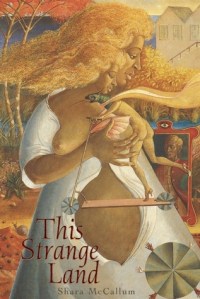
Library Journal describes This Strange Land, (Alice James Books, 2011) the third full-length poetry collection of Jamaican poet Shara McCallum, as “poems of ruin and rebirth, … a marvellous collection filled with a lovely and evocative music.” Even more entrancing than this is fellow Jamaican writer Lorna Goodison’s assessment:

“Jean Rhys could be the presiding spirit of this moving collection, which mines deep veins of loss and displacement. The personal and the political converge in new ways in these finely crafted poems, and readers should be prepared for unexpected turns and genuine surprises.”

A collection governed by that particular Jean Rhys-ian sentiment and spirit will win me over, I know, in ways I may find difficult to articulate, in the aftermath of my experiences with the work. I wasn’t exaggerating when I called Wide Sargasso Sea my Everything Book, back when I recommended six Caribbean novels for summer/long vacation/life reading. I am just as eager to discover just how Rhys “presides”, as Goodison suggests, in these poems, as I am to find out how McCallum speaks, hearing the shape and weight of her poetic concerns as articulated in her own voice. (The collection is beautifully accompanied by a CD of the poet reading several of her pieces.)

I’ve been lucky enough to hear Shara McCallum read her work before, at a 2012 Bocas reading with Guyanese poet, Fred D’AguiarThis Strange Land was longlisted for the 2012 OCM Bocas Prize for Caribbean Literature. When I heard McCallum read, I knew I would need to acquire her work, vitally and through urgent means, so it made the best kind of sense to be surprised with it on my birthday, by my mother. That language of essential, literary knowingness, can be so tenuous, so impossible to script convincingly between two souls. I am infinitely lucky to have that with my mum.

My uncle and I have this tradition: no matter how busy our lives get, he takes me book-shopping on my birthdays. Last year, he bought me The Amazing Absorbing Boy by Rabindranath Maharaj (at whose 2012 Bocas reading I was present, and on which I shared my thoughts), and Turkish writer Elif Shafak’s The Forty Rules of Love. This year, I chose two titles firmly rooted in Caribbean terra firma.

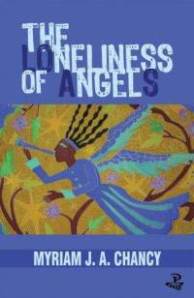
Haitian writer Myriam J. A. Chancy’s The Loneliness of Angels (Peepal Tree Press, 2010) was longlisted for the 2011 OCM Bocas Prize for Caribbean Literature, and is hailed on the Bocas blog as “steeped in Haitian history, charting human connections across gulfs of time and space.” Told from multiple narrative voices, spanning generations, borders, languages and communities, the novel hints, even from its blurb, at a transformation (or else a confirmation) of how Haiti is perceived. It feels that it will be a necessary read, if not an easy one. Spiritual matters are said to bind the novel’s numerous threads, and I am, I confess, almost singularly concerned in seeing how this is borne out.

Chancy read from The Loneliness of Angels at this year’s Bocas festival, too, but with the program as delightfully stuffed as it was, I couldn’t make it. When next she reads here, I will endeavour to be in attendance, my well-read copy in hand.

Another writer whose Bocas reading I missed was that of Indian author Rahul Bhattacharya. His novel, The Sly Company of People Who Care, (Farrar, Strauss and Giroux, 2011) was the winner of this year’s Royal Society of Literature Ondaatje Prize, and generated quite a bit of buzz at Bocas, too. It is annoying to consider that Kirkus Reviews touts the book as “occasionally rippling with pidgin English and yet always sparkling with literary insights”, as though the presence of the former could automatically be thought of as a detractor to the latter. Kirkus goes on to say that the narrative is set “within the landscape of a forgotten corner of South America…an exotic locale”, compounding my issues with its nonetheless glowing write-up. I’m much happier quoting the dust jacket’s other critic, Sam Lipsyte:

“What a voice, what a startling, funny, charming, provocative voice! Rahul Bhattacharya’s narrator is a true wanderer and a gifted poet of description. The journey he takes us on, through Guyana, through histories and selves, is a wonder.”

Perhaps the reality of having grown up/continuing to grow up in a former colony, of inhabiting a place that others feel comfortable breezily grouping as “oh, the islands“, perhaps that has led me to think of “exotic” as pejorative rather than laudatory. No islands are created equal; there is nothing in Trinidadian history that ought compel one to think it is synonymous with Guyanese history, a reality that writers like Bhattacharya doubtless know. I love reading novels about Guyana, not because it is an exotic place, but because the novels are about Guyana. That an Indian native has written what’s been called the quintessential Guyanese novel is not a deterrent. It hints to the possibility of more access to seeing, and to the abundant richness of discovery — both of which can lead to the finest writing.

I’d meant to close this post with thoughts on the book I ordered for myself, in recognition of twenty-six bibliophilic years. I’ve wanted it for so long, and been quietly enthralled with its writer for even longer. I will speak of it, and her, another time, when my order is delivered, and I’m holding that much-anticipated volume in my grateful, hungry hands.

34. The Twelve-Foot Neon Woman by Loretta Collins Klobah

Published in 2011 by Peepal Tree Press.

Winner of the Poetry Category Prize, OCM Bocas 2012.

Shortlisted for the overall OCM Bocas Prize for Caribbean Literature 2012.

Shortlisted for the Felix Dennis Prize for Best First Collection, 2012.

We lead complex, beautiful, many-dimensioned relationships with the Caribbean islands we inhabit. They require different masks, evolving responses to unpredictable seasons: whether we luxuriate in the heated thrust of Carnival, or mourn our murderous headlines, we, people of these particular islands, contain multitudes. This is one of the many gracefully-articulated messages woven into the fabric of Loretta Collins Klobah’s poems. At their forefront gleams the titular persona, the twelve foot neon woman, a resistance heroine, a glorious Madonna for the 21st century. She resonates with passion as much as she snarls in discontent, this unabashed Puertorriqueña, and in so doing she provides both anchor and platform for Klobah’s wondrously sung pieces.

Indeed, it is singing that comes first to mind as one allows this collection to simmer in the blood, registering the finely-wrought heat of its movements, the attention paid to dance and the rhythms many claim as indigenous to our shared shorelines. In “The BBC Does Bomba”, barrio children set themselves free to the persistent, encouraging tattoos pounded out on Modesto Cepeda’s barrel-drum, becoming receptacles of kinetic splendour.

“Girls raise the ruffled circle-skirt
to salute the drum, flick wrists
con fuerza until the butterfly skirts snap
por la derecha, por la izquierda,
the flower-print cotton
faldas swinging like machetes
over the harvest.”

Wrapped up in the flowing undulations of dances like these, the poet reminds us, are examinations that pierce, conducted by both foreign and local eyes. The question of perceptions, of how Puerto Rico and the wider Caribbean sees itself, how we are seen by others, runs through several of the poems, keenly felt in pieces such as “Googling the Caribbean Suburbs”. Here, the narrator conducts a search that zooms in on satellite images of her home from space, the rows of houses making up, in impersonal relief, the neighbourhood whose inhabitants she knows intimately, having shared her life in close communion with their own. “Google Earth makes us out as small, blurred spaces,” the penultimate line of the poem reports, closing with, “That’s how we look, from out there.”

Embedded in this discussion of how we see ourselves are uncompromising, angry refrains against the criminal violence exploding through Puerto Rican and all Caribbean streets. Klobah’s voice rings out against the censorship of police brutality, gang warfare, injustices against children. These poems do the opposite of presenting a unified touristic front: they impel in language that abjures the severity of academia for the warmth of the pueblo, for the anxious concerns of living, working, struggling Caribbean people. “We have created a new world where the indiscriminate gun is always at our backs,” laments the narrator, in “El Velorio, The Wake (1893)”, a poem that paints in vivid and excruciating detail the preparations for the funeral of a child killed by a stray bullet.  Unforgettable images of sorrow in the wake of destruction accompany many of these examinings, in the shape of a halo of flies around a child’s head; of corpses that “lie in little beds of straw in the war zones”; of five young bodies tumbling off a fortress wall, “their surprised appendages flailing like starfish legs, turning like pinwheels.”

At the epicentre of all this, the soul’s purely decadent delight with its own rhythms is allowed to unfurl. Poems like “The First Day of Hurricane Season” possess this self-ownership without apology or shame, as its narrator, a woman in the full glow of her maturity, savours the taste of her life as it is now.

“I brew fresh ginger tea with coarse brown cane sugar,
cut a papaya, and watch the sun bead its juices.
No one ever taught me to expect that a phase of life
spent without a lover could be as happy, simple, and rich
as this.”

There is a way, too, that Nature reaches out to graze its fingertips against the wetness of human experience in the poet’s verse. The veil between what we fabricate for convenience, and what the land offers us for survival: this seems thinnest and most porous in pieces such as “Night Wash”, wherein a woman, post-washtub-rinsing, hears night beckoning her. “When one frog sings alone,” she listens, “it sounds like someone weeping, or hiccuping after the kind of hot-eyed, bottomless weeping that I have not had for a very long time.” Even amidst the uncertainty of violence, about which nothing is definite other than its eventuality, these poems are sheathed in sylvan hope. They can show you the way back to your own open heart,  gently, with the grace of forests, bamboo cathedrals, singing frogs.

If we run the risk of becoming inured to daily senselessness, then Klobah’s poems pull us back from the brink of ennui, reminding us what fiery solace can live in raised arms of protest. There is a balance here of old worlds meeting new, of the slavery barracks colliding with street art, of our ancestors melding into the patterns of fierce pop and rap songs.

The twelve-foot woman herself, she who can claim many names in daylight or in darkness, holds this cultural syncretism proudly in the cradle of her belly. In the lushly-titled “The Twelve-Foot Neon Woman on Top of María’s Exotik Pleasure Palace Speaks of Papayas, Hurricanes, and Wakes”, she sways in her hard-won confidence. She has wrestled her autonomy from the clutches of slave owners and abusive lovers, from history’s cruelties and a nation’s difficult congress with itself. She channels “Oya, orisha of whirlwinds and cemeteries”, making no apologies for her pain, no reparations for her sweet, Boricua music, intent on “writing my son and daughter all my love songs,” a woman warrioress we both need and recognize triumphantly.

A marginally shorter version of this review first appeared in the Trinidad Guardian‘s Sunday Arts Section on August 19th, 2012. You can view it here.

Andre Bagoo interviews Loretta Collins Klobah in the September/October issue of Caribbean Beat, here.

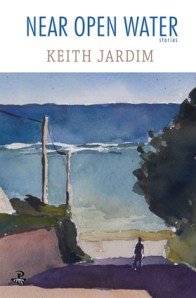
33. Near Open Water by Keith Jardim

Published in 2011 by Peepal Tree Press.

Longlisted for the 2012 OCM Bocas Prize for Caribbean Literature.

You should never underestimate good short fiction, I thought, dragging the back of my hand across my stinging eyes. I had just read the first story, called “In The Atlantic Field” of Keith Jardim’s collection, and already, just like that, the serenity of my day had been stolen. I put the book down, took decisive steps away from it. I walked around the house, and when I returned to the book, it was with mild resentment (the good kind), mixed with greater parts curiosity and the salted wound of unscripted emotional response. I read on.

The twelve stories in Near Open Water invite our considerations (and yes, our tears, too) on loss and excess, each one set or linked closely to a vast body of water. In “In The Atlantic Field”, a young boy and his mother go for a longer-than-usual drive along the north coast road. Nicolas meets a beautiful young woman and learns both less, and more, than he wants to know in “The Marches of Blue.” “The Visitors” who come to Trevor’s father’s house are intent on finding something to satisfy their motivations. In “The White People Maid”, Cynthia meets a legendary figure after witnessing a gruesome pharmacy robbery. A man and a woman play with dangerous intimacies before a wild beast’s enclosure, in “In the Cage.” Complacent Gene and frustrated Anna travel to Georgetown by Essequibian boat in “A Landscape Far From Home.” “Caribbean Honeymoon” tells the story of quite a different couple on quite a different, crueller journey. Nello, the narrator of “Fire in the City”, muses on the directions his own life has taken. A man takes a drive whose destination seems both grim and unclear, in “Kanaima, Late Afternoon”. Roy and Fiona visit the zoo’s most regal occupant, learning more about its origins from an eccentric source in “The Jaguar”. “Night Rain” tells a seemingly-bare story of a man who visits a woman in bed. The collection concludes with its titular piece, “Near Open Water”, in which a journal is kept, a dream is had, and more than one frightful thing is embedded into a consciousness, for good (or not so good).

Perhaps some of these descriptions strike one as would blurry, indistinct landscape art, the sort that adorns dental waiting rooms. If there is vagueness in the detailing here, it is because detail can linger where you least expect it in Jardim’s work. Neither the reader nor the narrator can be guaranteed of any answers that will illuminate. In “The Marches of Blue”, after a string of seemingly-unconnected encounters with other islanders, Nicolas turns to his severe grandmother for the mapping-lines that will make sense of their stories, receiving further uncertainty for his pains. What she does share is coloured in with a kind of resigned, tranquil bitterness.

“His grandmother said: “The sweetness of the very young, to think that. But age dries up things in you, even poetry, like this damned island. Damned because everything that has ever happened here over the last five hundred years was never meant to happen, was a mistake, wrong. […] I’m an old woman now, and I don’t want to drag up the past. It’s too tiresome. I want to tend my garden and die in peace.”

With uncertain provenance, guided by ambitious and destructive historical sculptors, how can any path we reasonably take in Caribbean waters seem straightforward? In this way, the stories interrogate a time that perhaps has always been marred by fracture, split on more fault lines than lends comfort.

There is a certain savagery to unchecked human appetite, to the places it can lead. In these stories, personal pleasures are pursued recklessly, consequence a distant island blurring out of focus. “Total madness” is the way Nello describes a club scene in “Fire in the City”, adding “like people only want to dance their life away. Not just the night, eh. Their whole fockin’ life. And to hell with the damn island.” Some characters are barely bemused by the curious, inelegant politics that govern survival. Roy explains to Fiona, when she presses him for a detail he is either unwilling or unable to provide, that “The rumours are there. This place is loaded with them. It’s a way of life here. How can people not make assumptions? It’s how the island amuses itself…”. For others, like the young writer in “Near Open Water”, the pursuit of a contemplative interior life, set against a vivid natural backdrop, can mask the fear of things committed towards violent ends, things guessed at and unknown. He tries to keep a journal against such thoughts, but a voice  both cautionary and seductive encroaches on his pages, with dire warnings that hint at his fate.

“This matter of fate, and the uneasy part of yourself – you leave it abruptly. No reflection whatever; you told me that’s dangerous, that’s what’s wrong with the world – the neglect of history, and of selves, even. And here you are, guilty of it, refusing to take your own advice. Or is it the melancholy the sea brings to most of us? […] It seems an act of destruction has begun…”

In spite of this questionable interpersonal canvas, the land and water offer, if not outright solutions, then a measure of solace, of feeling oneself linked to something other than a daily gamble with rigged odds. Jardim’s prose reveals the places we inhabit in stunning, achingly grateful ways. The young boy who frolicks on the north coast littoral in “In The Atlantic Field” experiences a suspended moment of raw glory.

“He’s in the haze, happy in the light. The wet rocks are dark and glinting. He throws the spear at them; it breaks in two and falls into the bright surf. Among the rocks there is one with a smooth, triangular slate surface angling at him. He finds a quartz-crystal stone and begins writing the words: I am the first person here.”

Unfettered love for the land and its non-bipedal citizens grants us access to people who cherish existence differently, operating off the grid in quirkily reassuring ways. The itinerant, multi-wristwatched Dr. Edric Traboulay, who favours Roy and Fiona with smatterings of his wit, vast knowledge and naturist’s sympathies, reminds us that the truest names for jaguars, even caged ones, aren’t the cutesy handles affixed to official signposts. The verdant thickets indigenous to islands; the mangrove’s mystery; the sea’s brutal, tender refrain: all are suggestions on how we might live, or alter our living. The dearth of characters like Traboulay suggests that we are immune, or too far removed, to hear or respond authentically.

This is the thing about painful literature: it hurts. Revelations in print rest uneasily, many of them because they are less revelations and more revolving doors smacking us in the face with more truth than we like. It makes reading Jardim essential, rewardingly thorny: here are vistas framed by separate seas, converging. For those willing to explore, there are reminders of beauty, even levity, in the muck: rambling zoologists; feisty domestic workers resisting kleptomanic labels; bliss, at finding the perfect north coast road to unmoor what remains of a distant, faintly shimmering life.

32. Archipelago by Monique Roffey

Published in 2012 by Simon & Schuster.

One day, Gavin Weald uproots himself from the staid, reassuringly placid existence he’s meted out for himself and his six year old daughter, Océan, and quite literally takes to the sea. Companioned by their loyal hound, Suzy, and enough furtively-acquired supplies to see them well out of Port of Spain waters, they set sail on Gavin’s old Danish boat, Romany, to visit the Venezuelan Los Roques archipelago. Gavin once frolicked there in his heyday, before the advent of his family, before the coming of the great brown flood waters that devastated his home and its now distressed, fragile occupants. Other Weald family members will not be making the trip with them. Each precarious marker of the voyage out is signalled by Gavin’s fear, his nauseous uncertainty over where the right path might lie. As he shepherds this most unlikely of crews across the startlingly blue seas for which his daughter is named, he is reminded that there is a shape to his oldest of dreams that he scarcely registers, one that the sea will send surging to the fore.

Overweight, beset by painful psoriasis and more than his fair share of daily nightmares, Gavin Weald resembles no archetypal moulds for an adventurer-hero. Before he sneaks Romany out of the TTSA harbour, the burden of his aging body weighs heavily on him, so disparate from the younger, fitter, carousing image of his youth. Soon after he and Océan slip the bonds of Trinidadian waters, though, Gavin feels that settled knowing of the sea stir in his bones.

“The sea makes him feel lonely and yet so very much himself; she makes him gather himself up, a self which has vanished some time ago into the element of air. Overnight, the fluid in his veins is catching up with the fluid and the rhythms of the sea; he feels like the sea appears, placid, powerful.”

For all of our protagonist’s uncertainty, his prevarications on both dry land and shifting water, the quiet splendour of Roffey’s characterization means that we want no other guide for our travels. Gavin is less overtly reassuring than he is persistently earnest, a sentiment that earns him further unwarranted harshness from life, yes, but also visits upon him moments of sublime grace, such as the raw pleasure of seeing Océan snorkel for the first time. Everyone, the author subtly reminds us with each sea-swell and map-charting, can face bold and complicated terrain. Peregrinations of discovery are not merely for the flat-chested or unflinching.

Islands are everywhere in this stunningly rendered novel, reminding or teaching us anew about our individual selves against their history-mired backdrops. The long arm of human injustice, greed and excess runs on no shorter a leash here, as Gavin, Océan and Suzy dock in multiple ports to discover. Beach-combing through the sea’s washed up treasures on one of the Los Roques islands, Gavin muses on the disturbing assortment of plastic debris and shattered coral, thinking, too, of how oil swallows up life around them, oil destroying nature. Father, daughter and dog confront the garish spectacle of cruise liners; the beguilingly pink slave huts at Bonaire; the uneasy history that built the Panama Canal, with equal parts wonderment, dread and curiosity. Nothing seems clear about human progress: it all glimmers, like the Sea Empress tourist ship, “grotesque and a spectacle in its own right.”

We’re taught in some of our earliest creative writing classes that one of the great bankable conflicts worth exploring in both fiction and non- is Man’s relationship, and struggle, with the environment. The novel mines this persistently (and not necessarily in the ways you’d expect, either), but it also reveals in both frustrating and gleeful detail what we learn about ourselves in the process. The sea cradles the real possibility of a different life for Gavin and his daughter, bound up in which is the re-scripting of their damaged intimacy. Water of one sort has the potential to heal, if not completely, then life-sustainingly, the rupture caused by water of another chaotic provenance.

“It feels like he and Océan have blended. They have softened in themselves and with each other; the sea has dissolved them, and they are suppler in their skin. They have been disappeared for weeks now, and they are sun-henna brown […] He didn’t expect to feel so lost in his own escape; a new space has opened up, an ocean.”

This wilful act of disappearance reminds or encourages the reader of what solace and redemption there might be in unmooring. If no-one is sympathetic to your plight, the sea will have you, but one cannot bargain with her for support or guidance. Gavin marks every leg of his journey with unlooked-for allegiances of varying intensity, with keen observations of the shifting natural landscapes around him. Reflecting on South America’s bloody history of invasion, torture and revolt, he muses that “Recovery takes time; it is the story of the still emerging Caribbean.” The land aches for the erasure of trauma, much as the individual does: Roffey stresses here that neither on regional nor personal fronts can rooted suffering be brushed away, not without investigation and the watchful calendar’s cycle.

Archipelago’s trajectory reminds the reader in both subtle and unapologetic flourishes that through our best-laid plans for Nature, Nature herself persists. The novel is replete with achingly beautiful descriptions of the world that frames these seafarers. Even in the midst of tantalizing doubt, of crippling loneliness, Gavin cannot but soak it in, the “skies… reflecting sea reflecting sky reflecting sea; this world is so electric in its shades of blue…”. Storm weather holds its own relentless magic, at once spellbinding and cautionary:

“That evening the sky pinks over. Grey and indigo clouds stay still in the sky like towering puffs of cream, like staircases made of foam. Forks of lightning appear miles away, silent delicate veins of gold, fizzing down from the clouds.”

The further Gavin, Océan and Suzy plot their course, the more they allow themselves to drift into the arbitrary shelter that Nature provides, learning in increments that the best harbours can turn hollow, learning, also, that there is refuge in unexpected places. This hard-won reassurance beats at the maritime heart of Archipelago: that the perilous journey, no matter how hurricane-beset, finds its own natural way of leading you back to yourself.

A marginally shorter version of this review first appeared in the Trinidad Guardian’s inaugural Sunday Arts Section on August 5th, 2012. You can view it here.

To read my impressions of Roffey’s novel prior to its launch, you can check out my Bocas 2012 coverage of her discussion with Rivka Galchen and Anita Sethi, here.