“Sea Blast” – Gilberte O’Sullivan

15395991452_182800d5aa_b
Image: Siren – Songkhla, posted at Flickr by Axel Drainville under a Creative Commons License.

Every child who had to be dragged from the sea, screaming wild, howling for entry, wonders what it would be like if they’d broken free from their parents’ grasp, run back to the surf, and traded their limbs for fins.

“Sea Blast” is a baroque, embroidered sea-poem. Sargasso has stitched it. There are no embankments against tide and time here: not human passion, not iron, no industry of man’s desire or man’s jealousy or man’s architecture. Nothing keeps the sea, embodied as a mad island woman, from surveying and claiming what she wants. Including what she’s wed.

Gilberte O’Sullivan gathers starfish-splayed images, unites them into a coral reef of beauty and foreboding: “little fish scholars”; “scrolls of perishable ideas”; “the sign of the mast”. In the domestic disharmony of pirate husband and maritime wife, in the slow and insidious untethering of the former’s defenses against the latter, the poet both builds her caverns under the ocean, then chips at them, worrying language to prise out pulsing miniature snakes of malaise. What a fine, sanguineous festering O’Sullivan invokes.

The poet needles gentleness out of the poem with sharp, underwater spears, leaving us with the long, vicious effects of saltwater-erosion. The sea takes everything when you aren’t looking: time, love, decency, family ties, even a bowl to cast your cares into, weeping. Yet it is the very cruelty of the poem that sings us the most sublime of narratives: an anti-conquest fable, like something out of a waterlogged tome, promising a vengeful end of any man who wants to marry a woman into submission without her tacit seal of approval.

What a chorus of oceanic comeuppances is “Sea Blast”. What an augur of inevitability. What a promise, waiting to rise up and eat everything you own, with salt. Dive in; forget drowning.

Read “Sea Blast” here.
Gilberte O’Sullivan was a featured writer in “Who’s Next” at the 2014 NGC Bocas Lit Fest, and was again featured at the festival in 2017’s “Stand and Deliver”.

Puncheon and VetiverThis is the eleventh installment of Puncheon and Vetiver, a Caribbean Poetry Codex created to address vacancies of attention, focus and close reading for/of work written by living Caribbean poets, resident in the region and diaspora. During April, which is recognized as ‘National’ Poetry Month, each installment will dialogue with a single Caribbean poem, available to read online. NaPoWriMo encourages the writing of a poem for each day of April. In answering, parallel discourse, Puncheon and Vetiver seeks to honour the verse we Caribbean people make, to herald its visibility, to read our poems, and read them, and say ‘more’.

“Investigation of Past Shoes” – Vahni Capildeo

16553094216_bb3ceddbad_k
Image: Little red shoes, posted at Flickr by Vanie Castro under a Creative Commons License.

As a young girl, “The Red Shoes” was the first fairytale to fill me with both delight and horror: it was one of my first lessons in the truth that something sublimely beautiful can dance you all the way to your own grave, or someone else’s.

When I read the poems of Vahni Capildeo, I often feel as though I’m dancing, even if my best ballet flats are welling with blood. The serpentine, carnivorous, raised-lynxhead attentions of Capildeo’s poetics keep me upright in fields of the too-common. They also remind me that in the common, there is always dancing. Take, for instance, “Investigation of Past Shoes”. A narrator tells us of their history in footwear: 1970s clogs with side buckle; gold and silver sandals racked up outside a temple, waiting for their mistresses’ feet; bleached-pristine Convent sneakers; “distressed silver ballet slippers … Cool as moonlight on / a tourist coastline.”

We arrive at the poem’s end to their bare, pearlescent-toenailed feet, yet in each cleated address, the poem offers us some bareness, some bone-deep exposure, like the stultifying whitewashery of Convent sneakers, of a ‘prestige’ education filled in with the patina of “Toxicity  and intoxication: / with  good  intentions,  getting  high on paste.” What I love about this poem, and so many of Capildeo’s poems, is that it doesn’t pre-announce its poetic intentions. We call it poem, but it could, with a smattering of imagination, with a stretching of leeway, be called ‘anti-advice brochure’; ‘ironic and morbidly hilarious walking tour guide’; ‘instructions on how to achieve the perfect pedicure through trial, history and error’.

Walk with this poem and maybe expect to get lost. Or maybe find yourself going dancing, to the alive and insomniac cadences Capildeo offers: toss the ex-husband’s torture flats. Toss the ex-husband, too. Glide home barefoot.

Read “Investigation of Past Shoes” here.
Vahni Capildeo’s newest collection, Venus as a Bear, will have its Trinidad launch at the 2018 NGC Bocas Lit Fest.

Puncheon and VetiverThis is the tenth installment of Puncheon and Vetiver, a Caribbean Poetry Codex created to address vacancies of attention, focus and close reading for/of work written by living Caribbean poets, resident in the region and diaspora. During April, which is recognized as ‘National’ Poetry Month, each installment will dialogue with a single Caribbean poem, available to read online. NaPoWriMo encourages the writing of a poem for each day of April. In answering, parallel discourse, Puncheon and Vetiver seeks to honour the verse we Caribbean people make, to herald its visibility, to read our poems, and read them, and say ‘more’.
“Poem for a Gunman” – Soyini Ayanna Forde

15869763378_fb6da4e5b0_k
Image: Black Medusa, posted at Flickr by Ben Raynal under a Creative Commons License.

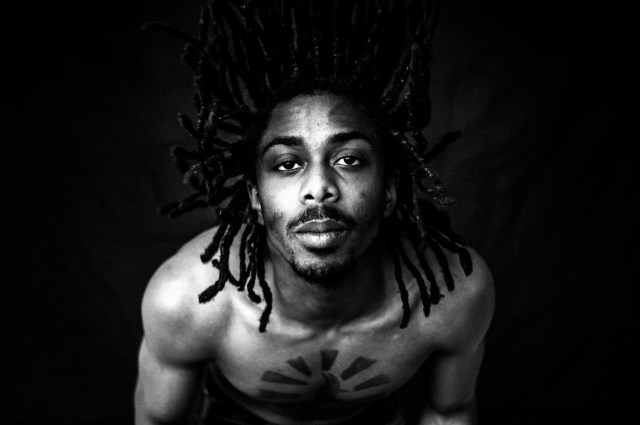
Sometimes, love takes you by the mouth. Both of them.

Soyini Ayanna Forde‘s “Poem for a Gunman” tugs your underpinnings aside, curls urgency and sincerity upwards into your heart in slow, molasses-drugged strokes. The address of the poem is intimate, revelatory, confessional: we learn of a lover with “slow walk solid calf muscles nutmeg flesh / marinating in Rasta oil”, a lover who transmits need with the press of ganja-ripe fingers around his woman’s throat, a man who “could have / picked me up if you wanted to, crumple me, / throw me away”. Oh, forget Prince Charming. Fling off Rhett Butler. Heathcliff, who? If you want it good, go to yard.

I’m listening to vintage Beres Hammond while I write this. Yeah. Tings serious.

“Poem for a Gunman” is direct, so tender and ravenous in its address. It bares the nape. It hitches up the dress. It smudges the lipstick, reapplies it, then licks it off raw. It presses you backwards, knees bending, onto the bed of hunger still salted and leavened with the last afterglows of slaking thirst. Forde instills in us this same unbowed, primeval knowing of the speaker’s lover, investing us in a psychogeography of his planes, his angles, his moods and humours. We walk in his skin, and lie down in him, lying down in her. This great, genuine shapeshifting voyeurism of the spectacle of love, and loving, fuels the best romances. The best darknesses, too.

I so badly want to tell you the last two lines of this incandescent, hummingbird-hearted poem, but I think you should read it, and find out. Take yourself to bed, or be taken to bed, on the promise of it, the renewal and supplication and transubstantiation of that need. Pull it into your mouth like sensimilla, exhale slowly. Again.

Read “Poem for a Gunman” here.
Soyini Ayanna Forde is the winner of the 2016 Small Axe Literary Competition for Poetry.

Puncheon and VetiverThis is the ninth installment of Puncheon and Vetiver, a Caribbean Poetry Codex created to address vacancies of attention, focus and close reading for/of work written by living Caribbean poets, resident in the region and diaspora. During April, which is recognized as ‘National’ Poetry Month, each installment will dialogue with a single Caribbean poem, available to read online. NaPoWriMo encourages the writing of a poem for each day of April. In answering, parallel discourse, Puncheon and Vetiver seeks to honour the verse we Caribbean people make, to herald its visibility, to read our poems, and read them, and say ‘more’.

“Final Prayer in the Cathedral of the Immaculate Conception I” – Canisia Lubrin

5374133741_4e02068ee9_b
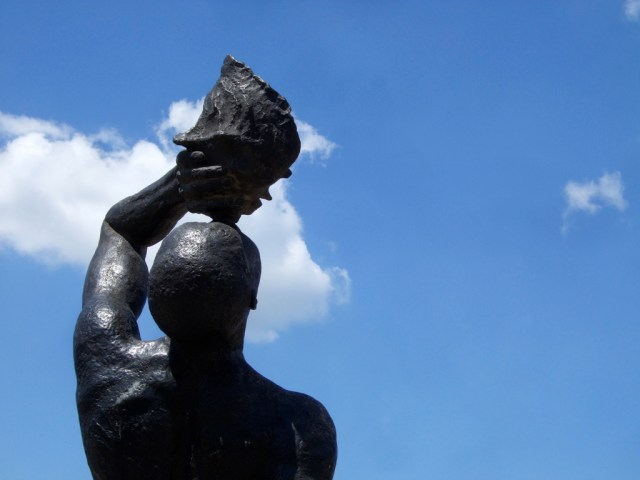
Image: Conch, posted at Flickr by Amy Nelson under a Creative Commons License.

There’s history in stone.

In searching for an image to accompany this poem, I turned up scores of photos of uncredited ‘African masks’ in New York museums, and monuments, forts, edifices, all laid in, brick by millionth brick, by the hands of black slaves.

What is an ‘African mask’? Is it similar to an ‘African textile’, or an ‘African pot’? What have we learned about making Africa a congealed, amorphous continent of pain, and its accompanying culture? It’s the culture of pain Canisia Lubrin‘s after in “Final Prayer in the Cathedral of the Immaculate Conception I”, but also the culture of how black bodies have survived it.

Lubrin invokes “the symmetry of shattered-strong / women”, tattooed and transcendent, even as they’re reduced to little more than slideshows of ‘African culture’. The poem is a daring, image-stilettoed refusal to accept broad-brushstroke canvasing of black pain, or else black joy. The poet sifts through any obscurantist bladderwrack, dives into history, slavery, the dislocation and torture of black humanity, and brings us pearls, lustrous and obsidian with weight and impact.

“Peel back the scales of these untranslatable African songs, reveal / them more syllabled than your “Gloria.”” is my favourite pearl of the poem. This is how Lubrin arrives at ‘African’ definitions that are both specific and encompassing, both one thing and many, all holding hands, all lifting lanterns, all shattering slave-labour structures. This is not an unmarked African mask in a museum on the Upper East Side. This is not an artifact needing stolen back. This is its own stealing back, its own fervent and radical witness.

“See queens and knights left over to check- / mate”, the poem promises us. Or, perhaps, the poem prays in us. It is, after all, a prayer, and a final one. It bows our heads.

Read “Final Prayer in the Cathedral of the Immaculate Conception I” here.
Canisia Lubrin’s first book of poems, Voodoo Hypothesiswas published by Wolsak & Wynn in 2017.

Puncheon and VetiverThis is the eighth installment of Puncheon and Vetiver, a Caribbean Poetry Codex created to address vacancies of attention, focus and close reading for/of work written by living Caribbean poets, resident in the region and diaspora. During April, which is recognized as ‘National’ Poetry Month, each installment will dialogue with a single Caribbean poem, available to read online. NaPoWriMo encourages the writing of a poem for each day of April. In answering, parallel discourse, Puncheon and Vetiver seeks to honour the verse we Caribbean people make, to herald its visibility, to read our poems, and read them, and say ‘more’.
“Place Name: Oracabessa” – Kei Miller

4772396671_968b56d8ac_b
Image: Golden Clouds Villa, Oracabessa, Jamaica, posted at Flickr by Jerry Edmundson under a Creative Commons License.

Vibranium.

I left Black Panther hoping Wakanda was real. Isn’t this part of what Afrofuturism implies? You hold some hope in your mouth for the majesty of African queens and kings, who never have to beg for anything: who can topple empire with the whir of a spaceship’s heart.

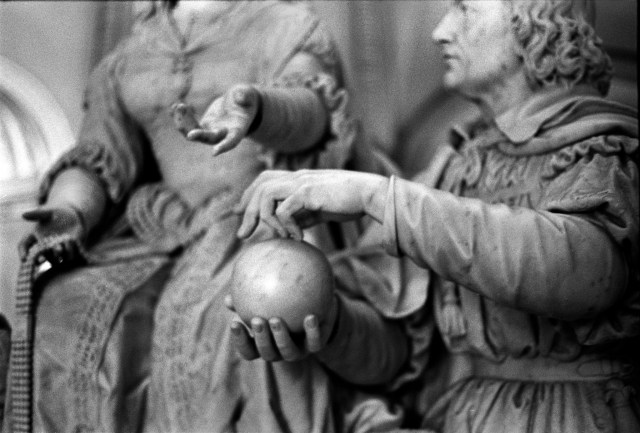
As vibranium is to Wakanda, so is oro, gold to the history of conquest. “Place Name: Oracabessa” starts us off with an etymology lesson. “OracabezaGolden Head”. Kei Miller is our tour guide through this place, but instead of brochures, and sticky lollies for the kids, he’s dropping gold into our palms, pulling us back through the keyhole of history. Remember when we read Lorna Goodison, and looked through the keyhole at Columbus and Queen Isabella? This time, it’s a different view, same Agent Orange Colonist. We start at the site of plunder, and work our way back through time, toppling comforts as we go.

The poem is constructed conversationally, with tactical fluidity. You don’t even know your eyes are welling with tears til you’re more than halfway in. You could be pinpricked by Miller’s mellifluous capacity to sing language, offering us “a ship that in 1502 slipped into Orcabessa the way grief / sometimes slips into a room”. The poem isn’t so much concerned with summoning galleons as it is shattering them. Anyone who wonders where the contemporary speculative lives in Caribbean poetry should turn to the poet’s The Cartographer Tries to Map a Way to Zionwinner of the 2014 Forward Prize for Best Collection.

Here, it’s not so hard to imagine James Bond as “a barefoot bwoy from St Mary, Jamaica”, to feel all the weights of gold in your sunbruised, sunlovered hands: everything glows. Everything, we pray, can be reclaimed. Seize the ships, shaken not stirred. Overrun them, laughing.

Read “Place Name: Oracabessa” here.
Kei Miller’s most recent novel, Augustown, was the winner of the 2017 OCM Bocas Prize for Caribbean Literature.

Puncheon and VetiverThis is the seventh installment of Puncheon and Vetiver, a Caribbean Poetry Codex created to address vacancies of attention, focus and close reading for/of work written by living Caribbean poets, resident in the region and diaspora. During April, which is recognized as ‘National’ Poetry Month, each installment will dialogue with a single Caribbean poem, available to read online. NaPoWriMo encourages the writing of a poem for each day of April. In answering, parallel discourse, Puncheon and Vetiver seeks to honour the verse we Caribbean people make, to herald its visibility, to read our poems, and read them, and say ‘more’.
“Capybara” – Anthony Joseph

6903218919_7dd77e6883_b
Image: Agouti, posted at Flickr by Rebecca Siegel under a Creative Commons License.

In Trinidad, hunting season never ends.

Anthony Joseph’s “Capybara” understands. Legal and illegal don’t matter here. What matters is how much you go pay for a fresh-skinned manicou, a bouquet of iguanas blinking by the side of the road, an offertory of blue crabs waiting with bound gundis. Capybara is one way to say agouti, manicou, the large, social species that falls victim to a hunter’s rifle every day in Trinidad, either in or out of the sanctioned season.

The laws under laws move the exoskeleton of “Capybara”. This poem is concerned not with the strictures man imposes, but with the preternatural teeming that runs an island like a ghost carnival. The island is Trinidad, where “In Port of Spain / the cold Capybara’s brain is lifted up and eaten.” The Trinidad of the poet’s verses claims the sepulchral, the sinister, the erotic and the ecclesiastic, in imageries of Akashic coffins; Baptist promises; Deacons brewing turbulence; sisters waiting in Hindu hills; shuddering climaxes on black leather chairs.

Like any suitably uncivilized poem, the poem asks more questions than it, or you, can ever hope to answer. The answers to the questions are not answers. The questions don’t want that ordinariness. They want your intrigue, your gothic attentions, your hunter’s gunsmoke. The answer to the litany of ‘Whos’ in “Capybara” could be you. It could be the addressee of the poem, or the narrator who teases and implores us, with the closing salvo, “I fall in love / too easily.”

The poem gives us many keys; none of them unlock its own doors. Instead, take the capybara-key and turn it into the woodland of yourself: go hunting with the taste of manicou meat rich and rank on your tongue. Dine in all the lit rooms of The Ministry of Light, red-handed.

Read “Capybara” here.
Anthony Joseph’s fictional biography Kitch will be launched at the 2018 NGC Bocas Lit Fest.

Puncheon and VetiverThis is the sixth installment of Puncheon and Vetiver, a Caribbean Poetry Codex created to address vacancies of attention, focus and close reading for/of work written by living Caribbean poets, resident in the region and diaspora. During April, which is recognized as ‘National’ Poetry Month, each installment will dialogue with a single Caribbean poem, available to read online. NaPoWriMo encourages the writing of a poem for each day of April. In answering, parallel discourse, Puncheon and Vetiver seeks to honour the verse we Caribbean people make, to herald its visibility, to read our poems, and read them, and say ‘more’.
“Reporting Back to Queen Isabella” – Lorna Goodison

38628747886_56bf14e5eb_k
Image: elevator speech, posted at Flickr by Robert Couse-Baker under a Creative Commons License.

Who were we, before we were discovered? What were our discoverers, imagining they could settle us?

In “Reporting Back to Queen Isabella”, Christopher Columbus regales his patron. Hoping she’ll continue to GoFundMe and coffer his expeditions, he tells her of the uncommon wealth of Xamaica. He is the prodigal conquistador, if you like, needing to make good on royal investiture.

Lorna Goodison, the Poet Laureate of Jamaica, peers with us through the keyhole of empire. Where, then, are we positioned to see this poem enact its homecoming? The omniscient narrator is one of us. There we were, they say, “massifs, high mountain ranges, expansive / plains, deep valleys”. How unsettling it is that the architecture of conquest can also be topographically beautiful. All of Columbus’ West Indian maps are a cartography that rattles chains, poisons babies and sails, as the crow flies, to torture.

The poet isn’t sparing us. She is showing us what pillagers look like when they go home. Columbus throws the crumpled map of Xamaica at Queen Isabella’s feet, almost as if to invite her golden slipper: here, majesty, walk on this. The poem unfurls us like maps, points to each of our rivers and asks us to consider the weight, the suffocation, of feeling ourselves owned. The poem comes to us from a place of post-settlement. Columbus has already returned, his ships laden. The poem is showing us the very theft of ourselves. We are the people at the keyhole. We are the people the colonial maps don’t draw in.

This poem is a drawing in of ourselves. The mountains: us. The rivers: us. The overabundance: us. How can we ever imagine ourselves as small, when the museums of empire spill with our industry? Conqueror, smile: so I may pluck my gold back from your jaw.

Read “Reporting Back to Queen Isabella” here.
Lorna Goodison is the recipient of a 2018 Windham Campbell Prize.

Puncheon and VetiverThis is the fifth installment of Puncheon and Vetiver, a Caribbean Poetry Codex created to address vacancies of attention, focus and close reading for/of work written by living Caribbean poets, resident in the region and diaspora. During April, which is recognized as ‘National’ Poetry Month, each installment will dialogue with a single Caribbean poem, available to read online. NaPoWriMo encourages the writing of a poem for each day of April. In answering, parallel discourse, Puncheon and Vetiver seeks to honour the verse we Caribbean people make, to herald its visibility, to read our poems, and read them, and say ‘more’. 

“Confessor” – Safiya Sinclair

6020501642_48d13c662c_b
Image: Prickily Hooks, posted at Flickr by Derek Gavey under a Creative Commons License.

Caribbean.

The word sits, sovereign as a female lord, in the body of “Confessor”. It’s one of the poems from Cannibala debut collection of revisionist firebranding, a restitchery of the Caliban mythos. Cannibal reads like Shakespeare’s being held by the throat with a hummingbird-feathered shiv. What leaks from that neck of literary empire goes into Sinclair’s cauldron of conjure, along with many ingredients fearsome and strange.

“Confessor” keeps a sea pulse. “Out here I am the body invented naked, /
woman emerging from cold seas” has been my Facebook status since last year, in the spot where you slot your biography. I keep it close because it reminds me of how much I prize changeability, the resilience of shapeshifting, in myself and in poems. This poem is a palimpsest, like the one created by littoral surf, and in every stanza something precious, sea-strange, sharply intimate, washes up for our awe, our heated wanting.

“All is knocked back”, says the poet as she knocks us back into the waves of the poem, dragging out intimations of desire, abandonment, violence: an adult version of a story for children, describing what you might find on a Caribbean seashore. The poem is a great unlocking of vulnerability, and a great keeper of secrets: its principal figure roams the site she has been deposited, or else discarded, “whole months / spent crawling this white beach / raked like a thumb”. In seaglass-glimmering language, the poet could be giving us the scrap of a treasure map, promising us that the sea has already alchemized the rest.

Every time I read “Confessor” I see a new woman emerging naked from the seas, sucked back in to resurface, wilder and wetter each time. I smell her skin. I lick its salt and find myself, cast out, unmooring.

Read “Confessor” here.
Safiya Sinclair’s Cannibal was the winner of the 2017 OCM Bocas Poetry Prize for Caribbean Literature.

Puncheon and VetiverThis is the fourth installment of Puncheon and Vetiver, a Caribbean Poetry Codex created to address vacancies of attention, focus and close reading for/of work written by living Caribbean poets, resident in the region and diaspora. During April, which is recognized as ‘National’ Poetry Month, each installment will dialogue with a single Caribbean poem, available to read online. NaPoWriMo encourages the writing of a poem for each day of April. In answering, parallel discourse, Puncheon and Vetiver seeks to honour the verse we Caribbean people make, to herald its visibility, to read our poems, and read them, and say ‘more’. 

“Pepper Sauce” – Malika Booker

34555090340_45a0e9e39a_k
Image: Hot Date, posted at Flickr by 夏天 under a Creative Commons License.

It happens in the country.

It happens in the city, too, but many city people will tell you it only happens in the bush. Out there, in the land of outhouse and rumshop, of police post and chicken coop, the law is a wavering scavenger, picking at flesh and faith to survive. The truth is that it happens everywhere, but when you think of the grandmother in this poem packing homemade pepper sauce into her granddaughter’s vagina, tell me you don’t think of it happening behind God back.

“Pepper Sauce” is the first poem I heard Malika Booker read aloud, and I can only hear it in her voice. It is Booker’s most potent offspring from Pepper Seedits most unforgiving and brutal. It reminds me of the impossibility of decency: that word, when we use it, is so often a white flag waving against the crimes we’ve already committed. Decency doesn’t come into it, really. Someone out there is being eaten, and someone’s already picking their teeth.

Look at the principal colour contrast in “Pepper Sauce”: the vermillion — implied but never stated — of the peppers, ground to a threat in their white enamel bowl. The poet, not once, pushes the red down your throat. She waits for the colour to burn into you, enacting a dread and baleful synaesthesia. You smell the red. You feel it sting, cut and rip into your skin. You taste it with your other, lower mouth. You know the pepper is red. What else could it be? What lesser colour would deliver the law of rule?

The poem makes the narrator complicit: amidst all the bawling, hoarse-sobbing, skin-welting, no one helps poor Anne. The neighbours are horrified, but they stay indoors. Pepper burns, mouth or cunt: it happens everywhere you can imagine.

Read “Pepper Sauce” here.
Malika Booker’s “Nine Nights” was shortlisted for the Forward Prize for Best Single Poem 2017.

Puncheon and VetiverThis is the third installment of Puncheon and Vetiver, a Caribbean Poetry Codex created to address vacancies of attention, focus and close reading for/of work written by living Caribbean poets, resident in the region and diaspora. During April, which is recognized as ‘National’ Poetry Month, each installment will dialogue with a single Caribbean poem, available to read online. NaPoWriMo encourages the writing of a poem for each day of April. In answering, parallel discourse, Puncheon and Vetiver seeks to honour the verse we Caribbean people make, to herald its visibility, to read our poems, and read them, and say ‘more’. 

“The Night Grew Dark Around Us” – Andre Bagoo

8021381698_bd86e1c812_k
Image: Hibiscus, posted at Flickr by Brian Evans under a Creative Commons License.

If only by incanting, we might stay longer here.

Where is here? When it comes to Andre Bagoo’s poems, I’ve learned to bring a storm lantern of wonder and still, ecstatically, expect to get lost. This is one of the first poems I ever read from Bagoo, whose second collection, BURN, was longlisted for the 2016 OCM Bocas Prize for Caribbean Literature. It remains a talisman. I incant it to myself, eyes closed, as an invocation of mystery, of family trees, of the deep well of the unknowing.

In “The Night Grew Dark Around Us”, hibiscuses, daughters, mothers, authors, are all related. Not entangled: there is no abstraction here. The bloodlines are clear. Unfurl for yourself a map of ancestry, but instead of names, inscribe flora. In reading this poem, nothing will seem more natural, and the poet does not struggle to convince you. You will find yourself convinced, through the conduit of language, as unvarnished and resonant a mechanism for meaning as is unbroken bread to the starving.

Incantatory poems function like prayers. That is because they are. Notice that the first word of the poem is ‘let’: it is a permission to prayer, much as a priest says, “Let us bow our heads.” Let us stand for the final hymn. Let us now perform aarti. Let us proclaim the mystery of faith. The faith here, the ultimate gamble of the poem, resounds in love.

“His love has no end.”
“His love had no end.”
“His love has no end.”

Do we repeat most earnestly and penitently that which we know to be true, or that which we have always known was/is/will be true? Let us come to this poem expecting to be shriven of complacency. Let us, amen.

Read “The Night Grew Dark Around Us” here.
Andre Bagoo’s third book of poems, Pitch Lakewas published by Peepal Tree Press in 2017.

Puncheon and VetiverThis is the second installment of Puncheon and Vetiver, a Caribbean Poetry Codex created to address vacancies of attention, focus and close reading for/of work written by living Caribbean poets, resident in the region and diaspora. During April, which is recognized as ‘National’ Poetry Month, each installment will dialogue with a single Caribbean poem, available to read online. NaPoWriMo encourages the writing of a poem for each day of April. In answering, parallel discourse, Puncheon and Vetiver seeks to honour the verse we Caribbean people make, to herald its visibility, to read our poems, and read them, and say ‘more’.