24. Anatomy of a Disappearance by Hisham Matar

Published in 2011 by The Dial Press.

Nuri’s childhood is well-heeled, sensitively moulded; he does not lack for parental affection, though it is frequently distilled with eccentricity. The recipient of uncommon, and uncommonly shown, affection from his parents, he finds himself, at a tender age, thrown into a bemusedly altered state when his mother succumbs to a mysterious illness. In an attempt to restitch the tenuous fabric of their familial comfort, Nuri and his father, former political dissident of international reknown, Pasha, vacation at the Magda Marina Hotel, a sweltering beachside resort dotting Alexandria’s coastline. It is there that father and son encounter the entrancingly beautiful, yellow bikini-clad Mona. Their interactions with her form the basis of a complicated, acutely felt triangular relationship that spans erotic awakenings, unspoken betrayals, and the passage of many years, indelibly altering each participant in its perfumed wake. When Nuri and Mona are left reeling in the aftermath of Pasha’s abduction, the mire of bureaucratic red tape and festering resentments through which they must navigate leave them sceptical as to just how precise their lifelong impressions have been, of the man they love most.

Something about reading Matar’s prose puts one in mind of wandering through the dense foliage of a half-sentient dream, wherein the author delineates, blurs and casts colours of sound and light over our keenest emotive reactions, wearing the robes of a master chiaroscurist. Seemingly ordinary expositions are transmogrified so that we drink his imagery beneath a sea that is mapped somewhere between our own imagination meeting his. Rarely do we doubt this authenticity of voice, which renders the work as easy to absorb (for the reader who appreciates fineness of form) as the purest air. Lexically, stylistically, Matar barely makes a misstep, and in this regard, each page is a pleasure.

Threads of the disturbingly and entrancingly erotic hem each page of Anatomy of a Disappearance, and they don’t strictly apply to the characters one might pair by default, either, which is what makes the implementation of this ragged desire all the better. Insofar as the tri-pointed bond among stoic Pasha, mercurial Mona and frequently discomfited Nuri himself can be said to be its own personage, that unnamed fourth character that embodies their inharmonic disunion feels eros across the board. Some of the best passages of the novel thickly hint at never-to-be-resolved shards of sexual tension between father and son; the foundations of this are even more intriguing to parse than every sweaty boudoired flirtation that Nuri and Mona trade, predictably. Those open to the multivalence of burgeoning sexuality will find this aspect of the reading richly, thoughtfully cast.

Emotional complexity could be said to be the feeling cornerstone of the novel; this marries seamlessly with the thematic exploration of the survivor’s impasse: of what remains to be done once a loved one’s enforced absence drags itself past the point of rational hope. The novel is also constructed as much on the skeletal considerations of a bildungsroman, making the aching peregrinations of Nuri all the more valid. We both feel for him, and feel that his suffering, his sense of displacement at his typecastedly stolid British boarding school, his fumblings through the onsault of sexual prerogative, are necessary and credible. If Matar has Nuri flounder and regret for the sake of sustaining depth, then it is skilfully done, not without compassion, not without (more importantly), reminding us of how easily replaceable his childhood and teenage difficulties are, with any of our own, barring (or including) the shadow of a father one fears may never return, or be returned.

At times, Nuri grapples for an identity outside of the distant cloak of his father’s presence, and the complexity of his reaction to feeling this is vividly imparted—his reluctance, guilt, shame, bravado, swirl all together, blotting onto the page our impressions of him as a meticulously drawn protagonist, worthy of our attention, sympathy and solicitude. In one of the most perspicaciously hopeful scenes of the novel, an adult Nuri pauses in the midst of a solitary walk, to consider the apartment block before him.

“The stone buildings stood dimly in the night, and, looking at them, I felt a deep longing to inhabit their rooms. To make love and eat and bathe and sleep in there, to quarrel and make promises, to sit with friends and talk into the night, to listen to music, read a book, write a letter, consider the position of a new object, watch flowers in a low vase, watch them at different times of the day, clip their stems and replace their water daily, move them away from a harsh light, a drafty passage, draw out their time.”

Occasionally, the contemplation over whether Pasha will ever reenter Nuri’s life becomes subtly secondary to the question of whether or not Nuri will ever successfully navigate a personhood with which the latter can be content, away from Pasha’s all-encompassing orbit. Truly, Nuri works against the threat of his own inevitable disappearance, specifically in how he can make his life count, before the decline, in how he can etch himself visibly into a world where he, not Pasha, can own the starring role.

Some books seem so quietly, inexorably suffused with the idea of the best they could be that they never quite, to phrase it with seeming, but unintentioned unkindness, get over themselves. Anatomy of a Disappearance is one of the most thoughtful, thinking person’s reads I’ve had the pleasure to know this year, but perhaps much of its internal grey space is never externally worked out across the page. The result is a study of the intricately plotted map of minefielded human interaction, which may yield more casualties of clarity than clearly charted coordinates… which, when you’re reminded of Tolstoy’s oft-quoted opening liner on family, seems to be less disingenuous than damned honest.

A free electronic copy of this novel was provided by the Random House Publishing Group (The Dial Press imprint) for review, through NetGalley. The opinions expressed in this review are entirely my own, and are not influenced by their generous gift of gratuitous literature.

Duane Allicock’s Thoughts on The Gift of Rain, by Tan Twan Eng

Published in 2008 by Weinstein Books.

Longlisted for the Man Booker Prize, 2007.

“You were born with the gift of rain. Your life will be abundant with wealth and success, but life will test you greatly. Remember—the rain also brings the flood.”

I’ll open this review with a tiny confession of sorts; I’m a bit of a sucker for quirky titles and quotations featured at the beginning of any literary work. The effect it has on me is akin to what the average man may experience while driving, and suddenly spotting a pretty woman jogging in the opposite direction. We’re both likely to get whiplash; me, from craning my neck to try and read what’s written on the spine of the shelved book and him from the fender-bender he will inevitably cause.

Now that I’ve gotten that off my chest, Tan Twan Eng’s debut novel The Gift of Rain, is the kind of work which could have piqued my interest from the title alone, but the aptly selected quotation from Jean-Dominique Bauby’s The Diving Bell and the Butterfly pretty much ensured that I would read on. Partly because I was intrigued, but primarily because those two aspects are merely decorative icing; to be certain about how the creation tastes, I have to consume the sample.

The story told is as common and familiar as rainfall is to the island of Penang in Eng’s novel; that of an autobiographical tale recounted by an individual who is in his twilight years. The character in question is Phillip Hutton, a half Chinese, half British native of Penang who, in his early seventies, is the lone resident of the mansion which has been in his family for generations. What precipitates the telling of his story, and simultaneously stirs him from years of self imposed solitude is the arrival of two entities, both of which are obliquely related to him by varying degrees of separation.

The most unfamiliar element in the equation goes by the name of Michiko Murakami, a Japanese woman of similar age, whom Phillip, though never having met her before, remains convinced that she has for a long time “…been set upon a path that would lead her to the door of my home.” This is because Phillip once heard her name spoken by his long deceased friend and sensei, Hayato Endo, during the very tumultuous years when he came of age; namely the Japanese invasion of Penang in World War II. As a mutual person of interest, Michiko’s arrival instantaneously carries him back to that era.

However it’s his listening to her ‘fill in the gaps’ about the life of this enigmatic ghost from his past which cements the effect. The final impetus to his confronting the memories of that period though, is the result of a pair items innocuously presented as gifts; an old katana and a letter, written by Endo in 1945, which had only recently reached Michiko prior to her meeting Phillip. So, with all these seemingly random, but related set pieces in the appropriate positions, Phillip Hutton, “…gently unfolded” his “life, exposing what was written, letting the ancient ink be read once again.”. Thus begins a story in which the action, save for those occasional key intervals in the tale where both the elderly narrator and the reader might require a quick break to refresh themselves, principally occurs during those six years of the war.

Now, I’ll admit that the aforementioned story-telling mode is fairly effective for this type of narrative, and the connection which Eng establishes with the reader, through Michiko, is accomplished so deftly that one could literally imagine Phillip Hutton as a real person. By the end of this novel I could feel his pain, loss and identify with his moments of anxiety and ambivalence in having to choose between his loyalty to friends and greater causes, which in his case, is defending his family and the country he called home. I could even empathize with the sense of grief and alienation he often experienced when, despite having the best of intentions, every completed action made him feel like he was being hurtled along the road to hell.

There remain certain elements in the story however, which reminded me that although this is eloquently composed fiction, by a very capable writer, it is still a debut novel. My first grouse is with the coalescing of those parts which introduce Phillip in his teenage years. Whenever you do read Gift you may beg to differ with me, but in hindsight, I was left with a sense of contrivance in how Eng attempted to weave together the circumstances of Phillip and Michiko’s initial encounter. I’ll admit, stranger things have happened than a mailed package meandering around Asia for more than four and a half decades, but the plausibility of the prospect produces a strain which could break that aforementioned ancient katana.

Another feature that I found equally double edged was the presentation of genders in this debut. Having studied and read my fair share of works across cultures from the bildungsroman genre, it was a welcome change to observe a young man’s transition from youth into adulthood, facilitated no less by his exposure to a martial art, in this case aikido. Even the treatment of the growth of the father-son relationship is handled in a way that, like Phillip Hutton, I could imagine myself echoing his observation about “the best of fathers” who endure their sons’ “callousness with dignity and silence”. As the novel progressed however, I began to notice a pattern; almost every critical relationship in Eng’s book is distinctively male. Be it Phillip and Kon, a fellow student of aikido, training partner and friend, Phillip and his father Noel, Phillip and his grandfather, and the most profound, Phillip and Endo.

I’m not saying that there’s a dearth of female characters, some of whom, like Phillip’s sister, Isabel, and his Aunt Mei, are drawn in a relatively satisfying manner. Yet the reality is that as figures in this work, they don’t seem to exist in their own right, but are merely supporting characters in the drama of Phillip Hutton’s life, and only gain significance when they assist him in discovering a key facet about himself. The female relationships in Gift are thus often tenuous, strained, and too often the female member met a tragic end.

Furthermore, there’s a specific white elephant in the room that needs to be acknowledged, and that is the relationship between Phillip and his sensei. As bonds go, it is indeed one of a very intense loyalty, and the subject of serious conflict, not merely between Phillip’s family, and friends, but also Endo and the latter’s associates. There’s also a fair amount of anguish present between the two characters, so much so that my ‘gaydar’ kept detecting a barely concealed homoerotic vibe to what is shared between the student and teacher.

There are moments where I found that that the two talk and even act like a couple. What’s more, even though Michiko speaks of the romantic affection she had for Endo, and Phillip states that he heard Endo utter her name, I don’t recall it being spoken of by Endo in similar terms. I’d also have never guessed that he had a past love waiting for him from the manner in which he and Phillip would stand near each other, and Endo would occasionally caress Phillip’s face, or another seemingly innocuous part of his anatomy. There’s one scene in the work, where Eng has Endo rubbing Phillip’s bruised muscles after a particular vicious round of training at the Japanese consulate that is rendered in such a tender tone, that were it not for the imagined scent of liniment, you could expect the moment to proceed in a particular fashion.

Admittedly the author never has a physical consummation of this intimacy occur, seemingly content to have the two circle each other, bound by their duty to family, country and the tenets of aikido. It’s an ambiguous portrayal that, alas, could leave parties on either side of the gay/straight divide feeling equal parts unsatisfied or uncomfortable with the writer, wishing he didn’t vacillate.

Rest assured though, these identified objections to The Gift of Rain ultimately do not detract from the work being a most noteworthy debut. Eng is at his absolute best when illustrating his natural environment, and I recommend that future readers look out specifically for his description of a boat ride Phillip takes with Michiko to observe fireflies. Also, when incorporating the key moments of Penang’s history during that era into the narrative, Eng doesn’t allow himself to get carried away. He is also adept at capturing the capriciousness of the time, both for many of the key characters, and also that of the ordinary citizens, none of which is presented quite so well as the fate which befalls an elderly piano teacher.

Ultimately, I could see this work resonating with both those who have never had a father figure in their life, while making those who did, remember the pleasant and less pleasant moments of growing up. The colonial subject will identify with both the personal and national feelings of abandonment, especially at critical moments in the experiences. Phillip Hutton’s story also speaks to the fact that personal alienation touches both the affluent as well as the impoverished. In the end, I, like Phillip didn’t gain a full appreciation for his ‘gift’ until the close of the work and I wouldn’t want to spoil the epiphany for anyone. Just know that when the revelation arrives and you turn the final page, the denouement will feel, in a word, gifted.

Duane Allicock hails from the island of Trinidad and lives for reading, cycling and running; in that order. When not pursuing any of these passions, he prefers to immerse himself in listening to music, or the silence of the Mount Saint Benedict monastery, pondering on life’s humorous ironies.

23. After the Fire, A Still Small Voice by Evie Wyld

Published in 2009. This Edition: Random House Australia, 2010.

Winner of the John Llewellyn Rhys Prize, 2009.

Shortlisted for the International IMPAC Dublin Literary Award, 2011.

“He was still whole, there were still things that one man alone was worth.” 

Frank Collard turns to the wild, and his grandparents’ rustic outpost in the swamplands, when an abusively disastrous relationship shatters his heart. Lonely, he gradually inches away from being corralled by the teeming landscape that surrounds his shack, to becoming a part of it, blending gracelessly and gruffly into the local milieu. Though he adapts the semblance of a normal life, rooted in work and earnest, albeit thorny, social interaction, he shares little of the past he’s fled. His reluctance to unburden himself of old hurts mirrors the journey of his father Leon, an extraordinary maker of cakes who found himself hard-pressed into military service, feeling it change him perhaps irreparably, as it did his own father, who volunteered eagerly, yet found vital parts of himself effaced by the reality of war.

There is the distinct impression one sometimes receives, when reading of something grand, or sweeping, or otherwise elaborately contrived, that a character has just done in the book one’s reading. The feeling is akin to furrowing the brow and exclaiming, “Well, that’s just not how real people behave, is it?” It is worth noting right here that Evie Wyld’s book is built on the structure of something unflinchingly honest—even the way it flinches is honest. While reading, one gains the impression of absorbing something stripped to barebones and left in the sun to roast, of prose subjected to a rigorous, flinty syntax, studded through with alarming pinpricks of raw beauty.

Wyld is at her best, here, when discussing grief, and the book could be considered a generationally unfolding sorrow-documentary, of a kind that dampens our eyes and makes us suck in our breath, with the laughter we laugh when things are good and proper miserable, so that to laugh about it is the only sane recourse. What is particularly laudable is the manner in which Wyld inserts gut-spasming woe into the most domestic and non-extraordinary of settings. Witness, for instance, Frank’s messy navigation of girlfriend-withdrawal, in the aftermath of a nasty confrontation that effectively seals their rupture:

“The toast pinged up, and, crying, he buttered it and daubed it with jam, inhaling deeply and letting out long shaky breaths. He ate it breathlessly between hiccups. His mouth, which at that moment had nothing to do with him, would not stop making the sound ‘Aaaaaaaa’ like a stiff door opening. He lay on the floor, a smear of jam on his cheek, and mashed the last of the bread into a wet pap with an open bawling mouth. The crusts sat on the floor. He swallowed and breathed in sharply, then cooled his crying to a whimper, then to sniffling and then just to staring. The sun moved across the kitchen floor, regardless.”

The author writes this so convincingly that we accept a grief so cavernous as to unman Frank, a relentless sadness that chokes, rendering useless the elegant protestations of studied melancholy. There are no fainting couches here, no dainty snifflings into handkerchiefs. I especially love the way in which Frank’s mouth “…at that moment had nothing to with him…”, reminding us that when we are this transported outside ourselves with a surfeit of intense emotion, even our anatomy feels remote, conducted by another, out of our sight, outside the realm of interest.

Though Frank and his father lead separate, near-diametrically opposed lives on the page, the ways in which Wyld unites their divergent stories with lashings of past trepidation, of an unquantifiable sense of void, are skilful and subtle. Both men feel themselves hunted and haunted by the nigh-unassailable sensation of being pursued into unknowns. Nothing in their resentment-riddled, mysteriously ill-articulated communion, or lack thereof, allows for the sharing of this unified phobia; neither of them knows the other suffers in a language so well suited to his unique understanding. The reader wonders, for the duration of the reading, whether or not it would make a difference to their relationship if, for instance, Frank were ever told of the dreadful doubts Leon nursed while at war:

“Tears on his face, he felt the teeth of a terrible thing on the back of his neck, breathing through its nose on him, in, out, hot, pant.”

Some may find it unrewarding that the exact cause of the father-son malaise remains largely unearthed. It can be galling to consider that Frank and Leon might have fallen out over some poorly edited snafu, a minor discrepancy that wounded both their masculine prides; perhaps Frank’s girlfriend wonders at this, as she tries to sift through the rubble that nourishes a long-term vow of silence. Personally, the ambiguity marshalling the quietness between these men works admirably; it leaves it to the reader to devise reasons, grand or minute, and it prompts speculation over how much of the events of the last chapter of the novel coloured Frank’s perception of Leon, and Leon’s musings over Frank. This is good writing, the skilfully underscored balance of omitting just enough, of never bludgeoning the reader over the head with detail; those of a discerning, thoughtful bent will notice appreciatively (while those inclined to fast-food in their literature will probably have put the book down by now).

Grief and terror couple and uncouple against a background of settings one would initially think too bland (save for the backdrop of Leon’s outpost and battlefield, which Wyld blesses with no war paint, just irksome bush scratching the legs and loosing the bowels of boys pretending at soldiers) to support their movement through the chapters. Yet none of the settings read as anything less than exquisitely suited to the unfolding of each private, stunted drama. The dirt and insect-framed jungle wilderness that surrounds Frank’s shack, the family bakery in Parramatta to which Frank returns, despite himself, in search of his father (the same bakery in which his father once turned out elaborate baked goods in a thorough, calm manner; the very bakery in which he courted Frank’s future mother), the home of Frank’s sole friendly family unit, in the unkempt northlands: all these locations in the novel are implacable, inviting themselves near-perfectly for Frank’s fumbling self-discovery. The author infuses as much detail (without rendering her landscapes in a saturated style) to these places, making them represent geographic markers as well as placeholders for the full range of human emotional discord and desire, as if to suggest that cartography remains immune, for the most part, to the petty dramas with which we map our time on earth. This makes Frank’s sadness and stubbly conflicts simultaneously relevant to him, and gloriously, disturbingly irrelevant, given the sweeping dismissal of Enough Time: a fact of which Frank himself seems all too cognizant for much of the novel.

Yet the mission statement of Wyld’s book, if there can be said to be but one, is not as reductive as “Life causes despair to run roughshod all over you; therefore, despair.” The gnarled, honest interactions he shares with Sal, the precocious child of the aforementioned family unit, are some of the best passages of the book, and attest to the contrary of prevailing desolation. Their unlikely bond speaks instead to the surprising friendships that can be worked at when embarrassment and artifice are cast aside. Beset at every dirty, suspicious corner with the long arm of the past, Wyld’s grittily redemptive novel seems to whisper, “This is the way you come back to yourself; this is how to banish spells of unremitting dark: gracelessly, naturally, with pain—the only way possible.”

This is the third book I’ve read and reviewed on my personal reading list (which you can see here) for The Bookette’s British Book Challenge 2011.

McKinley M. Hellenes’ Thoughts on Lenny Bruce is Dead by Jonathan Goldstein

Published in 2006 by Counterpoint Press.

“It was happening so fast. He had this funny feeling that it might be him. It might be him that this was all about …

This is how you become a certain way. This is how you become who you are.”

–Jonathan Goldstein

Reading Lenny Bruce is Dead is like channel surfing through a movie that occasionally, and terrifyingly, reminds you of your own life in shocking and embarrassing ways. Goldstein’s style is both guileless and visceral, with a humour and delicacy that reads like the sort of poetry you hesitate to call poetry because poetry doesn’t usually have so much ejaculation in it. It is the seamless contrast between the obscene and the transcendent that gives the writing its profound power. Imagery, gorgeous and decadently crude, completely unconnected to the narrative, lingers for days:

“He liked jerking off to flappers. These women were all dead but their spirit lived on in his erection and when he came, they died all over again.”

There is a sort of magic realism inherent in certain imagery that lends a lucid, dreamlike quality:

We all saw that we were really the size of Chrysler Buildings and sex was about angels dying from the sheer beauty of it all and that the greatest pornography of all was the human imagination.”

The prose is infused with a longing for which there is no cure, except perhaps to read books like this one.

The novel, the scanty plot of which concerns a young man called Josh whose mother dies and leaves him and his emotionally helpless father alone to cope with her absence, is held together and made cohesive by remembered moments of his life that lend context to the dishevelled present:

“He ran through the snow and all he could see was white. It was as if he was dead and nobody could see him. At the depanneur, he walked through the aisles and pretended he was car exhaust.”

The novel is filled with small, breathtaking moments like that, moments that rip you backwards through time until you are a kid again, eating cereal while watching early 1980s cartoons in your He-Man underpants. It somehow evokes perfectly whatever time period in which you grew up and the time when life was the most confusing. You know you will never be happy like that again, except in retrospect.

The narrative is broken up into tiny increments that are the literary equivalent of snapshots taken randomly out of the album and scattered on the floor. These little vignettes are memories not only of Josh’s childhood and his dead mother. They also include the sordid details about all the girlfriends he has ever had, his relationship with his father, his rabbi, several of his friends, the coming of the Moschiach, and an arch nemesis or two. It isn’t a novel about coming of age, however. It has nothing to do with resolving parental issues, or coming to any conclusions about the mysteries of the human condition. Goldstein’s style has a disquieting morbidity, reminding you at the least likely moments that you are afraid to die. Certain lines of dialogue and internal narrative that perfectly articulate all the insane thoughts you don’t have the courage or imagination to put into actual words. Thoughts too profound to share out loud are expressed so simply, they almost seem mundane:

“He woke up in the middle of the night and felt nothing but that he was alive. This was the panic he kept trying to describe. Being.”

Each paragraph of Lenny Bruce is Dead is a novel of its own. Cut each one out and slip them into fortune cookies. Break one open when you need to reminded that any stupid, shitty forgettable moment of your life is beautiful and irreplaceable, no matter how disgusting or embarrassing it is. It will tell you over and over: You are completely and irretrievably alone, but you are not the only one. There is no prize for most pathetic, least loveable, or easiest to confuse. We’re all in this boat together and it’s sinking, so don’t miss out on any opportunity you get to jerk off or get laid or eat something you know will give you diarrhoea later, but what the hell. “One day there will be no difference between anything.” Goldstein writes, “It’ll all be the exact same thing. One day you’ll look in the dictionary and there will be only one word and you’ll just have to make do.”

There are books you love for reasons you can’t explain. It has little to do with what the book is about. None of the essential plot points are more meaningful to you than the ones in any other book. It isn’t the way the narrative resolves itself perfectly or charmingly unravels at the last possible minute, so you’re never quite sure if you got it or not, or even if you were supposed to. If you worry about whether or not you are “getting” a book, Lenny Bruce Is Dead probably isn’t for you. If you want a book that gets you, even if you don’t get it, then give it a try. I doubt you will be disappointed. And if you are, at least you will feel understood. Goldstein’s narrative is seemingly plotless and disjointed until at the end of it all, you look back and say, Okay. I sort of get it now. Can I just start again, please? I promise I’ll pay attention this time.  For what has been called an experimental novel, there is no gimmick here. Just an honest and hilarious and deeply human story that has haunted me for nearly a decade. I’ll keep reading it, again and again, for all the decades to come.

McKinley M. Hellenes is a writer living in the Ruskin area of Mission, British Columbia. Her writing has appeared in various magazines of ill repute. She is currently at work on a novel about Post-War Vancouver and a Feminist look at Holocaust survival, for which she received a Canada Council for the Arts Grant. She spends her days waiting for the seals to come take her away. In the meantime, writing stories suffices.

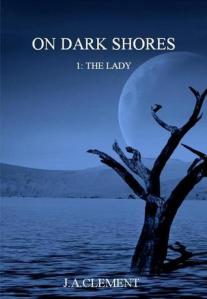
22. On Dark Shores 1: The Lady by J.A. Clement

Published in 2011 by Weasel Green Press.

“For a time, a countless time, there had been nothing more than ceaseless water, stinging bone-sand, and the wind, keening; but suddenly the wind died and the grinding waves smoothed down to uneasy swells. Sounds whispered over the unquiet waters like a chanting of spells; at first they held no more meaning than the mourning wind or the hissing sea-spume, but then came a sound that caught and held, like the anchor of a ship.”

Nereia is a resourceful thief, quite likely the best pickpocket that the small, salt-sprayed fishing town of Scarlock has seen. Though bitterly weary of her trade, she perseveres for the welfare of her sweetly trusting younger sister, Mary. Orphaned since Mary’s infancy, both girls live uneasily in thrall to Copeland, a small-time shady businessman with big-time aspirations, in the acquisition of which he intends to involve Nereia, whether she willingly consents or no. Bolstered by his stoic bodyguard heavy, Blakey, Copeland proves himself distressingly capable of meting out punishment to those who would liberate themselves from his iron grip of control. Despite her prior knowledge of this, Nereia cannot help but make a desperate bid for freedom. In so doing, she pits her gritty resilience against Copeland’s well-crafted cruelty. The quietly slumbering village that witnesses their struggle, and the startling events wrought of its consequences, may well hold more time-brined secrets than its shuttered windows and sea-slick walkways suggest.

Reading the expository opening paragraphs of On Dark Shores 1: The Lady prompted my best hopes for a gracefully constructed and fertilely imagined creative landscape. In these lines, we are introduced to the cast’s main players not by name, but through their dreams, all of which are uneasy, tempest-tossed. Tidings are being washed ashore which will bode ill, we are given to understand, and this hinting at future upheaval is admirably conveyed through Clement’s subtle associations of geographical tumult with individual distress. It is evident that we are reading the work of someone who enjoys implementing literary ornamentation, someone who is mindful of the importance of strongly crafted situations, and equally worthy characters to populate them.

That being established, however, the novel lacks a certain evenness of successful storytelling. There are beautiful, glowing passages, to be sure, but there are also areas which appear to have missed a similar application of consistent, dedicated layering. Much of the novel’s narration is dependent on third-person accounts of events, which provides the writer with a broad canvas for perspectives. Given the number of personages to whose inner thoughts we are privy, the potential richness available from multiple non-omniscient narrative seems only hinted at in promising glimpses, without ever truly being deeply sustained.

Reading Clement’s depictions of the natural terrain of her novel offers the surest marker of appreciation for her descriptive prowess. The polish and gleam in her lines often shines most brightly when she writes about the sea (which, given the title of the series, might be intentionally done, or not.) For instance, it would be difficult to savour the following:

“The drizzle had stopped, but the light was failing across the restless sea; the smoothed steel swells were growing wind-tipped and wild with hissing spray.”

and then declaim Clement as talentless; quite the contrary. If she were a consistently uninspiring, yawn-soliciting producer of paltry prose, that would render this review short and dismissive. The difficulty lies in aligning her bountiful caverns of gorgeous writing with her other fictive terrain that is decidedly less lush. Much of the dramatically-infused dialogue featured in character altercations is less riveting than it could be; this is not to suggest that the author ought to puppeteer her players into uttering phrases only as she would say them. The beauty of dialogue (and third-person limited narration alike) lies in allowing an imperfect, biased, disjointed accounting of things; yet without authorial polish and poise, neither scenario nor character appears in their intentional (and thus convincing) lack of lustre. Instead, the writing suffers; the writing appears unmade, neglected, merely patched up with good intentions and talented flourishes, not soundly caulked through in an expert’s hand.

I do not suggest that there aren’t gems to be unearthed in this first installment of the On Dark Shores series; there are. Previously mentioned is Clement’s proficient sculpting of the geographical vistas of her story; the land and sea speak to us as convincingly as Scarlock’s residents and visitors, at times, perhaps more so. Among the highlights of narrative lie expository snippets from townsfolk who aren’t crucial to the machinations of the main plotline (or are they?) such as Niccolo, the fisherman who, early on, provides a piece of fateful information, and spends the rest of the story accounting to himself for its unintended results. Another minor character who prompts intrigued speculation is the proprietress of the local brothel, referred to enigmatically as Madam. Her past is storied, checkered with less than savoury happenings, and if she becomes a central figure in the events of the series’ next installment, I sense that it will be all for the good. Do not be surprised if you find yourself yearning for more revelations concerning the mystical mother of the Shantari and her monumental upcoming journey. Hungering for elucidation on the second novel’s skeletal premises, beckoning beyond our reach, is an excellent effect engendered by a first-part installment, but not if it comes at the risk of souring or, worse, sapping our interest in the events of the book currently in our hands.

Clement does a formidable job of constructing a world outside of the primary events of the novel; this holds its own drawbacks as well as delights. Often, the concerns and preoccupations of the fringe characters are more compelling than the principal ones. Nereia herself is the most glaring disappointment. She possesses all the requisite building blocks for Clement to create a rollickingly outstanding heroine. Instead, she wanders through the plot’s progression (which is less haphazard and more sketchily dubious, reading as though telling segments of it had been left on the cutting floor) with spirited gumption, certainly, but without the visible progress necessary to substantiate her full self. By this I mean that she owns enough moxy and fortitude to establish her as a warrioress worth our time, without sufficient context-crafting, without the heady, darkly glowing internal monologues and stream of consciousness narration that would have furnaced her fighter’s tale so convincingly.

On Dark Shores 1: The Lady tips itself out of favour by anchoring its plotline with a forcibly forward slant towards the remaining two books in the series, not allowing for the bountiful breathing space to truly come into its own. Its gracious writing style, dedication to fleshing out particular characters and literarily-cast foundation recommend it; its incoherency, implausibility of certain situations and disjointedness make one hope for a far more spectacular sequel. I do hope for it. There is brilliance in this authoress’ dusky world of wailing wind and water…muted, perhaps, but visibly gleaming all the same.

J.A. Clement’s engaging website, Wandering on Dark Shores, features comprehensive updates on her writing process and plans for the full series, as well as a host of purchase links for the first novel. You can also follow her on Twitter, here.

A free electronic copy of this novel was provided by J.A. Clement for review. The opinions expressed in this review are entirely my own, and are not influenced by her generous gift of gratuitous literature.

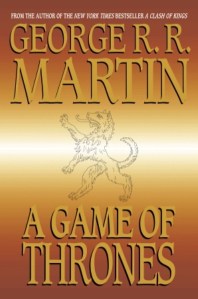
21. A Game of Thrones by George R.R. Martin

Published in 1996. This Edition: Bantam Dell Random House, 2011.

Winner of the Locus Award for Best Fantasy Novel, 1997.

Shortlisted for the Nebula Award for Best Novel, 1997.

Shortlisted for the World Fantasy Award for Best Novel, 1997.

“Wind and words. We are only human, and the gods have fashioned us for love. That is our great glory, and our great tragedy.”

We’re not in Middle Earth any more, baby.

Don’t get me wrong — you’d be hard-pressed to find a more earnest Tolkenian stalwart than your humble reviewer. I begin with Tolkien, not to disparage or dignify Martin by comparison, but to posit that both men have crafted worlds beyond measurable value in the genre of adult fantasy.  A Game of Thrones, first in the A Song of Ice and Fire saga (and here is a series that deserves such a title, not other current pretenders that feature incandescent undead and perpetually blue-jeaned werelings), is worthy of a place on the loftiest pedestal you polish for your high fantasy, for reasons both dirty and divine.

Winter is coming. These are the the watchwords of House Stark, proud and patrician defenders of the North of Westeros and rulers of Winterfell, its ancient castle fortress. Presided over by principled Eddard Stark, his loyal wife Catelyn and their five children, Winterfell enjoys a lull of peace before the arrival of Eddard’s best friend, the King of Westeros’s Seven Kingdoms, Robert, who presses the former into becoming his ‘hand’, his second in command and principal advisor, to rule at his side in King’s Landing, many leagues south of Winterfell. Eddard’s beloved bastard son, Jon Snow, seeks his own livelihood elsewhere, denied the companionship and security of a permanent place in the Stark familiarity he’s known his entire fifteen years. He rides even further north, to fringes of civilization and the Wall, a massive ice bulwark spanning 300 feet long and towering 700 feet tall, hewn by Brandon the Builder to defend Westeros against the threat of wild creatures both known and beyond human imagination. Jon “takes the black”, swearing his fealty to the Night’s Watch, a band of ebony-clad soldiers charged with the protection of the Wall against every possible threat. Meanwhile, across the narrow sea from Westeros, wily, dispossesed Viserys Targaryen, last male survivor of the royal line King Robert slew, dreams of nothing but regaining the crown he deems his birthright. He sells his young sister Daenerys in marriage to fierce Dothraki warlord, Khal Drogo, in hopes of attaining a vast legion of horsemen to recapture the kingship at his command. These concerns involve the three-pronged storyline of A Game of Thrones, but they are a mere glimmer behind the bedezined curtain of plots, subplots, and tributaries of storylines stemming from even these.

Two major criticisms I’ve read of A Game of Thrones is that it’s appallingly overconcerned with the sociopolitical intrigues of the monied elite, as well as guilty of favouring a decidedly misogynistic slant. Given that the titular game refers to an ongoing series of intellectual manipulations and sleight of hand coercions for ruling power, I cannot see how the selfsame intrigues would not come to the fore. It is worth noting that it is not always the monied elite players of the game who yearn for power, however. All have aspirations, and the aspirations of all are keenly documented, not merely those of royal bloodlines. The concerns of the peasantry, the commonfolk, the ‘little people’, are admittedly less prevalent, but they do occur. They oil the machinery of the grand conquests; they litter the battlefields of bad decisions. The fact that they do not speak as much surely says a great deal about them, the position they hold in society, and the stratification of society itself. When they do speak, which is not, it ought be noted, a rare occurrence, merely a less frequent one, it is always believably, and in service of plot strengthening, theme reinforcement and general expository goodness.

As for the lack of strong female characters in the novel, yes, there are several less of them than their male counterparts. George R. R. Martin’s prerogative in writing of more men in positions of power than women can hardly be called a misogynist’s work, if this is the sort of creative world he wishes to establish. Refusal to read the book on these grounds seems like lazy feminist pointscoring that owns no basis in logical assertion: would a novel densely populated with women warriors and leaders offend the rights of men? I’m all for reading about the ascent of gorgeously-sculpted women in literature and life, and the stories of Daenerys Targaryen and Arya Stark are well worth the stories of ten less lovingly-limned leading ladies.

A densely worded world needs vibrant, achingly alive characters to populate it, else all its lavish description has been for naught. Martin moulds such figures in abundance, and charges them with the telling of the thousand and one tales within these pages. The narration of the novel is entrusted to eight principal players (excluding the hair-raising prologue, delivered to us by minor figure, Will). They are:

  • Eddard Stark, Lord of Winterfell, Hand of the King of the Seven Kingdoms, a man burdened beneath the bastion of being almost entirely too good;
  • Catelyn Stark, Eddard’s loving wife, supportive of his every decision, save his emotional proximity to his bastard son;
  • Jon Snow, newly-appointed man of the Night’s Watch, who chose to serve for honour but finds the reality decidedly more grim;
  • Sansa Stark, Eddard and Catelyn’s eldest daughter, exceedingly fair of face and soft of courage, the polar opposite of her sister;
  • Arya Stark, as steel-tempered as any aspiring knight, and more than many, no less resolute than her brother;
  • Bran Stark, whose dreams hold far more than the fodder of mere daylight imaginings;
  • Cersei Lannister, radiant wife of King Robert, who is more than passing attached to her equally lovely twin brother, Jaime;
  • Tyrion Lannister, also called The Imp, younger brother of Cersei and Jaime, and, as he himself would be quick to point out to you, a dwarf.

The utter lack of authorial omniscience in the narration makes each account from each character sing all the livelier. One becomes so engrossed in the tale told, for instance, in Tyrion’s chapters, which are brimful of well-executed wit, wordplay and self-deprecating humour, that to see them come to a close often elicits a frown of annoyance. Switching from Tyrion’s narration to Arya’s, especially after being left on the crest of a dramatic, jaw-dropping development, or a particularly arch comment from The Imp, seems frustrating for the first page, until Arya’s pugilistic perseverance entirely wins us over. We part ways with her at the end of each of her chapters, musing ‘ah, if I only had a daughter/sister like that… why can’t I be more like Arya, anyway?’

It is in this respect that Martin’s cast reminds me of Tolkien’s: for the archetypal luminescence by which readers best enjoy identifying themselves. There is no underdog who can read Tyrion’s half-bitter, half-humoured introspectives without at least a tinge of knowingness, just as no mother, made frantic with desperate love for her children, can deny that they, like Catelyn Stark, would not cut their hands to the quick, to save a slumbering son. The personages within A Game of Thrones could be used to construct a tarot deck of emblematic figures, each character occupying a central or minor slot. What tempers this universal accessibility, however, is that none are drawn with too thick a brush in one overarching quality. Tyrion, for instance, may distinguish himself from the ruthless egoism of House Lannister and his siblings, but his penchant for exquisite enactments of cruelty makes for spectacular reading. Viserys Targaryen rules over his half-crazed compulsions and his little sister with a mercilessly iron fist, but Daenerys remembers him for his passing peaceful jaunts as well, for his quietly hungry boyhood dreams of a better life for them both, in a kingdom across perilous waters. The impression is sustained in nearly everyone we meet in these pages, of a life preceding their appearance in the narration, a life with all its innumerable associations, foibles and moral complexities. Reading characters who are less richly envisioned, less convincingly wrought, will be all the more telling for having read Martin’s, here.

Neither is the folkloric beating heart of the world of Westeros, and all that lies beyond it, treated with any less attention to detail. A Game of Thrones is prefaced by an exquisitely rendered map, pure cartographic delight in the tradition of Tolkien’s own storytelling legacy. There is history in every fireside account, in every mug of ale passed between hands in each tavern of ill repute. There are gods, both old and new, the ancient weirwood deities of the Godswood, beneath whose heart tree Eddard muses for guidance and polishes his greatsword of executioner’s blood; the pristine new gods of the septons and septas, the star spirits that the Dothraki believe to be the fallen dead. The novel is tapestry, a liberal and forceful commingling of belief systems as rich and dense as freshly shed blood, as deep as the darkest magic.

One could do much worse than to wander from Middle Earth into Westeros.

19. Thalo Blue by Jason McIntyre

Published in 2011 by Jason McIntyre.

“The wash turned from yellow to a concentrated orange, one that screamed inside his head. He screamed too, at least he tried to. It came out of the base of his throat more like a stifled call in a windstorm with gravel and dust kicking at the words. It was the staggered, helpless plea of a man who did not know what was going to happen to him, and it ended in a gagging, choking sound as pressure from the stranger’s hands intensified.”

Sebastion Redfield is terrified. If you were embroiled in the precarious circumstances that surround him at the novel’s inception, you would be, too. Ensconced in the quiet lull of a neighbourhood defined by its lack of fanfare, at rest in his parents’ house (in which neither of his parents reside, any longer, for reasons both distinct and conjoined), Sebastion’s equanimity is shattered by the intrusion of a stranger who wants to steal something far more precious than the good china. In the aftermath of the attack, Sebastion aligns himself with the unlikely company of the psychiatrist assigned to his case, Malin Holmsund, in an effort to piece together the shreds of what they know about his assailant. While struggling to connect the identity dots of his mystery marauder, our protagonist learns in startling increments of just how much he stands to lose…and of just how little he can afford to stay still.

I’d wager that Sebastion, or Zeb, which he prefers, isn’t quite like any other leading literary man I’ve read, which I count as a reinforcing strength of this work. Even (or especially) among his peers, he both suffers and benefits from perceiving the world through a synaesthete’s eyes. His sensory and colour-coded interpretation of his natural environment makes for illuminating, oft-revealing reading. As we consider shapes and scenarios in shades and hues through Zeb’s visage, we are often called on to realign our paradigms for basic sight. A man on the cusp of maturity, we witness Zeb’s formation as he grows, through the author’s use of well-placed flashbacks.  Nothing Zeb does or says in his journey towards self-preservation and self-discovery feels off-kilter, perhaps because we have been allowed to take the mark of him at every significant stage of his being. The impression of a life fully formed is what remains, once the last page of the novel has been turned. We feel that we have lived with our leading man, observing the peculiar palette that has been his life up until that very moment, and our reading is all the richer for the sense of this credible roundedness.

McIntyre’s other characters, those who are both pivotal and secondary to the successful engineering of the novel, are laudably represented. Not one of them is delivered gracelessly; not one is packaged without attention to detail. If you find yourself feeling tender stirrings of sympathy for someone in these pages who ought, logically, to defy them, be not alarmed. Villainous hearts are susceptible to tenderness and contrition. Quietly submissive souls spark forth in episodes of rage. Reading Thalo Blue is a timely reminder of the complexity of even those dramatis personae whom we’d like to easily slot into pre-ordered roles.

Good writing does not necessarily a good novel make, but Jason McIntyre is a good writer. When we read, we allow the author an unshakeable level of dominion over our senses—if the writer does his work well, we won’t want to be shaken. It took me no more than a handful of chapters to feel confident that I was in no danger of decrying foul fiction, and knowing this holds its own kind of quiet reassurance. What I loved best about McIntyre’s prose were moments when it lent itself to a sage series of omniscient narrative contemplations, such as this one, in which Zeb has an illuminating early conversation with his lover, Caeli.

“They talked about bigger things mostly, things beyond themselves but instead within the scope of the world at large. And amongst those monstrous topics, they talked about the little things, like the skin on the tops of their coffees, and the sound the soles of their shoes made on gravel as they walked. The hours were consumed.”

Anyone who’s traded silence for the earnestly raging river of this brand of discussion will instantly nod with acknowledgement, and appreciation of the skill with which it’s transcribed. I paused the longest to think of the following offering, which, in the interest of maintaining intrigue, may or may not be about Caeli, too.

“Friends and lovers speak in tongues. They use a language that no one else knows, one that they have invented for themselves only. It’s a secret handshake that either lives forever–or dies, carried off when one of its creators leaves for good.”

In the margins of my notebook, there’s a scribbled thought about this, written moments after I read those lines for the first time. “I know this,” it says. “I’ve lived it. I’ve been the one to take the language away, and I’ve had it taken from me, too.”

I do not suggest that all of McIntyre’s prose moved me equally, but it would be injurious to a writer, I think, if you demanded that each of their lines made you weep at its beauty. Some of the expository paragraphs hold a certain staid predictability, and some of the dialogue, particularly the interchanges surrounding criminal investigations, gave me, I confess, less pleasurable pause. Nonetheless, the overall effect is one of respectable, considered writing, and there is nothing to lament, stylistically speaking.

Opponents of a non-linear plot construction will find Thalo Blue nauseating. As a proponent of experimentation in all areas of literary craft, I was pleased to entangle myself in the meandering, converging threads of Zeb’s life. The reader will find herself thrust a decade backwards, sitting with Zeb and his father on the latter’s sickbed, yanked to the cosily clandestine scene of quite a different boudoir that Zeb shares with Caeli, pushed through the swinging doors on an ice-slicked collision. If the deciphering of which events fit where, and how, makes one tetchy, then I propose more careful reading. The ways in which the novel proceeds will reward a sensitive reader, and stymie one accustomed to a ‘colour by numbers’ approach to their fiction.

This novel earns its chops based on a neat list of accomplishments. Principal among these is its sophisticated residence in a genre of writing about which I am typically leery. Its discernible nicks in an otherwise glowing patina are happily worth the price of admission. A suspense thriller edged with nuances of psychological investigation, Thalo Blue is as much an examination of human behaviour beneath pressure as it is a bildungsroman with bite. If reading it prompts you to search out more of McIntyre’s work, then we’re in the same synaesthete’s landscape of brightly-hued anticipation.

Details on Jason McIntyre’s publications, including Thalo Blue, as well as direct purchase links are accessible from his Amazon.com author page, here. You can also peruse his personal website, The Farthest Reaches, here, where there are links to his Twitter and Facebook pages.

A free electronic copy of this novel was provided by Jason McIntyre for review. The opinions expressed in this review are entirely my own, and are not influenced by his generous gift of gratuitous literature.

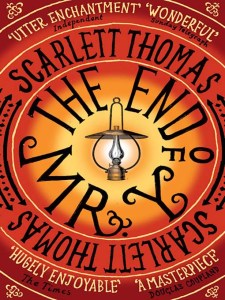
18. The End of Mr. Y by Scarlett Thomas

Published in 2006 by Mariner Books.

Longlisted for the Orange Prize for Fiction in 2008.

“So if we’re all quarks and electrons …” he begins.

What?”

We could make love and it would be nothing more than quarks and electrons rubbing together.”

Better than that,” I say. “Nothing really ‘rubs together’ in the microscopic world. Matter never really touches other matter, so we could make love without any of our atoms touching at all. Remember that electrons sit on the outside of atoms, repelling other electrons. So we could make love and actually repel each other at the same time.”

Many a bibliophile has been quoted as saying, ‘Give me books before bread!’, but Ariel Manto’s acquisition of an ultra-rare 19th century tome literally lands her near to poverty. Yet, for a copy of The End of Mr. Y, a literary work with which Ariel is obsessed, the decision is effortless. The fact that everyone who has read the book seems to have disappeared (including Ariel’s Ph.D. advisor, who once gave an academic talk on this ‘curse’) does not dissuade her. Once she reads The End of Mr. Y, she is left with more questions than answers, and a burning desire to follow the journey of Mr. Y himself. Her own journey, replicated on the steps that he—and Ariel believes, her absent advisor—took, sends her spiralling into an alternative realm of reality, called the Troposphere, in which she is able to spatially manoeuvre by piggybacking on the thoughts of others. However, Ariel soon realizes that (a) not all in the Troposphere is as it seems, and (b) she is not alone in her mindsurfing odyssey.

It is hard to figure out whether or not Ariel Manto deserves the reader’s respect. At several points in The End of Mr. Y, attempting to love Ariel can feel like an effort in loving the most (under)doggedly dismal parts of ourselves, the ones we feed with cheap alcohol, too many cigarettes and a lifetime’s dingy disappointments. This doesn’t mean that the novel’s protagonist is poorly-drawn; quite the contrary—she shines by her very lack of lustre. Insofar as a character’s convincingly-rendered moments of unlikeability make her eminently more likeable, Ariel Manto’s a gem.

Emblazoned across the cover of the book is Jonathan Coe‘s assertion that you’ll finish The End of Mr. Y “a cleverer person than when you started.” Unless you are well-versed in quantum physics (and are, in fact, formidably read across the sciences), then this is likely to be true. The novel strikes a deft balance between those things that scientific research has already established to be beyond contention, and those things over which it still debates and troubleshoots.

This is no obvious science textbook distilled into fiction, however, for which we may be glad. Thomas is just as concerned about portraying the ways in which faith coalesces or collides with rational data and quantifiable proof. For example, the concept of multiverses, and the validity of time travel in and among these, is crucial to the novel’s structure. Attention is also paid to communication, to language and speech, to literature and expression, the conduits that determine how we interface with the world, and the reasons why what we perceive to be real may or may not be so.

We wrestle with the grey space between absolute conviction and staggering disbelief, as Ariel does. We watch her mind absorb new ideas, new frameworks for comprehension, and while observing those expand, alter, shift dramatically or incrementally as the novel progresses, we realize we’re hooked. At her lowest ebb, Ariel asks herself whether or not she would do it all again: to have forsaken so much, including a tangible future with a mysteriously familiar man, in search of knowledge, and she knows that she would. Fellow learning junkies will admire the eminently accessible, academic chops of The End of Mr. Y. It’s like summer reading for the unabashedly nerdy logophile and bookish scientist, both.

Reading The End of Mr. Y led me to contemplate the successful sell of gimmick-harnessed literature, which I mean in the most innocuous way possible. The ‘go-thou-no-further’ approach has worked admirably in this novel, as both strategy and context. Thomas prompts us to peer beyond each tarnished veil, which we do, each time, without hesitation. (I’d like to challenge at least one person who tells me that they weren’t tempted to conduct the exact experiment that Ariel does, since I’m reasonably certain they’d be lying.) Telling people not to do something, in the hope that they will proceed to do it, may seem like the easiest sell in literature, as in life. On the contrary, this technique has been so often and so ill-employed, that when it functions in the hands of a talented writer, we tend to take notice. Some of the success of books like these, and this, surely hinge on the adroit manipulation of that very concept.

The author engineers Ariel’s dalliances in the Troposphere (i.e. the parallel realm of thought in which she must mindsurf to progress) in fine and credible style. These passages of the novel often feel to be the most poised and crisply detailed. Whether Ariel is trespassing on the mind of a fundamentally insecure teenager, or that of her unlucky, morose neighbour, or the shadowy agents who’re tracking her down, each windowed interlude is a miniature showcasing of the author’s talent for capturing unique voices.

The end of The End of Mr. Y is unambiguous and indefinite, all at once. Odds are you’ll loathe it, or beam in satisfaction as you close the back cover. Either way, few contemporary novels astutely define “conversation piece” so well as this one. Be they silly talks, long-reaching rambles or heated dialogues, if you don’t have much to discuss, then consider that you just might have left your critical mind in another plane of existence.

This is the second book I’ve read and reviewed on my personal reading list (which you can see here) for The Bookette’s British Book Challenge 2011.

17. Remarkable Creatures by Tracy Chevalier

Published in 2009. This Edition: HarperCollins, 2010.

Good first sentences can be utterly damning. They allude to the possibility of reading something that will spellbind us, something that, if it is grotesque, is so sublimely grotesque that we are rather glad we lost our lunch over it. (I can only imagine the Marquis de Sade grinning in glee at a well-heeled dowager’s protestation that The 120 Days of Sodom sent her scampering to church for shrift.) If the best part of a book, however, is its opening sentence, that seems to be a cowardly act—to sculpt nothing fine, save one or two arresting lines. When I opened Remarkable Creatures, therefore, and read

“Lightning has struck me all my life. Just once was it real.”

I was wary.

Civilly banished from their London home to the seaside town of Lyme, the unwed and not-particularly attractive Philpot sisters gradually learn to sift out what happiness they can, in their considerably reduced circumstances. Of the three, it is stoic Elizabeth who is drawn to beachcombing for fossils, an exercise she initially selects to occupy her days, free of the male attention she only occasionally craves. As she swiftly becomes enamoured of her fossil collection, particularly of the ancient fish skeletons she hoards, Elizabeth encounters young Mary Anning, the working-class daughter of Lyme’s debt-swamped cabinetmaker. A talented ‘hunter’ (in this context, fossil locator, gatherer and preserver) Mary allows Elizabeth into her own life, in its frequently impoverished yet deeply resilient reality. The two women grow up both alongside and apart from each other, and as their friendship is tested, severely, by bitter jealousy, by the arbitrary hand that assigns social class and station, and by one irresistible man, Elizabeth and Mary learn how much they can both withstand, and what causes them to shatter under pressure.

I’ve not read any other of Chevalier’s books, but after finishing Remarkable Creatures, I acquainted myself with the plot and concerns of each. I feel reasonably justified in remarking that the writer’s forté seems to be in her marriage of engrossing historical situations with finely considered characters. Though I had not heard of them before this reading, Mary Anning and Elizabeth Philpot were real women. It is fascinating to contemplate how much of their lives, as presented to us on Chevalier’s pages, are directly sown from the long hand of history, and how much is invented, conjured out of the ether, to add pathos, verve, humour. Both Mary and Elizabeth are deeply likeable, frustrating and varied characters—no less than human renditions, in short, and we find ourselves caring for their everyday struggles, as well as their protracted longings, sooner than we might have expected. Much historical fiction too often relies on the richness of the situation it attempts to reanimate with prose—The Great Depression, the rise and fall of the Roman empire, the history entire of a small island—that it falters in its investment in people, in breathing life into the past through the vessels that are best suited to carry it—the inhabitants of the work, be they living or purely ghostlike.

It is maddening to read of the circumstances of women in this early 19th century British society, and worse yet to contemplate that the injustices endured by Mary, Elizabeth and others of their sex are still endured, oft-unrecognized, not given the illumination in art or sound policy-making, nearly as much as they warrant. Mary’s loneliness, denied a life of comfortable indulgence, with the financial prospects it affords, is starkly illustrated, in a conversation with the person who has captured and bewildered her heart.

“My life led up to that moment, then led away again, like the tide making its highest mark on the beach and then retreating.

‘Everything is so big and old and far away,’ I said, sitting up with the force of it. ‘God help me, for it does scare me.’

‘There is no need to fear,’ he said, ‘for you are here with me.’

‘Only now,’ I said. ‘Just for this moment, and then I will be alone again in the world. It is hard when there’s no one to hold on to.’

He had no answer to that, and I knew he never would.”

Chevalier’s depiction of the life and times in which the novel is set strikes one as being infused with accuracy, from the recollections of past-times, superstitions, customs and everyday minutiae. We feel as though we’ve wandered onto the set, perhaps, of a BBC production of  a period drama, replete with narrow, cobblestoned streets, home-brewed bottles of elderflower champagne, petticoats and workhouse-penury alike. Natural landscape is no less vividly portrayed than the man-made structures of the novel. The beach, for example, is its own character, in every right—it’s unforgiving nature, its mystery, secrecy, the pleasure of its unexpected treasures, and the peril of its capricious cruelties. Anyone who loves the sea deeply cannot help but be moved by Chevalier’s design of it, as well as appreciate the relevance of all that the ocean offers to Mary and Elizabeth, both tangibly and soulfully.

What I loved best about reading Remarkable Creatures is that it did not challenge me. Surely, this sounds like an extraordinary contradiction, but I think one might catch one’s death of illumination-depression, sipping from an eternal literary font of Kafkas, and Joyces. The read was absorbing without being daunting, entertaining without meriting a single furrow of my brow, and if not particularly earthshattering, then distinctly eye-opening. Otherwise, I would not be purposing to read more on the life of Mary Anning, and other women of the 19th century who have been overlooked (until now) in science, engineering and other heretofore-considered ‘masculine’ fields. This, to my mind, is the premier advantage of well-done historical fiction. It transports us, not simply during the hours in which we read it, but when we have turned the last page, then seek knowledge, context and more reading on that era, that set of unique circumstances, elsewhere. Remarkable Creatures has done this, and therefore, perhaps it is unfair to say that it has not challenged me. It has, after all, challenged me to learn more—and is this not one of the best pursuits?

Finally, it is worth noting that the last line of Remarkable Creatures is as good as its first – maybe it’s a little better. I’m looking forward to hearing whether or not you concur.

15. The Monsters of Templeton by Lauren Groff

Published in 2008 by Voice, an imprint of Hyperion Books.

Shortlisted for the Orange Award for New Writers, 2008.

Willie Upton returns to her idyllic Templeton homestead in disgrace, on the very day that a colossal, antediluvian monster’s carcass is dredged from the depths of the town’s lake, Glimmerglass. Pregnant with the child of her (married) thesis advisor, Willie is thrown another bombshell by her repentant hippie-turned-Baptist mother, Vivienne: Willie’s father is not the random, faceless commune-dweller she’d previously been led to believe, but a living, breathing Templetonian man—alive, well and in their midst. As Willie’s return to her postcard-worthy homestead turns from mere refuge to sleuthing around for clues to her mystery dad’s identity, she learns far more than she bargained, about the living and the dead, about men and monsters alike.

Have you ever bought a book, or picked one from a library shelf, based on the recommendation of another writer, on its jacket? Such was the case with my acquisition of The Monsters of Templeton. The curious thing is this: the writerly acclamation that drew me in was proffered by a master of contemporary fiction, whose work I’ve not yet read. Here’s what he had to say.

“Lauren Groff’s debut novel, The Monsters of Templeton, is everything a reader might have expected from this gifted writer, and more…There are monsters, murders, bastards, and ne’er-do-wells almost without number. I was sorry to see this rich and wonderful novel come to an end.”

What The Monsters of Templeton accomplishes best is its portrayal of another world. Groff’s hand is loving – this place is crafted on the bones and imagination of a town beloved to the author herself. Though we are provided with a map of the town at the novel’s beginning, I daresay that one is not needed. With an eye for architectural detail and geographical precision, the author enables us to trace out the Running Buds’ Route in our sneakers. We, too, will wish to pelt out of the stuffy confines of Franklin House, hurling ourselves into the dually secretive and embracing arms of Glimmerglass Lake. Just as Willie does, we’ll sit on the steps of the town library with the boy from our childhood, who manages to amuse and amaze us with perplexing certainty—and we, too, will be tempted not to leave. There are few, if any, falterings in the construction of space and place in this book, and this serves to reward the telling of the tale itself, making it gleam all the brighter.

As for the story, it is far from singular. Indeed, many yarns crave the attention of being the finest-spun, and this becomes a balancing act in which Groff occasionally slips. For instance, the sideline concerns of Willie’s idiosyncratic and ailing college bestie, Clarissa (with Clarissa’s long-suffering husband Sully, in tow) strike out, in terms of holding interest, far more than they score points for emotional appeal. I read most of Willie and Clarissa’s expected fallings-out (and charming recoveries) with thinly veiled impatience, eager to return to finer exposition.

Thankfully, of fine and varied exposition, there is no shortage—a variety of presentation woos us to Groff’s creative skill. Most of the alternative storytelling methods come to us through Willie’s research into her paternal parentage. The documents she uncovers often threaten to overpower our protagonist’s own voice in their desire to be told. The ghosts are alive and strong in The Monsters of Templeton, and for fiction that invokes the past in any meaningful way, this is grand. Willie feels the pull of her ancestry just as deeply, on reading the journal of Sarah Franklin Temple Upton (an abridged version of which is presented to us). After her all-nighter of frenzied absorption, Willie reflects.

“All that night, I read three hundred pages of wildness in my great-grandmother’s tight sepia script, and in the morning it was as if Templeton had fallen under an enchantment…I felt almost as if Sarah’s Templeton were layered atop my own; as if a sheet of tracing paper had settled upon the rooftops of my village…I could feel the pull of the ghosts in the lake, knew that if I looked out onto the lawn those terrible private people of whom Sarah spoke would be standing there, in military lines all the way down the lawn, all looking up into my window, deep holes for eyes.”

In addition to the increasingly frantic journal entries of Sarah Franklin Temple Upton, we are invited to peruse several other artefacts that Willie unearths in her bid for father-discovery:

♣ a host of revealingly-captioned portraits and photographs

♣ the almost literally poisoned-pen correspondence of two treacherously disparate women (my favourite, naturally)

♣ the tales of a long-gone people, from their own tongues (including a spectacular envisioning of some significant days in the life of James Fenimore Cooper’s titular character from The Last of the Mohicans)

♣ a family tree, curated by Willie, that grows alongside her own fleshing-out of her curious and captivating lineage (This reminded me of Faith Jackson, the protagonist of Andrea Levy’s Fruit of the Lemon [reviewed here] and her own incrementally burgeoning family tree, documented in similar fashion.)

The Monsters of Templeton is a first novel of remarkable ambition—that it hardly falters in translating this ambition into nigh-impeccable readability is laudable. Still… and still, alas, the ambition moves me more than its overall execution. There is too much discomfiting distance between what I loved:

♣ Groff’s startlingly beautiful segments of great writing

♣ the lavish attention to detail and sincerity in building Templeton from air and inspiration

♣ Ahhh, the monster (more on that denizen of the Glimmerglass deep, anon)

and what left me cold:

♣ most of the Clarissa and Sully interludes

♣ evident unbridged lacunae betwixt Groff’s gorgeous prose and Groff’s okay prose, since the former is so startlingly good that it renders the latter all-the-duller

♣ uneasy diction, usually to do with too-muchness: being overfed on Turkish Delight still prompts nausea, despite the delicious path there

For all this, my final impressions attached to this first reading are both haunting and enduring. Even if there were no other points to recommend it, there would be The Monster, our aquatic acquaintance, who is rendered in Groff’s finest, most poetic prose. We meet it in its death, yet we feel that we have understood something essential of its life, and the ways in which it lived. We feel that we have held something of it in our hands, and to our hearts, at the novel’s close.

The Monsters of Templeton reminds us of the distinctions we make between what is monstrous, and what is truly fair… and how awfully wrong even the best-intentioned of us tend to be.