20. And Then Her Mouth by Portia Klee Jordan

[This is a review of an erotica collection. It should not be read by anyone who is too young to read erotica.]

Published in 2010 by Xynobooks.

I’ve long been of the opinion that there ought to be some measure of subtlety in the writing of sex. A panting slather of erogenous zone names, rubbed together on the page, leaves me distinctly… dry. A preponderance of “bulging, turgid members” meeting “quiveringly helpless mounds” leads to a laziness of craft—just because the parts fit together doesn’t mean a writer need mash them in textually ’til they’re sore, and we’re bored. Portia Klee Jordan’s audacious, poetic and elegantly perverse collection, And Then Her Mouth, works toe-curlingly well for me because it doesn’t aim to evade the subtle artistry of good writing. It dives into it, gaping-mawed, and sucks us in—and we go; willingly, we go.

A principal selling point of this gathering of dirty divulgences is that they’re not a precocious tween’s teeth-cutting panty twisters (though you might stumble across at least one ingenue ripe for the picking among these pages). These are eighteen investigations of a persistently purple desire. The word ‘purple’ comes at us at many a turn in these tales – lurking ’round one too many a corner, for my liking. Still, if it best expresses, for Jordan, a particular aura, a no holds barred zone of throbbing openness, then a few too many purples are a miserly toll, spare change you won’t miss as you speed along this open highway of well-weathered pleasure-seekers. One gets the impression, while reading, of lives dipped deeply in lust and self-examination alike, which flavours each vignette with intensity, fire and fever, meriting belief and arousal.  Whether these dirty stories are drawn from the velvet of the author’s own beaded bag of tricks, or not, she is owed a nod of approval for sparing us staid contrivances and sophomoric storylines.

Moral ambiguity makes the sensory ravaging you’re offered from each tale all the sweeter. You’re liable to find a kink for each sexual bent in Jordan’s repertoire, delivered sans ethical interference. In “Pretty Me”, following a nerve-humming exchange with Marcel the drag queen, formerly staid Patricia wrangles a cross-dressing, gender-torquing fetish out of her husband Gerald, with the aid of electrical tape, fishnets and theatrically imposed cruelty. The entirety of “III. Onomatopeter” is a single wicked sentence in celestially sordid punning. “II. Statutory Grape” plies us with the stream of consciousness hunger of a thirty year old observer for a girl whose “breasts are so new they’re surprised to be there”. Far less is on the menu than one might imagine, in “Eat Me”, the concluding piece of the collection, in which Melanie and the narrator have earned their absent gag reflexes for reasons culinary and otherwise. The author keeps scales of reckoning, blind or otherwise, out of her telling. The result: we get to decide how we feel about each scenario, and the freedom of this safe, sultry space is in itself back-archingly good.

My favourite of the eighteen (eighteen being such a primed number for this collection, in quietly declarative ways: the ‘official’ threshold for sexual release, versus the organic compulsion to explore the body/bodies of others much, much earlier than that) is unabashedly, hands-down, skirts-up, “Summer is Cold Here, Linnea”. Beautiful lesbian Dianna finds ways to thaw the nights of her work-imposed Alaskan chill, and intersperses her anatomical explorations with thoughtful missives to her lover Linnea, who (we assume) languishes for her, back home. The narrative cleaves cleanly down a line of epistolary versus confessional styles, rethreading the chasm between the couple, while emphasizing how much grey space there is between what they know about each other, and what they imagine to be true. As Jordan serves this wryly reflective tale that twists into us by turns both tender and intemperate, we marvel at the supple flow of her prose, the authority of her character construction. The introduction of Dianna establishes a plausible portrait of a flesh and blood Sapphist, not a cardboard and estrogen The L Word placeholder.

“Dianna loved women. She loved them. Her personal attachments, the emotional depth requisite for any long-term, soul-serving relationship, these were always with people of her own gender. She knelt down at the altar of worship and buried her mouth overflowing with the physical manifestation of love and awe in the tufted, fleshy crevices of the sex of the Goddess, the Mother of Us All, with whole-hearted, unshaken devotion. And sometimes she had sex with men.”

In the length of time it takes to share a clove cigarette with a dark-eyed stranger, “Summer is Cold Here, Linnea” breathes potent draughts of queer identity interrogation into us, and sweetens their consideration with two artfully lubricated sexual forays. A tour de force in miniature, it’ll leave you just as reflective as ravaged, and solicit many a damp-fingered reread. If you deem the last line of the story to be anything other than the epitome of tongue in cheek wordcrafting, plotwrangling excellence, then let me know—we’re ripe for a debate.

The poetics of Jordan’s pornography establish her as a sensual raconteuse well worth the consideration of the refined reader, the one who’s bookmarked special tracts in his sexual textbooks, the one who’d wager that she knows a thing or three thousand about fiction that enlivens, thickens the breathing, alerts the pulse. These lines from ‘Manipulation, Retribution’ display evidence of how beauteously the author connects our excursions into eros with her deft mappings of human emotion.

“The sounds coming out of my mouth aren’t conscious, aren’t really my own; they are from some other place, some Lovecraftian pit of tentacled grief. I give voice to a sorrow so great it has no name, to a feeling of loss so yawning and empty that from the first it sent us back shaking and looking over our shoulders to the warm cave fire, to rub shoulders with the others of our kind and turn our backs on our understanding of mortality.”

We glean these grief-soaked revelations from the story’s protagonist as he lies across his homemade sawhorse, abandoning his body to a brutal cropping from two courtesans, in the dungeon he and his late lover Martika made, together. ‘Manipulation, Retribution’ is as much a submissive’s playground of utter delight as it is a wise, emotionally spent man’s retrospective on all the things he’s hewn, and all the losses he’s incurred, through living and loving, and the well-stretched canvas he’s made of his life, in the name of non-conventional lust.

If And Then Her Mouth swiftly becomes your 2011 Bible for all things decidedly non-chaste, do let me know. If you’ve been reading those colour-by-numbers guides to literary kinkiness, consider this study in sex and the human psyche your graduation certificate… but please, try not to smear it. Unless, of course, that’s your thing. Portia Klee Jordan wouldn’t judge, I daresay, and neither will I.

You can purchase And Then Her Mouth directly from Portia Klee Jordan’s publisher, Xynobooks, as well as peruse their collection of archived and forthcoming titles.

A free electronic copy of this novel was provided by Nick Maloich at Xynobooks for review. The opinions expressed in this review are entirely my own, and are not influenced by his generous gift of gratuitous literature.

19. Thalo Blue by Jason McIntyre

Published in 2011 by Jason McIntyre.

“The wash turned from yellow to a concentrated orange, one that screamed inside his head. He screamed too, at least he tried to. It came out of the base of his throat more like a stifled call in a windstorm with gravel and dust kicking at the words. It was the staggered, helpless plea of a man who did not know what was going to happen to him, and it ended in a gagging, choking sound as pressure from the stranger’s hands intensified.”

Sebastion Redfield is terrified. If you were embroiled in the precarious circumstances that surround him at the novel’s inception, you would be, too. Ensconced in the quiet lull of a neighbourhood defined by its lack of fanfare, at rest in his parents’ house (in which neither of his parents reside, any longer, for reasons both distinct and conjoined), Sebastion’s equanimity is shattered by the intrusion of a stranger who wants to steal something far more precious than the good china. In the aftermath of the attack, Sebastion aligns himself with the unlikely company of the psychiatrist assigned to his case, Malin Holmsund, in an effort to piece together the shreds of what they know about his assailant. While struggling to connect the identity dots of his mystery marauder, our protagonist learns in startling increments of just how much he stands to lose…and of just how little he can afford to stay still.

I’d wager that Sebastion, or Zeb, which he prefers, isn’t quite like any other leading literary man I’ve read, which I count as a reinforcing strength of this work. Even (or especially) among his peers, he both suffers and benefits from perceiving the world through a synaesthete’s eyes. His sensory and colour-coded interpretation of his natural environment makes for illuminating, oft-revealing reading. As we consider shapes and scenarios in shades and hues through Zeb’s visage, we are often called on to realign our paradigms for basic sight. A man on the cusp of maturity, we witness Zeb’s formation as he grows, through the author’s use of well-placed flashbacks.  Nothing Zeb does or says in his journey towards self-preservation and self-discovery feels off-kilter, perhaps because we have been allowed to take the mark of him at every significant stage of his being. The impression of a life fully formed is what remains, once the last page of the novel has been turned. We feel that we have lived with our leading man, observing the peculiar palette that has been his life up until that very moment, and our reading is all the richer for the sense of this credible roundedness.

McIntyre’s other characters, those who are both pivotal and secondary to the successful engineering of the novel, are laudably represented. Not one of them is delivered gracelessly; not one is packaged without attention to detail. If you find yourself feeling tender stirrings of sympathy for someone in these pages who ought, logically, to defy them, be not alarmed. Villainous hearts are susceptible to tenderness and contrition. Quietly submissive souls spark forth in episodes of rage. Reading Thalo Blue is a timely reminder of the complexity of even those dramatis personae whom we’d like to easily slot into pre-ordered roles.

Good writing does not necessarily a good novel make, but Jason McIntyre is a good writer. When we read, we allow the author an unshakeable level of dominion over our senses—if the writer does his work well, we won’t want to be shaken. It took me no more than a handful of chapters to feel confident that I was in no danger of decrying foul fiction, and knowing this holds its own kind of quiet reassurance. What I loved best about McIntyre’s prose were moments when it lent itself to a sage series of omniscient narrative contemplations, such as this one, in which Zeb has an illuminating early conversation with his lover, Caeli.

“They talked about bigger things mostly, things beyond themselves but instead within the scope of the world at large. And amongst those monstrous topics, they talked about the little things, like the skin on the tops of their coffees, and the sound the soles of their shoes made on gravel as they walked. The hours were consumed.”

Anyone who’s traded silence for the earnestly raging river of this brand of discussion will instantly nod with acknowledgement, and appreciation of the skill with which it’s transcribed. I paused the longest to think of the following offering, which, in the interest of maintaining intrigue, may or may not be about Caeli, too.

“Friends and lovers speak in tongues. They use a language that no one else knows, one that they have invented for themselves only. It’s a secret handshake that either lives forever–or dies, carried off when one of its creators leaves for good.”

In the margins of my notebook, there’s a scribbled thought about this, written moments after I read those lines for the first time. “I know this,” it says. “I’ve lived it. I’ve been the one to take the language away, and I’ve had it taken from me, too.”

I do not suggest that all of McIntyre’s prose moved me equally, but it would be injurious to a writer, I think, if you demanded that each of their lines made you weep at its beauty. Some of the expository paragraphs hold a certain staid predictability, and some of the dialogue, particularly the interchanges surrounding criminal investigations, gave me, I confess, less pleasurable pause. Nonetheless, the overall effect is one of respectable, considered writing, and there is nothing to lament, stylistically speaking.

Opponents of a non-linear plot construction will find Thalo Blue nauseating. As a proponent of experimentation in all areas of literary craft, I was pleased to entangle myself in the meandering, converging threads of Zeb’s life. The reader will find herself thrust a decade backwards, sitting with Zeb and his father on the latter’s sickbed, yanked to the cosily clandestine scene of quite a different boudoir that Zeb shares with Caeli, pushed through the swinging doors on an ice-slicked collision. If the deciphering of which events fit where, and how, makes one tetchy, then I propose more careful reading. The ways in which the novel proceeds will reward a sensitive reader, and stymie one accustomed to a ‘colour by numbers’ approach to their fiction.

This novel earns its chops based on a neat list of accomplishments. Principal among these is its sophisticated residence in a genre of writing about which I am typically leery. Its discernible nicks in an otherwise glowing patina are happily worth the price of admission. A suspense thriller edged with nuances of psychological investigation, Thalo Blue is as much an examination of human behaviour beneath pressure as it is a bildungsroman with bite. If reading it prompts you to search out more of McIntyre’s work, then we’re in the same synaesthete’s landscape of brightly-hued anticipation.

Details on Jason McIntyre’s publications, including Thalo Blue, as well as direct purchase links are accessible from his Amazon.com author page, here. You can also peruse his personal website, The Farthest Reaches, here, where there are links to his Twitter and Facebook pages.

A free electronic copy of this novel was provided by Jason McIntyre for review. The opinions expressed in this review are entirely my own, and are not influenced by his generous gift of gratuitous literature.

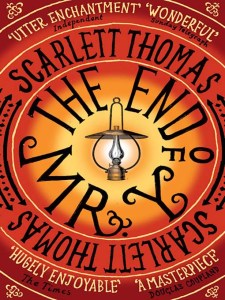
18. The End of Mr. Y by Scarlett Thomas

Published in 2006 by Mariner Books.

Longlisted for the Orange Prize for Fiction in 2008.

“So if we’re all quarks and electrons …” he begins.

What?”

We could make love and it would be nothing more than quarks and electrons rubbing together.”

Better than that,” I say. “Nothing really ‘rubs together’ in the microscopic world. Matter never really touches other matter, so we could make love without any of our atoms touching at all. Remember that electrons sit on the outside of atoms, repelling other electrons. So we could make love and actually repel each other at the same time.”

Many a bibliophile has been quoted as saying, ‘Give me books before bread!’, but Ariel Manto’s acquisition of an ultra-rare 19th century tome literally lands her near to poverty. Yet, for a copy of The End of Mr. Y, a literary work with which Ariel is obsessed, the decision is effortless. The fact that everyone who has read the book seems to have disappeared (including Ariel’s Ph.D. advisor, who once gave an academic talk on this ‘curse’) does not dissuade her. Once she reads The End of Mr. Y, she is left with more questions than answers, and a burning desire to follow the journey of Mr. Y himself. Her own journey, replicated on the steps that he—and Ariel believes, her absent advisor—took, sends her spiralling into an alternative realm of reality, called the Troposphere, in which she is able to spatially manoeuvre by piggybacking on the thoughts of others. However, Ariel soon realizes that (a) not all in the Troposphere is as it seems, and (b) she is not alone in her mindsurfing odyssey.

It is hard to figure out whether or not Ariel Manto deserves the reader’s respect. At several points in The End of Mr. Y, attempting to love Ariel can feel like an effort in loving the most (under)doggedly dismal parts of ourselves, the ones we feed with cheap alcohol, too many cigarettes and a lifetime’s dingy disappointments. This doesn’t mean that the novel’s protagonist is poorly-drawn; quite the contrary—she shines by her very lack of lustre. Insofar as a character’s convincingly-rendered moments of unlikeability make her eminently more likeable, Ariel Manto’s a gem.

Emblazoned across the cover of the book is Jonathan Coe‘s assertion that you’ll finish The End of Mr. Y “a cleverer person than when you started.” Unless you are well-versed in quantum physics (and are, in fact, formidably read across the sciences), then this is likely to be true. The novel strikes a deft balance between those things that scientific research has already established to be beyond contention, and those things over which it still debates and troubleshoots.

This is no obvious science textbook distilled into fiction, however, for which we may be glad. Thomas is just as concerned about portraying the ways in which faith coalesces or collides with rational data and quantifiable proof. For example, the concept of multiverses, and the validity of time travel in and among these, is crucial to the novel’s structure. Attention is also paid to communication, to language and speech, to literature and expression, the conduits that determine how we interface with the world, and the reasons why what we perceive to be real may or may not be so.

We wrestle with the grey space between absolute conviction and staggering disbelief, as Ariel does. We watch her mind absorb new ideas, new frameworks for comprehension, and while observing those expand, alter, shift dramatically or incrementally as the novel progresses, we realize we’re hooked. At her lowest ebb, Ariel asks herself whether or not she would do it all again: to have forsaken so much, including a tangible future with a mysteriously familiar man, in search of knowledge, and she knows that she would. Fellow learning junkies will admire the eminently accessible, academic chops of The End of Mr. Y. It’s like summer reading for the unabashedly nerdy logophile and bookish scientist, both.

Reading The End of Mr. Y led me to contemplate the successful sell of gimmick-harnessed literature, which I mean in the most innocuous way possible. The ‘go-thou-no-further’ approach has worked admirably in this novel, as both strategy and context. Thomas prompts us to peer beyond each tarnished veil, which we do, each time, without hesitation. (I’d like to challenge at least one person who tells me that they weren’t tempted to conduct the exact experiment that Ariel does, since I’m reasonably certain they’d be lying.) Telling people not to do something, in the hope that they will proceed to do it, may seem like the easiest sell in literature, as in life. On the contrary, this technique has been so often and so ill-employed, that when it functions in the hands of a talented writer, we tend to take notice. Some of the success of books like these, and this, surely hinge on the adroit manipulation of that very concept.

The author engineers Ariel’s dalliances in the Troposphere (i.e. the parallel realm of thought in which she must mindsurf to progress) in fine and credible style. These passages of the novel often feel to be the most poised and crisply detailed. Whether Ariel is trespassing on the mind of a fundamentally insecure teenager, or that of her unlucky, morose neighbour, or the shadowy agents who’re tracking her down, each windowed interlude is a miniature showcasing of the author’s talent for capturing unique voices.

The end of The End of Mr. Y is unambiguous and indefinite, all at once. Odds are you’ll loathe it, or beam in satisfaction as you close the back cover. Either way, few contemporary novels astutely define “conversation piece” so well as this one. Be they silly talks, long-reaching rambles or heated dialogues, if you don’t have much to discuss, then consider that you just might have left your critical mind in another plane of existence.

This is the second book I’ve read and reviewed on my personal reading list (which you can see here) for The Bookette’s British Book Challenge 2011.

17. Remarkable Creatures by Tracy Chevalier

Published in 2009. This Edition: HarperCollins, 2010.

Good first sentences can be utterly damning. They allude to the possibility of reading something that will spellbind us, something that, if it is grotesque, is so sublimely grotesque that we are rather glad we lost our lunch over it. (I can only imagine the Marquis de Sade grinning in glee at a well-heeled dowager’s protestation that The 120 Days of Sodom sent her scampering to church for shrift.) If the best part of a book, however, is its opening sentence, that seems to be a cowardly act—to sculpt nothing fine, save one or two arresting lines. When I opened Remarkable Creatures, therefore, and read

“Lightning has struck me all my life. Just once was it real.”

I was wary.

Civilly banished from their London home to the seaside town of Lyme, the unwed and not-particularly attractive Philpot sisters gradually learn to sift out what happiness they can, in their considerably reduced circumstances. Of the three, it is stoic Elizabeth who is drawn to beachcombing for fossils, an exercise she initially selects to occupy her days, free of the male attention she only occasionally craves. As she swiftly becomes enamoured of her fossil collection, particularly of the ancient fish skeletons she hoards, Elizabeth encounters young Mary Anning, the working-class daughter of Lyme’s debt-swamped cabinetmaker. A talented ‘hunter’ (in this context, fossil locator, gatherer and preserver) Mary allows Elizabeth into her own life, in its frequently impoverished yet deeply resilient reality. The two women grow up both alongside and apart from each other, and as their friendship is tested, severely, by bitter jealousy, by the arbitrary hand that assigns social class and station, and by one irresistible man, Elizabeth and Mary learn how much they can both withstand, and what causes them to shatter under pressure.

I’ve not read any other of Chevalier’s books, but after finishing Remarkable Creatures, I acquainted myself with the plot and concerns of each. I feel reasonably justified in remarking that the writer’s forté seems to be in her marriage of engrossing historical situations with finely considered characters. Though I had not heard of them before this reading, Mary Anning and Elizabeth Philpot were real women. It is fascinating to contemplate how much of their lives, as presented to us on Chevalier’s pages, are directly sown from the long hand of history, and how much is invented, conjured out of the ether, to add pathos, verve, humour. Both Mary and Elizabeth are deeply likeable, frustrating and varied characters—no less than human renditions, in short, and we find ourselves caring for their everyday struggles, as well as their protracted longings, sooner than we might have expected. Much historical fiction too often relies on the richness of the situation it attempts to reanimate with prose—The Great Depression, the rise and fall of the Roman empire, the history entire of a small island—that it falters in its investment in people, in breathing life into the past through the vessels that are best suited to carry it—the inhabitants of the work, be they living or purely ghostlike.

It is maddening to read of the circumstances of women in this early 19th century British society, and worse yet to contemplate that the injustices endured by Mary, Elizabeth and others of their sex are still endured, oft-unrecognized, not given the illumination in art or sound policy-making, nearly as much as they warrant. Mary’s loneliness, denied a life of comfortable indulgence, with the financial prospects it affords, is starkly illustrated, in a conversation with the person who has captured and bewildered her heart.

“My life led up to that moment, then led away again, like the tide making its highest mark on the beach and then retreating.

‘Everything is so big and old and far away,’ I said, sitting up with the force of it. ‘God help me, for it does scare me.’

‘There is no need to fear,’ he said, ‘for you are here with me.’

‘Only now,’ I said. ‘Just for this moment, and then I will be alone again in the world. It is hard when there’s no one to hold on to.’

He had no answer to that, and I knew he never would.”

Chevalier’s depiction of the life and times in which the novel is set strikes one as being infused with accuracy, from the recollections of past-times, superstitions, customs and everyday minutiae. We feel as though we’ve wandered onto the set, perhaps, of a BBC production of  a period drama, replete with narrow, cobblestoned streets, home-brewed bottles of elderflower champagne, petticoats and workhouse-penury alike. Natural landscape is no less vividly portrayed than the man-made structures of the novel. The beach, for example, is its own character, in every right—it’s unforgiving nature, its mystery, secrecy, the pleasure of its unexpected treasures, and the peril of its capricious cruelties. Anyone who loves the sea deeply cannot help but be moved by Chevalier’s design of it, as well as appreciate the relevance of all that the ocean offers to Mary and Elizabeth, both tangibly and soulfully.

What I loved best about reading Remarkable Creatures is that it did not challenge me. Surely, this sounds like an extraordinary contradiction, but I think one might catch one’s death of illumination-depression, sipping from an eternal literary font of Kafkas, and Joyces. The read was absorbing without being daunting, entertaining without meriting a single furrow of my brow, and if not particularly earthshattering, then distinctly eye-opening. Otherwise, I would not be purposing to read more on the life of Mary Anning, and other women of the 19th century who have been overlooked (until now) in science, engineering and other heretofore-considered ‘masculine’ fields. This, to my mind, is the premier advantage of well-done historical fiction. It transports us, not simply during the hours in which we read it, but when we have turned the last page, then seek knowledge, context and more reading on that era, that set of unique circumstances, elsewhere. Remarkable Creatures has done this, and therefore, perhaps it is unfair to say that it has not challenged me. It has, after all, challenged me to learn more—and is this not one of the best pursuits?

Finally, it is worth noting that the last line of Remarkable Creatures is as good as its first – maybe it’s a little better. I’m looking forward to hearing whether or not you concur.

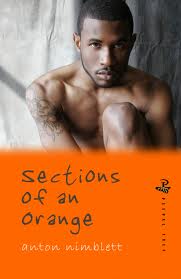
16. Sections of an Orange by Anton Nimblett

Published in 2009 by Peepal Tree Press.

“God, that’s sexy as hell.”

This is what I thought as I sat in the audience of the Paper Based bookshop at the Hotel Normandie, a fortnight shy of one year ago, listening to Anton Nimblett read from the titular offering of his short story collection, in which the narrator shares a highly unusual post-haircut pleasure at his stand-in barber’s basement. I know the oft-deceptive spell that a writer who reads his work well can cast, though, so I purposed to find out whether or not, frankly, the sex was sustained as convincingly on paper as it was in person. I was not disappointed.

There are eleven stories in Sections of an Orange, some of which are connected by the same characters, telling different sides of the same, or different, tales.  In “Visiting Soldiers”, we confront the peculiarities of a quietly devastating loss, as we learn exactly what one bereaved mother carries in her purse. We nod in agreement at the description of the busybody neighbour in “Into My Parlour”, who feeds on gossip and forces doubt, with one well-timed suggestion. “On the Side” swerves between dual expositions: a gory car accident and the bonds of food and familiarity that link the two men entangled in it. “Time and Tide” traces the retreat of one of those men to Trinidad, where he allows himself to trade past hurt for the present of easy talk on Maracas beach, and the very definition of one pleasant surprise. In “Just Now”, we learn that there’s more to that pleasant surprise than a body that blesses a crisp white shirt with a bit extra beauty—we meet his wife, and the everyday voodoo love that anchors him happily to her side. We attempt not to cry at the miracle that dwells in the simple gift of “Marjory’s Meal”. “How Far, How Long” has us shake hands with Ray, and his man… and his other man, and how they’re all simultaneously incredible, but not quite enough. “Sections of an Orange” juxtaposes snippets of a hit-and-run news brief with one of the most tantalizing trips to the barber ever recorded. That barber, a misunderstood creative close to implosion, seals his fate with a trip to Van Cleef and Arpels, in “Ring Games”. In case we’d forgotten, we’re reminded  of the soothing balm avoidance can bestow, when we read what one good woman does for love in “Mr. Parker’s Behaviour”. The collection closes with the heart-thudding narrative of a man who’s best recognized for everyone, and everything, he isn’t, in “One, Two, Three – Push”.

A familiarity of place, persona and situation abounds in these tales of Trinidad and New York, but I have found that it takes more than mere recognition in fiction to make the writing sizzle. Thankfully, the familiarity in Sections of an Orange is partnered with both subtle and audacious (but never mawkish) wit and whimsy. I could not imagine saying to Nimblett, “You, sir, are out of touch.” Nimblett knows. He writes with the voice of a writer who sees, who spends a lot of time, maybe all the time, looking. Listening. Feeding off the vibe of strangers and best-beloveds alike—and if that sounds malicious, then it ought to be asserted that eavesdropping, observation and a good old Trini maco are the polished trade-tools with which the hottest literature is churned out.

I like the unpredictability of this collection, the way that the oeuvre defies pigeonholing with no mean spirit. You might watch the cover of the novel and instantly formulate your best-intentioned prejudices, but the writing will smack you on the cheek, whisper archly, “So yuh thought I was a book of gay stories, eh? Well, yuh damn wrong…”, but even this revelation is not cruel in the way it caresses your senses. Yes, within these pages are the travails and the merriments, the hassle and hustle and delight of men who love men, but to say that this encapsulates the work Nimblett has done is poor praise, if it can be called that. Yes, the work provides a fresh, relevant point of access to disenfranchised gay Trinidadian and Caribbean men. It also treats with grieving mothers, with the weight of suspicion surrounding non-heteronormative behaviour both home and away. It peers into the isolation experience, the journeys of Trinidadians to the United States, the sense of community away from the island hearth, and the voices of remarkable people as they plot their place in a society that does not share their several secret languages. There would be no shame, I think, if Sections of an Orange were a book devoted solely to the queer masculine perspective of the Trinidadian-American citizen, but the wealth of its multivalent concerns pre-empts that, soundly.

Readers, I am hunting for a quote from these pages, from any of these eleven productions in loss, longing, hunger, and the cry of the fettered Self, and yet… I find that I want to present entire pages of prose, instead. The passage that describes the magicked yet terrestrially gritty encounter between barber Glen and our unnamed narrator, who is given the honorific of “Chocolate Man” by the former, is lip-bitingly potent.

The two men succumb to the allure of fresh fruit in their pageantry of lovemaking:

“This time he grabs a section of the orange, holds it six inches in front of my face, and steadying himself with one hand right next to me, he squeezes with the other hand. Juice falls through the air, hitting my chest, pooling at the centre and trickling down my belly. He waves his hand around, still squeezing, so that juice hits my face and shoulders, collecting in the hollow at my collarbone and forming a liquid necklace at my throat. His eyes follow the movement of his hand, a hand that seems to follow the orange, tracing some deliberate pattern that only he knows. His fingers, smooth dark peninsulas that end in crowns of perfect pink nail, are wet now, and I want him to touch me.”

(from “Sections of an Orange”)

Landscape is just as vividly rendered—we feel that we are walking with the tormented Push as he struggles towards claiming his identity, as he paces the city streets.

“A thin breeze greets Push in the Brooklyn night — cooler than earlier. Red Hook buildings carve skeletons against an indigo sky, like dinosaur exhibits in a museum after hours. Telephone wires sag from wood poles, recalling yesterdays. Uneven cobblestone patches poke history through asphalt streets.”

(from “One, Two, Three – Push”)

When landscape and character meld so seamlessly, finessed with the talent of subtle strokes, we can read lines like these, wherein a man surrenders himself to the grief of an inevitable loss, in the midst of preparing a tribute that rivals coffers of precious metals.

“The tears came drop by drop, pooling until they flowed, and flowing more and more until they bloomed into sound — one low, deep sob and then another and another, until his body was shaking. Then he had to set the knife down as he crumbled from his middle, folding at the gut and catching his head in his hands. There, with the breeze still gently stirring the leaves, with the birds still singing sweetly and the waves still lapping on the shore, he cried alone.”

(from “Marjory’s Meal”)

You could shelve this book with your queer literature anthologies, sure, but I daresay your hand would hesitate. You’d look across at your trove of Caribbean lit., of course, and glance meaningfully at your American contemporary fiction, almost as if in reflex motion. Let’s not even think about that cross-section of diaspora writing you’ve accumulated over the years, or your favourite social commentary-related writing… or, in fact, let’s. Perhaps, in the end, you’ll  file Sections of an Orange with the books that best remind you of home, the books by which, if you have allowed yourself to live, you can shake your head at your own damn foolishness, swallow a lump of pride at your better intentions, smile and remember all the inventions of mind and heart you pioneered, for love.

The author discusses his work, influences and his indebtedness to a sense of community in the article Anton Nimblett Responds, at The Signifyin’ Woman’s review site, here.

This book, and 11 more, are part of my official reading list (which can be found in my sign-up post here) for the 2011 Caribbean Writers Challenge.

15. The Monsters of Templeton by Lauren Groff

Published in 2008 by Voice, an imprint of Hyperion Books.

Shortlisted for the Orange Award for New Writers, 2008.

Willie Upton returns to her idyllic Templeton homestead in disgrace, on the very day that a colossal, antediluvian monster’s carcass is dredged from the depths of the town’s lake, Glimmerglass. Pregnant with the child of her (married) thesis advisor, Willie is thrown another bombshell by her repentant hippie-turned-Baptist mother, Vivienne: Willie’s father is not the random, faceless commune-dweller she’d previously been led to believe, but a living, breathing Templetonian man—alive, well and in their midst. As Willie’s return to her postcard-worthy homestead turns from mere refuge to sleuthing around for clues to her mystery dad’s identity, she learns far more than she bargained, about the living and the dead, about men and monsters alike.
Have you ever bought a book, or picked one from a library shelf, based on the recommendation of another writer, on its jacket? Such was the case with my acquisition of The Monsters of Templeton. The curious thing is this: the writerly acclamation that drew me in was proffered by a master of contemporary fiction, whose work I’ve not yet read. Here’s what he had to say.

“Lauren Groff’s debut novel, The Monsters of Templeton, is everything a reader might have expected from this gifted writer, and more…There are monsters, murders, bastards, and ne’er-do-wells almost without number. I was sorry to see this rich and wonderful novel come to an end.”

What The Monsters of Templeton accomplishes best is its portrayal of another world. Groff’s hand is loving – this place is crafted on the bones and imagination of a town beloved to the author herself. Though we are provided with a map of the town at the novel’s beginning, I daresay that one is not needed. With an eye for architectural detail and geographical precision, the author enables us to trace out the Running Buds’ Route in our sneakers. We, too, will wish to pelt out of the stuffy confines of Franklin House, hurling ourselves into the dually secretive and embracing arms of Glimmerglass Lake. Just as Willie does, we’ll sit on the steps of the town library with the boy from our childhood, who manages to amuse and amaze us with perplexing certainty—and we, too, will be tempted not to leave. There are few, if any, falterings in the construction of space and place in this book, and this serves to reward the telling of the tale itself, making it gleam all the brighter.

As for the story, it is far from singular. Indeed, many yarns crave the attention of being the finest-spun, and this becomes a balancing act in which Groff occasionally slips. For instance, the sideline concerns of Willie’s idiosyncratic and ailing college bestie, Clarissa (with Clarissa’s long-suffering husband Sully, in tow) strike out, in terms of holding interest, far more than they score points for emotional appeal. I read most of Willie and Clarissa’s expected fallings-out (and charming recoveries) with thinly veiled impatience, eager to return to finer exposition.

Thankfully, of fine and varied exposition, there is no shortage—a variety of presentation woos us to Groff’s creative skill. Most of the alternative storytelling methods come to us through Willie’s research into her paternal parentage. The documents she uncovers often threaten to overpower our protagonist’s own voice in their desire to be told. The ghosts are alive and strong in The Monsters of Templeton, and for fiction that invokes the past in any meaningful way, this is grand. Willie feels the pull of her ancestry just as deeply, on reading the journal of Sarah Franklin Temple Upton (an abridged version of which is presented to us). After her all-nighter of frenzied absorption, Willie reflects.

“All that night, I read three hundred pages of wildness in my great-grandmother’s tight sepia script, and in the morning it was as if Templeton had fallen under an enchantment…I felt almost as if Sarah’s Templeton were layered atop my own; as if a sheet of tracing paper had settled upon the rooftops of my village…I could feel the pull of the ghosts in the lake, knew that if I looked out onto the lawn those terrible private people of whom Sarah spoke would be standing there, in military lines all the way down the lawn, all looking up into my window, deep holes for eyes.”

In addition to the increasingly frantic journal entries of Sarah Franklin Temple Upton, we are invited to peruse several other artefacts that Willie unearths in her bid for father-discovery:

♣ a host of revealingly-captioned portraits and photographs

♣ the almost literally poisoned-pen correspondence of two treacherously disparate women (my favourite, naturally)

♣ the tales of a long-gone people, from their own tongues (including a spectacular envisioning of some significant days in the life of James Fenimore Cooper’s titular character from The Last of the Mohicans)

♣ a family tree, curated by Willie, that grows alongside her own fleshing-out of her curious and captivating lineage (This reminded me of Faith Jackson, the protagonist of Andrea Levy’s Fruit of the Lemon [reviewed here] and her own incrementally burgeoning family tree, documented in similar fashion.)

The Monsters of Templeton is a first novel of remarkable ambition—that it hardly falters in translating this ambition into nigh-impeccable readability is laudable. Still… and still, alas, the ambition moves me more than its overall execution. There is too much discomfiting distance between what I loved:

♣ Groff’s startlingly beautiful segments of great writing

♣ the lavish attention to detail and sincerity in building Templeton from air and inspiration

♣ Ahhh, the monster (more on that denizen of the Glimmerglass deep, anon)

and what left me cold:

♣ most of the Clarissa and Sully interludes

♣ evident unbridged lacunae betwixt Groff’s gorgeous prose and Groff’s okay prose, since the former is so startlingly good that it renders the latter all-the-duller

♣ uneasy diction, usually to do with too-muchness: being overfed on Turkish Delight still prompts nausea, despite the delicious path there

For all this, my final impressions attached to this first reading are both haunting and enduring. Even if there were no other points to recommend it, there would be The Monster, our aquatic acquaintance, who is rendered in Groff’s finest, most poetic prose. We meet it in its death, yet we feel that we have understood something essential of its life, and the ways in which it lived. We feel that we have held something of it in our hands, and to our hearts, at the novel’s close.

The Monsters of Templeton reminds us of the distinctions we make between what is monstrous, and what is truly fair… and how awfully wrong even the best-intentioned of us tend to be.

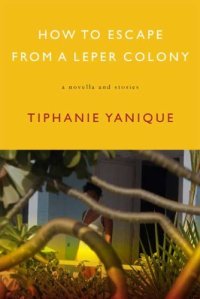
14. How to Escape from a Leper Colony by Tiphanie Yanique

Published in 2010 by Graywolf Press.

An S. Mariella Gable Book (an award given by the College of Saint Benedict for an important work of literature published by Graywolf Press)

Winner of the Fiction Category Prize, OCM Bocas 2011.

Shortlisted for the overall OCM Bocas Prize for Caribbean Literature 2011.

“I get her arms in front and see words written on them. It freaks me out. But it’s just words. ‘Stop looking,’ she says. ‘Stop reading.’ Lord Harry the Judge. I lay back in my seat and I just ask, ‘This is stupid. You couldn’t find no paper?’ She shakes her head, ‘I left my notebook.’ I open the golf and show her the roller paper, like a small notepad. ‘I didn’t think of that’ she say with her voice going all Yankee now. And then she crying like I hit her or something. She sit on her hands the whole drive back. Keep her arms tight by her side. Tonight, I think, I going kiss those arms. I going lick every word if she let me.”
from “Street Man”

I loathe exaggeration, especially when it comes to enthusiasm. I prefer my praise to be as precise as possible. Sadly, this means that much of my best loved phrases must languish, unused, waiting for true beauty to capture them. One such is borrowed from a film: to feel something “like a riot in the heart, and nothing to be done, come ruin or rapture.”

Tiphanie Yanique’s premiere publication is impressive. A collection of short fiction and a novella, How to Escape from a Leper Colony is remarkable in that it feels neither solely craft nor character-driven, yet reads as a spellbinding marriage of both. Here is short fiction to get you excited about the genre entire. Here is a novella you will want to reread until the people in it are achingly familiar to you, a novella which shows its full lustre in its unabridged format, as opposed to the more dim showing it made in Akashic Books’ 2008 anthology, Trinidad Noir. At a handful of pages shy of the two hundred mark, Yanique’s prose begs to be read in one sitting. I  read it cover to cover in bed, bleary-eyed with intensity, and when I reached the last line of the last story, “Kill the Rabbits”, (which I would have loved to see even further fleshed out) I felt that I had not had enough.

How to Escape a Leper Colony features eight pieces. The titular story will show you some of the reasons why an island of lepers and the nuns treating them walk into the sea. “The Bridge Stories” is a compendium of narratives that tells the same story, marking it multiple ways for tragedy and release. “Street Man” reads like a tale you’d hear from the man himself, in a crowded bar, over beers and your interjections of, “Nah, man!”, “Oh gosh, man!”, “For real, man?”. In “The Saving Work”, two white women who’ve moved their lives to the Caribbean puzzle out the truth at the root of why they hate each other so (with a burning church providing the backdrop). “Canoe Sickness” offers a retrospective of a young boy’s thwarted dream of pro-football glory (the least evocative of the pieces, for me). Mason finds a hideaway chapel in Houston that reminds him of his Jamaica home (in strangely erotic tones, too) in the exquisite “Where Tourists Don’t Go”. In the vein of “The Bridge Stories”, “The International Shop of Coffins” is a multipart exposition of grief, distance and the things we’ll do for love. Finally, “Kill the Rabbits” (as authentic an account of the sweet madness that is Carnival as ever I read one) introduces us to three seemingly-different people in the Virgin Islands, and the unusual ways they are fettered, to each other and to love.

Straddling a swinging bridge betwixt magical allegory and gritty realism, these stories are superbly-wrought. Yanique’s eye to detail is exceptional; her attention to a credibility of tone and voice—to the way a person speaks, or internalizes a situation—is finely-tuned. There are numerous delights here for the careful reader that will be missed, and no mistake, by any page-skimmers.  Unearthing sleight of hand contradictions, such as the difference between what characters say and what they do or mean is a particular treasure. What makes it sweeter is that Yanique never contradicts herself; we spend no time running after her sentences, filling in plot holes with frustration. There are no perfect, sparkle-toothed island exotics waving for the approval of tourists here, and this is a relief.

For all that How to Escape from a Leper Colony is a debut offering, nothing about Yanique’s work heralds it as mawkish or sickly desperate to please. Can my desire for this book to have been a longer collection truly be a complaint? Hardly not, though I do wonder how two or three more stories would have affected the impact of the reading. That is a bold-faced hypothetical, however, so I will precisely declare: I love this writer’s writing, and I look forward, impatiently, to reading another riot in the heart from Tiphanie Yanique.

“One of my teachers once said that history has no influence on land, that land is outside of history. He lied or he was mistaken. History has carved down mountains. History has drenched out rivers. History has made the land, and the land has, when under duress, made history. […] No one and no thing is unmoved by human history, and it is a sad, sad truth. But that Carnival the land had decided to defy history. And this, like my body, was a bit of an impossible thing —  but an admirable thing as all impossible things are.”

from “Kill the Rabbits”

This book, and 11 more, are part of my official reading list (which can be found in my sign-up post here) for the 2011 Caribbean Writers Challenge. 

13. His Dark Materials I:The Golden Compass by Philip Pullman

Published in 1995. This Edition: Alfred A. Knopf, 1998.

Winner of the Carnegie Medal, 1995.

Winner of the 70th Anniversary Carnegie of Carnegies (the UK’s favourite Carnegie Medal winning book of all time)

The Golden Compass is bone-chillingly good ( a statement that surely holds some water, when you consider that I read it in decidedly non-frosty tropical temperatures.) Still, I felt the cold—the unmistakable ice-kiss of fear and awe that assails you when, and where, you least expect it.

Lyra  Belacqua has been perfectly content to play at full tilt on and around the premises of Jordan College at Oxford, for the entirety of her eleven year-old existence. Brought up in a well-intentioned yet scatterbrained way by the college academics, Lyra has been accustomed to being orphaned, with no blood relations save her oft-absent uncle, Lord Asriel. Though she lacks parental guidance, Lyra is never alone. She basks in the constant company of her dæmon familiar, Pantalaimon. Both her helpmeet and her best friend, Pantalaimon is of Lyra herself: neither she nor he can fathom a reality in which they exist separately. This bond between human and dæmon exists between all humans—to not be thusly companioned would be beyond the realm of belief, and of decency.

Lyra has long dreamed of accompanying Lord Asriel on his mysterious expeditions to the North, but she cannot predict that she will journey there under the oft-terrifying, fantastical circumstances that do take her. The Golden Compass charts her journey to the bitter-cold roof of the world, where Lyra and Pan must confront an evil beyond imagining, from even the most unexpected of sources.

If you are wary of the magical, mythical, extra-terrestrial or para-normal, The Golden Compass (originally entitled Northern Lights, which I prefer) is not the book for you. If you cannot abide an iota of speculation or criticism concerning organized religion, or discomfiting questions about why we believe what we do, then I strongly urge you to read elsewhere. Still, if you’re even the slightest bit curious, and are not averse to the very real possibility of a paradigm shift, then yes… reading this book could well change your life.

Each of the characters of Pullman’s novel is exceptionally well-crafted, whether they be major or minor. We meet and are awed, cowed, wooed and enraged by a host of extraordinary creatures, including my personal favourite, a fallen bear-sovereign, deprived of his ennobling armour, who dulls his bitterness with drink and hard labour. We also encounter a kindly gypsy seer, and the proud, sorrowful witch with whom he shares a storied past. We scoff at the wizened academics of Jordan College; we weep at the tragedy of a young boy’s loss of innocence, and we marvel, open-mawed, at the depiction of one of literature’s best-drawn, ruthlessly ambitious power couples.

Yet for all their fantastical elements, there is no awkwardness about this cast, no barrier separating them from us. They, too, obsess and are filled with equal parts regret for that which they have done and that which they failed to do. They, too, fall prey to vanity. They, too, are hurt for love, and not one of their stories compels you to narrow your eyes in derision, declaring, “Hmph. Only in a fantasy book.”

Set in an age of invention, discovery and conquest, The Golden Compass is littered with marvellous machinery, with vivid descriptions of barges, airships, of hot-air balloons, of instruments hewn with wicked and wistful intent. The most remarkable of all the creations we discover in this novel, however, is the titular object itself, otherwise called the alethiometer. Entrusted to Lyra to give to her uncle, she is told only that it tells the truth, and that she must learn herself how to decipher it—and learn, she does. The descriptions of the alethiometer attest to its beauty, and Lyra’s interactions with it show us, and her, that parsing the truth is an intricate, highly subjective process.

The novel is written in prose that seems, at times, plucked from the pages of a bygone era’s texts, such are its curious lilts and cadences, the peculiar goodness with which something is said, that enriches the very description of it, elevating it from the commonplace. Pullman truly is a turner of phrases. He subjects language to his particular purpose: to charm and captivate us. By my reckoning, he succeeds at that.

I think there has been some sad compromise over the literature to which we expose children, and I wonder at that. Who says that books for young people must be patterned with every prettiness, every convenient lie, every smiling face and sunny sky we can conjure? Detractors will, of course, posit that there is nothing natural about The Golden Compass, but the heart of the novel is filled with every natural feeling in the world, from grim despair to raging passion to lonely, determined resilience. Lyra becomes a benchmark for ourselves, as we wonder, at all that we would or would not do, with our destinies plotted out against the unforgiving, glorious Northern Lights.

‘You speak of destiny,’ he said, ‘as if it was fixed. And I ain’t sure I like that any more than a war I’m enlisted in without knowing about it. Where’s my free will, if you please? And the child seems to me to have more free will than anyone I ever met. Are you telling me that she’s just some kind of clockwork toy wound up and set going on a course she can’t change?’

‘We are all subject to the fates. But we must all act as if we are not,’ said the witch, ‘or die of despair.’

Enjoy another consideration of The Golden Compass by my dear book reviewing colleague, Jennifer of Books, Personally, which examines some issues and concerns that this review doesn’t directly address, here.

This is the first book I’ve read and reviewed on my personal reading list (which you can see here) for The Bookette’s British Book Challenge 2011.

12. Fruit of the Lemon by Andrea Levy

Published in 1999. This Edition: Headline Review, 2000.

“I became nervous waiting for the poet to start. I was thinking, ‘Please be good, please.’ The poet became my dad, my brother, he was the unknown black faces in our photo album, he was the old man on the bus who called me sister, the man in the bank with the strong Trinidadian accent who could not make himself understood. He was every black man – ever.”

Faith Jackson has always been, for the most part, a good girl. She’s a dutiful, well-attired twenty-two year old university graduate, raised by black expatriate Jamaican parents who, according to the common account, came over to England on a banana boat. White boys heckled Faith about this during her childhood, but to her parents, nothing about that journey even remotely elicits shame. Here, early-established, resides Faith’s quandary: her existence straddles bi-polar states of embarrassment and defiance, of red-faced chagrin at her skin, and awful anger at the reactions it provokes in London, where her ‘kind’ are called ‘wogs, ‘nig-nigs’ and ‘coons’ by the various Caucasian whites with whom she interacts. After witnessing a brutal act of vandalism perpetrated by white thugs against the black proprietress of an independent bookstore, something in Faith gives in to despair.

Alarmed by their daughter’s detachment from her (ostensibly glamorous but unfulfilling) job, even by her withdrawal from the raucous bonhomie of her flatmates’ ambience, Faith’s parents devise a plan. They pay her airfare for a fortnight’s getaway in Jamaica, the home to which they’ve been contemplating returning. As Faith’s mother gently reminds her, “Child, everyone should know where they come from.”

While reading Fruit of the Lemon, it became quickly apparent to me that I was in the hands of a startlingly evocative writer. Levy rarely ‘lays it on thick’: there is none of that overindulgence, poorly executed, in exposition, description or plot progression. The ingrained racism Faith endures uneasily in England, her incremental malaise and mistrust of her own complexion, are subtly enforced at every turn, ‘til we feel like buckling beneath the pressure, ourselves.

Caribbean readers will not, I think, be disappointed by Levy’s depiction of Jamaica. Not being of Jamaican ancestry personally, I cannot claim a countrywoman’s expertise, but the testament of the life and people of the island never, not once, caused me to furrow my brow and say, ‘Eh?’ Odds are, whether you are from Jamrock, or Trinidad, or Barbados, or anywhere beneath our persistent and particular sun, you will recognize trademarks of your own growing-up stories. You will steups (loud and irritated sucking of one’s own teeth, referenced several times by Levy) at the description of a relative just like the one who drives you mad. You will sigh when Faith learns the saddest stories of her origins from her Jamaican family, because that sadness, that mad, mad history lies dormant in your family too, just waiting to be prodded uneasily to life again.

Fruit of the Lemon made me laugh uproariously, no small feat, considering that it takes comedic heft on the page to really send me reeling with mirth. Levy excels at marrying elements of the absurd with the lamentable. This is particularly well-transmitted in the presentation of Faith’s ridiculous yet endearing elder brother Carl, who proclaims his superiority over his sister, treating her with a mixture of gruff disdain and barely-veiled irritation, but sheepishly hides the face that he is only just doing his first A-level exam. Most, if not all, of Levy’s characters are drawn in this enviably well-rounded way, so that they things they do and say elicit both hilarity and mortification.

Perhaps most striking of the praises offered to Fruit of the Lemon is the Sunday Telegraph’s assessment that “…[readers] will recognize the truthfulness of the world which Andrea Levy describes”—and these truths, to my mind, have less to do with being Caribbean, and more to do with being an observant person, regardless of skin hue or geographical marker.

With a narrative that spans the reach of the Atlantic, Levy writes convincingly of home and abroad, of isolation amidst throngs and of togetherness where only a few are gathered. Fruit of the Lemon begins with a humbly tiny family tree of Faith and her nuclear family. It ends with the deeply-rooted history of multiple branches, each tier a story and a legacy all its own.

This review was initially featured on Baffled Books.

This book, and 11 more, are part of my official reading list (which can be found in my sign-up post here) for the 2011 Caribbean Writers Challenge.

11. The Fourth Treasure by Todd Shimoda

Published in 2002. This Edition: Random House, 2003.

“In the sensei’s diluted mind there was a flash flood of knowing, a firestorm of awareness, a billion synapses exploding into a nova of cognizance. So much to resolve, nearly no time left.”

First year neuroscience graduate student Tina Suzuki learns of an intriguing, potentially lucrative test study for her doctoral thesis at the University of California, Berkeley – a sensei of shodô (Japanese calligraphy) has suffered a debilitating stroke. The attack has left him severely weakened, devoid of speech, robbed of his formerly impeccable skill with the vital implements of calligraphy, known as the four treasures: fude (brush); sumi (ink); kami (paper); suzuri (inkstone). Despite the effects of the aneurysm, Kiichi Shimano, better known to his students (one of whom is Tina’s Japanophile boyfriend, Robert) as Zenzen sensei, continues to create beautiful yet incomprehensible tracings. The markings, called ‘art’ by Tina and ‘scribbles’ by the doctors tending to the sensei, hold reserves of emotional appeal for one unlikely source—Tina’s self-effacing mother, Hanako, whose connection to shodô and Shimano run deeper than anyone (save one wily private eye from Kyoto) can suspect.

In her praise of The Fourth Treasure, author Liza Dalby remarks that the novel “…has the depth and nuance of a skilfully calligraphed scroll.” As hyperbolic as such a statement sounds, her assessment is as precise as Shimoda’s writing and the rendering of a tale ornately-wrought, presented with deceptive simplicity.

If I were to name a point at which this book excels without exception, it is in its form, which is briskly engaging without being irritatingly self-involved (in my experience, most literary works of the latter ilk are both annoying and difficult to stomach.) The margins of the novel serve as room for annotations. From Tina’s neuroscience notebook, we learn of the complex framework of the human mind, as she neatly defines biochemical behaviours (while finding that equating them with individual consciousness remains a mystery). From the Instructor’s Journal from Zenzen’s School of Japanese calligraphy, we receive lessons in shodô, complete with exquisitely-rendered kanji and exacting guidelines for their creation. The text is also interspersed with the mysterious inkwork of Zenzen sensei, flanked by tiny segments of poetry, no doubt indicative of the disjointed thoughts of the shodô master. These brief lines are heart-rending. They combine Shimano’s yearning with cryptic phrasing and brevity of form to achieve a muted, haiku-worthy stream of thought. The effect is mesmerizing—I could read an entire novel composed of just these.

There are multiple narratives at work in The Fourth Treasure, too. The story of Tina’s personal development may seem to initially dominate the progression of the novel, but soon, we realize we are reading a delicately balanced commingling of chronicles, including a series of sepia-tinted flashbacks that reveal the dynamic connection between the sensei and Tina’s mother. Among the other tales told are a bird’s eye view of Kando, the detective who finds himself entangled in the stories of Shimano and Hanako. Most enthralling, however, is the ancient History of the Daizen inkstone, used by Shimano and coveted by many, who believe he possesses it unlawfully. These fragments of the lives of the 17th-century calligraphers who first drew inspiration and art from the Daizen inkstone are expertly handled, in fine, evocative and precise prose. We may only see these characters in interludes, but the impressions they make are deeply felt – a sign of unforgettable storytelling if ever I read one. Adding to the near-flawless counterpoise that Shimoda exacts is the advantage of successful use of multiple perspective: we are granted access, not just into the mind of Tina, but the wonderings and speculations of several others: most notably, Zenzen sensei, whose thoughts open the book and preface his stroke, and Hanako, whose quiet revelations bring the novel to a close in a coda of liberation and sweet, shodô-tinted release.

If The Fourth Treasure falters anywhere, it is in matching the vividness and vitality of its crafting to the consistent success of its characterization. Tina, for example, seems uncertain for so much of the novel, not just in her aspect, but in her formation, like a series of wobbly figures plotted on a blurry Cartesian plane. It is the world of shodô that breathes purpose into her (and makes her infinitely more readable than she is when we meet her.) Even if the individual characters do not incite a riot of passion in the heart (and indeed, this may well not be their purpose), their circumstances cannot but move you. They grapple with love that has never died, even though it was starved, and with love that was never truly in bloom to begin with; with loss of one’s access routes to exhilaration in art and life, and with how to forge new pathways through pain and the bewilderment of loss.

My January 2011 has been a month of good reads, and The Fourth Treasure has been the best of them.