
I love writing letters. Some time ago, for a postal swap, I was asked to write a fictional introductory missive, adopting the personage of one of my best-beloved literary characters. I was urged to really get under her skin; to share a glimpse of the kind of woman she was; to, if not plumb her depths, then present her truly, with all the eager possibilities a first letter can afford. When I put pen to paper then, I thought it would be interesting to meet Lizzy fairly early into the events of Pride and Prejudice… before too many dances have passed, before several sparks can fly: you know, before much of that high-spirited Regency rabble-rousing gets thrown down.
Here is what I wrote.

Dear Morgan,
It is my distinct pleasure to be writing to you on this rainy, windswept 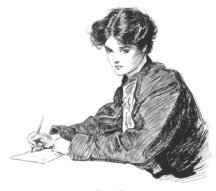 evening…grey clouds pattern the sky, while the deepening chill in the wind signals to me that winter draws ever closer. As I sit at my writing desk, safely and securely ensconced in the bedroom I share with my dear sister Jane, at our father’s Longbourn estate, I wish most sincerely that you and all those you love are in the very best of health and happiness.
It always pleases me greatly to pick up my quill in celebration of a new and lively correspondence; I do so abhor those dreadful social functions at which one must smile, and simper, and pretend to be charming and easily charmed at every occasion – though, t’is true, I do love a lively dance! There are few activities in my twenty-year old existence, thus far, that enrich the spirit, tingle the toes and bring hearty laughter to the lips as a rollicking country dance!
 As you may have guessed by now, my name in full in Elizabeth Bennet, but my family members and friends usually call me Lizzie or Eliza, as it suits them. My mum is often wont to call me Elizabeth when she is out of sorts with me for my peculiar habits and mulishly stubborn choices, which is more often than I suppose I should own to! I have lived my entire life at Longbourn, and am the second eldest of five sisters, but closest, I confess, to my eldest sister Jane, who is the very soul of goodness and sweetness, never thinks ill of anyone, even when perhaps she ought, and has the most charitable heart of any man, or woman, of my acquaintance. She has recently become enamoured, in her quiet way, of a dashing, if slightly dim young man called Mr. Charles Bingley, and I have high hopes for them eventually forming a serious attachment. I can think of few, if any, who deserve a life of happiness as much as Jane.
I suppose it ought to be my major preoccupation in life to endeavour myself matched to a young man of suitable prospects, or a man who makes a decent figure a year, as my mother would put it (though I think she would describe the matter much more loosely than that, alas. Apart from Jane and my dear father, I admit that I am not close to any of my other family members, though I certainly do feel fondness for the rest of them; they do not know me in the way that Jane and Papa do). Honestly, I find that I cannot seriously burden myself with fawning over every man who seems to have a laden purse and gives me an inviting glance at an interminable country ball.
I hope you will not think it too silly, Morgan, but I wish to marry for love… I wish to meet a man with whom I can hold forth in vigorous, sustained conversation and debate! A man who loves to read, to take long, contemplative walks, but above all, a man who will not be afraid to be truly himself with me, in every way, as I should surely feel free to do in his company. I have witnessed the ways in which an unhappy marriage of convenience can erode the lives of two people, slowly and excruciatingly. I do not want that to be my fate… I think I would prefer the life of a so-called ‘old maid’, for at least I would be allowed to be myself, and much happier for it, I firmly believe.
You know, at the same dance at which my sister made the happy  acquaintance of Mr. Bingley, I too had an encounter with a man, but I cannot claim that I took any level of pleasure in it. Indeed, not! I found this man in question, Mr. Darcy, to be rather haughty and full of himself. He looked the entire time as though the event was decidedly beneath him (but I could not help but wonder if he was merely uncomfortable and awkward, and decided that a frosty illusion of control would make him seem superior?) Either way, I feel certain that he and I shall not be fast friends – far from it.
Apart from hoping that I shall one day find a partner for the sake of true love – oh, I do hope I don’t sound like a hopeless romantic! – I try my best to be realistic on all points, especially since I live in a household of, for the most part, exceedingly silly females. I spend much time with my thoughts, as well as in the glorious open woods and trails. I adore walking. It gives me deep personal strength, and the space I need to think, to reflect and to have wondrous conversations with Jane, Papa or my dear childhood friend, Charlotte Lucas. I particularly like spending time with Charlotte; we’ve known each other since infancy, and have shared so much that we’re often of one mind on most things. She is a beacon of common sense, a practical, good-natured and wonderful friend. I may not have the most enthralling life, from any outsider’s perspective, but I am lucky to have been gifted the presence of dear friends and wonderful books. Reading transports me to new and exciting worlds daily… but I do often long to see more of the world, to travel far and wide, to take control of my own destiny, wherever it may lead.
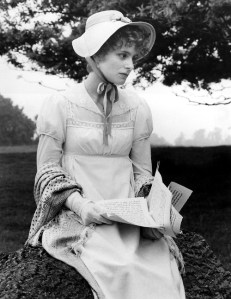 Mr. Darcy’s sisters, incidentally, were also at the ball I mentioned earlier. My mother was very much taken in with them, as is her way to be impressed by young ladies of great finery (and one of them has married well, so I suppose she is moved to flattery by that as well). I confess to you that I cannot trust them, nor think of them so kindly. I felt their criticizing eyes on me and my family, particularly my frivolous younger sisters, Kitty and Lydia. Now, I cannot claim to approve of the ways in which Kitty and Lydia will carry on, flirting with all the young and dashing gentlemen as they do – but why should standards of behaviour be different for a woman’s social conduct, I ask you, as opposed to a man’s? I have observed that a man may generally behave as he will without direct criticism, but it is an entirely different tale for a woman. I do hope that I will live to see more equality in the ways men and women are treated! I will strive, in my own small way, to make changes.
I have greatly enjoyed writing with you, Morgan. I am off to the post now with Charlotte for a leisurely walk, to think, laugh, and mail this letter to you!
Wishing you great happiness and health, now and always, affectionately,
~Eliza Bennet

At the great encouragement of my talented romance writing friend, Morgan Kelly, I’ve shared this letter. Perhaps it will incite scorn in the Austen purists; perhaps it will delight those more open to the notion that we can live freely and unreservedly with the books we love, entering into conversations with the characters who inhabit them. I have many other ideas for future literary letters, including a narcissistic rant from American Psycho‘s Patrick Bateman to himself (because who else would he write to, anyway?), and a blotted parchment ramble from Wide Sargasso Sea‘s Antoinette, to her curiously distant English husband (and, just maybe, a response from him, in one of his weaker moments.) I hope you’ve enjoyed encountering Elizabeth in this non-canon fashion! It was a pleasure to strive towards inhabiting her thoughtspace, gleaning a sliver of her concerns, listening to her passionate heart beat in time with the pen’s thoughtful, considered slant.
Black and white images used (from top to bottom):
Woman Writing Letters by Charles Dana Gibson
Elizabeth Bennet by LindseyKal
Elizabeth Confronts Darcy by Edwin Phillips
Elizabeth Garvie as Elizabeth Bennet in Pride and Prejudice (1980 BBC adaptation)
 Matt King’s life, all things considered, could do with a major overhaul. His wife, Joanie, has been in a coma for twenty-three days, courtesy of a boat-racing accident. Matt finds himself flounderingly out of depth in the management of his two daughters: rebellious, drug-recovering Alex, and exuberant, highly peer-pressurized Scottie. Lurking in the background of this familial implosion is the weight of a decision Matt must make: as principal trustee to a collective of Hawaii’s wealthy, royalty-descended landowners, he must say to which highest bidder huge tracts of heritage land should be sold. As time ticks by, and Joanie’s future prospects look increasingly grim, Alex stuns Matt with the revelation that Joanie has been unfaithful to him for some time. Bundling up his daughters, Matt takes them on an unexpected trip to locate the man Joanie possibly loves more than him, so he, too, can pronounce final farewells at her bedside.
 Novel Niche