15. The Monsters of Templeton by Lauren Groff

Published in 2008 by Voice, an imprint of Hyperion Books.

Shortlisted for the Orange Award for New Writers, 2008.

Willie Upton returns to her idyllic Templeton homestead in disgrace, on the very day that a colossal, antediluvian monster’s carcass is dredged from the depths of the town’s lake, Glimmerglass. Pregnant with the child of her (married) thesis advisor, Willie is thrown another bombshell by her repentant hippie-turned-Baptist mother, Vivienne: Willie’s father is not the random, faceless commune-dweller she’d previously been led to believe, but a living, breathing Templetonian man—alive, well and in their midst. As Willie’s return to her postcard-worthy homestead turns from mere refuge to sleuthing around for clues to her mystery dad’s identity, she learns far more than she bargained, about the living and the dead, about men and monsters alike.

Have you ever bought a book, or picked one from a library shelf, based on the recommendation of another writer, on its jacket? Such was the case with my acquisition of The Monsters of Templeton. The curious thing is this: the writerly acclamation that drew me in was proffered by a master of contemporary fiction, whose work I’ve not yet read. Here’s what he had to say.

“Lauren Groff’s debut novel, The Monsters of Templeton, is everything a reader might have expected from this gifted writer, and more…There are monsters, murders, bastards, and ne’er-do-wells almost without number. I was sorry to see this rich and wonderful novel come to an end.”

What The Monsters of Templeton accomplishes best is its portrayal of another world. Groff’s hand is loving – this place is crafted on the bones and imagination of a town beloved to the author herself. Though we are provided with a map of the town at the novel’s beginning, I daresay that one is not needed. With an eye for architectural detail and geographical precision, the author enables us to trace out the Running Buds’ Route in our sneakers. We, too, will wish to pelt out of the stuffy confines of Franklin House, hurling ourselves into the dually secretive and embracing arms of Glimmerglass Lake. Just as Willie does, we’ll sit on the steps of the town library with the boy from our childhood, who manages to amuse and amaze us with perplexing certainty—and we, too, will be tempted not to leave. There are few, if any, falterings in the construction of space and place in this book, and this serves to reward the telling of the tale itself, making it gleam all the brighter.

As for the story, it is far from singular. Indeed, many yarns crave the attention of being the finest-spun, and this becomes a balancing act in which Groff occasionally slips. For instance, the sideline concerns of Willie’s idiosyncratic and ailing college bestie, Clarissa (with Clarissa’s long-suffering husband Sully, in tow) strike out, in terms of holding interest, far more than they score points for emotional appeal. I read most of Willie and Clarissa’s expected fallings-out (and charming recoveries) with thinly veiled impatience, eager to return to finer exposition.

Thankfully, of fine and varied exposition, there is no shortage—a variety of presentation woos us to Groff’s creative skill. Most of the alternative storytelling methods come to us through Willie’s research into her paternal parentage. The documents she uncovers often threaten to overpower our protagonist’s own voice in their desire to be told. The ghosts are alive and strong in The Monsters of Templeton, and for fiction that invokes the past in any meaningful way, this is grand. Willie feels the pull of her ancestry just as deeply, on reading the journal of Sarah Franklin Temple Upton (an abridged version of which is presented to us). After her all-nighter of frenzied absorption, Willie reflects.

“All that night, I read three hundred pages of wildness in my great-grandmother’s tight sepia script, and in the morning it was as if Templeton had fallen under an enchantment…I felt almost as if Sarah’s Templeton were layered atop my own; as if a sheet of tracing paper had settled upon the rooftops of my village…I could feel the pull of the ghosts in the lake, knew that if I looked out onto the lawn those terrible private people of whom Sarah spoke would be standing there, in military lines all the way down the lawn, all looking up into my window, deep holes for eyes.”

In addition to the increasingly frantic journal entries of Sarah Franklin Temple Upton, we are invited to peruse several other artefacts that Willie unearths in her bid for father-discovery:

♣ a host of revealingly-captioned portraits and photographs

♣ the almost literally poisoned-pen correspondence of two treacherously disparate women (my favourite, naturally)

♣ the tales of a long-gone people, from their own tongues (including a spectacular envisioning of some significant days in the life of James Fenimore Cooper’s titular character from The Last of the Mohicans)

♣ a family tree, curated by Willie, that grows alongside her own fleshing-out of her curious and captivating lineage (This reminded me of Faith Jackson, the protagonist of Andrea Levy’s Fruit of the Lemon [reviewed here] and her own incrementally burgeoning family tree, documented in similar fashion.)

The Monsters of Templeton is a first novel of remarkable ambition—that it hardly falters in translating this ambition into nigh-impeccable readability is laudable. Still… and still, alas, the ambition moves me more than its overall execution. There is too much discomfiting distance between what I loved:

♣ Groff’s startlingly beautiful segments of great writing

♣ the lavish attention to detail and sincerity in building Templeton from air and inspiration

♣ Ahhh, the monster (more on that denizen of the Glimmerglass deep, anon)

and what left me cold:

♣ most of the Clarissa and Sully interludes

♣ evident unbridged lacunae betwixt Groff’s gorgeous prose and Groff’s okay prose, since the former is so startlingly good that it renders the latter all-the-duller

♣ uneasy diction, usually to do with too-muchness: being overfed on Turkish Delight still prompts nausea, despite the delicious path there

For all this, my final impressions attached to this first reading are both haunting and enduring. Even if there were no other points to recommend it, there would be The Monster, our aquatic acquaintance, who is rendered in Groff’s finest, most poetic prose. We meet it in its death, yet we feel that we have understood something essential of its life, and the ways in which it lived. We feel that we have held something of it in our hands, and to our hearts, at the novel’s close.

The Monsters of Templeton reminds us of the distinctions we make between what is monstrous, and what is truly fair… and how awfully wrong even the best-intentioned of us tend to be.
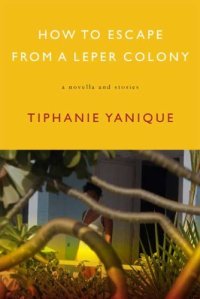
14. How to Escape from a Leper Colony by Tiphanie Yanique

Published in 2010 by Graywolf Press.

An S. Mariella Gable Book (an award given by the College of Saint Benedict for an important work of literature published by Graywolf Press)

Winner of the Fiction Category Prize, OCM Bocas 2011.

Shortlisted for the overall OCM Bocas Prize for Caribbean Literature 2011.

“I get her arms in front and see words written on them. It freaks me out. But it’s just words. ‘Stop looking,’ she says. ‘Stop reading.’ Lord Harry the Judge. I lay back in my seat and I just ask, ‘This is stupid. You couldn’t find no paper?’ She shakes her head, ‘I left my notebook.’ I open the golf and show her the roller paper, like a small notepad. ‘I didn’t think of that’ she say with her voice going all Yankee now. And then she crying like I hit her or something. She sit on her hands the whole drive back. Keep her arms tight by her side. Tonight, I think, I going kiss those arms. I going lick every word if she let me.”
from “Street Man”

I loathe exaggeration, especially when it comes to enthusiasm. I prefer my praise to be as precise as possible. Sadly, this means that much of my best loved phrases must languish, unused, waiting for true beauty to capture them. One such is borrowed from a film: to feel something “like a riot in the heart, and nothing to be done, come ruin or rapture.”

Tiphanie Yanique’s premiere publication is impressive. A collection of short fiction and a novella, How to Escape from a Leper Colony is remarkable in that it feels neither solely craft nor character-driven, yet reads as a spellbinding marriage of both. Here is short fiction to get you excited about the genre entire. Here is a novella you will want to reread until the people in it are achingly familiar to you, a novella which shows its full lustre in its unabridged format, as opposed to the more dim showing it made in Akashic Books’ 2008 anthology, Trinidad Noir. At a handful of pages shy of the two hundred mark, Yanique’s prose begs to be read in one sitting. I  read it cover to cover in bed, bleary-eyed with intensity, and when I reached the last line of the last story, “Kill the Rabbits”, (which I would have loved to see even further fleshed out) I felt that I had not had enough.

How to Escape a Leper Colony features eight pieces. The titular story will show you some of the reasons why an island of lepers and the nuns treating them walk into the sea. “The Bridge Stories” is a compendium of narratives that tells the same story, marking it multiple ways for tragedy and release. “Street Man” reads like a tale you’d hear from the man himself, in a crowded bar, over beers and your interjections of, “Nah, man!”, “Oh gosh, man!”, “For real, man?”. In “The Saving Work”, two white women who’ve moved their lives to the Caribbean puzzle out the truth at the root of why they hate each other so (with a burning church providing the backdrop). “Canoe Sickness” offers a retrospective of a young boy’s thwarted dream of pro-football glory (the least evocative of the pieces, for me). Mason finds a hideaway chapel in Houston that reminds him of his Jamaica home (in strangely erotic tones, too) in the exquisite “Where Tourists Don’t Go”. In the vein of “The Bridge Stories”, “The International Shop of Coffins” is a multipart exposition of grief, distance and the things we’ll do for love. Finally, “Kill the Rabbits” (as authentic an account of the sweet madness that is Carnival as ever I read one) introduces us to three seemingly-different people in the Virgin Islands, and the unusual ways they are fettered, to each other and to love.

Straddling a swinging bridge betwixt magical allegory and gritty realism, these stories are superbly-wrought. Yanique’s eye to detail is exceptional; her attention to a credibility of tone and voice—to the way a person speaks, or internalizes a situation—is finely-tuned. There are numerous delights here for the careful reader that will be missed, and no mistake, by any page-skimmers.  Unearthing sleight of hand contradictions, such as the difference between what characters say and what they do or mean is a particular treasure. What makes it sweeter is that Yanique never contradicts herself; we spend no time running after her sentences, filling in plot holes with frustration. There are no perfect, sparkle-toothed island exotics waving for the approval of tourists here, and this is a relief.

For all that How to Escape from a Leper Colony is a debut offering, nothing about Yanique’s work heralds it as mawkish or sickly desperate to please. Can my desire for this book to have been a longer collection truly be a complaint? Hardly not, though I do wonder how two or three more stories would have affected the impact of the reading. That is a bold-faced hypothetical, however, so I will precisely declare: I love this writer’s writing, and I look forward, impatiently, to reading another riot in the heart from Tiphanie Yanique.

“One of my teachers once said that history has no influence on land, that land is outside of history. He lied or he was mistaken. History has carved down mountains. History has drenched out rivers. History has made the land, and the land has, when under duress, made history. […] No one and no thing is unmoved by human history, and it is a sad, sad truth. But that Carnival the land had decided to defy history. And this, like my body, was a bit of an impossible thing —  but an admirable thing as all impossible things are.”

from “Kill the Rabbits”

This book, and 11 more, are part of my official reading list (which can be found in my sign-up post here) for the 2011 Caribbean Writers Challenge. 

13. His Dark Materials I:The Golden Compass by Philip Pullman

Published in 1995. This Edition: Alfred A. Knopf, 1998.

Winner of the Carnegie Medal, 1995.

Winner of the 70th Anniversary Carnegie of Carnegies (the UK’s favourite Carnegie Medal winning book of all time)

The Golden Compass is bone-chillingly good ( a statement that surely holds some water, when you consider that I read it in decidedly non-frosty tropical temperatures.) Still, I felt the cold—the unmistakable ice-kiss of fear and awe that assails you when, and where, you least expect it.

Lyra  Belacqua has been perfectly content to play at full tilt on and around the premises of Jordan College at Oxford, for the entirety of her eleven year-old existence. Brought up in a well-intentioned yet scatterbrained way by the college academics, Lyra has been accustomed to being orphaned, with no blood relations save her oft-absent uncle, Lord Asriel. Though she lacks parental guidance, Lyra is never alone. She basks in the constant company of her dæmon familiar, Pantalaimon. Both her helpmeet and her best friend, Pantalaimon is of Lyra herself: neither she nor he can fathom a reality in which they exist separately. This bond between human and dæmon exists between all humans—to not be thusly companioned would be beyond the realm of belief, and of decency.

Lyra has long dreamed of accompanying Lord Asriel on his mysterious expeditions to the North, but she cannot predict that she will journey there under the oft-terrifying, fantastical circumstances that do take her. The Golden Compass charts her journey to the bitter-cold roof of the world, where Lyra and Pan must confront an evil beyond imagining, from even the most unexpected of sources.

If you are wary of the magical, mythical, extra-terrestrial or para-normal, The Golden Compass (originally entitled Northern Lights, which I prefer) is not the book for you. If you cannot abide an iota of speculation or criticism concerning organized religion, or discomfiting questions about why we believe what we do, then I strongly urge you to read elsewhere. Still, if you’re even the slightest bit curious, and are not averse to the very real possibility of a paradigm shift, then yes… reading this book could well change your life.

Each of the characters of Pullman’s novel is exceptionally well-crafted, whether they be major or minor. We meet and are awed, cowed, wooed and enraged by a host of extraordinary creatures, including my personal favourite, a fallen bear-sovereign, deprived of his ennobling armour, who dulls his bitterness with drink and hard labour. We also encounter a kindly gypsy seer, and the proud, sorrowful witch with whom he shares a storied past. We scoff at the wizened academics of Jordan College; we weep at the tragedy of a young boy’s loss of innocence, and we marvel, open-mawed, at the depiction of one of literature’s best-drawn, ruthlessly ambitious power couples.

Yet for all their fantastical elements, there is no awkwardness about this cast, no barrier separating them from us. They, too, obsess and are filled with equal parts regret for that which they have done and that which they failed to do. They, too, fall prey to vanity. They, too, are hurt for love, and not one of their stories compels you to narrow your eyes in derision, declaring, “Hmph. Only in a fantasy book.”

Set in an age of invention, discovery and conquest, The Golden Compass is littered with marvellous machinery, with vivid descriptions of barges, airships, of hot-air balloons, of instruments hewn with wicked and wistful intent. The most remarkable of all the creations we discover in this novel, however, is the titular object itself, otherwise called the alethiometer. Entrusted to Lyra to give to her uncle, she is told only that it tells the truth, and that she must learn herself how to decipher it—and learn, she does. The descriptions of the alethiometer attest to its beauty, and Lyra’s interactions with it show us, and her, that parsing the truth is an intricate, highly subjective process.

The novel is written in prose that seems, at times, plucked from the pages of a bygone era’s texts, such are its curious lilts and cadences, the peculiar goodness with which something is said, that enriches the very description of it, elevating it from the commonplace. Pullman truly is a turner of phrases. He subjects language to his particular purpose: to charm and captivate us. By my reckoning, he succeeds at that.

I think there has been some sad compromise over the literature to which we expose children, and I wonder at that. Who says that books for young people must be patterned with every prettiness, every convenient lie, every smiling face and sunny sky we can conjure? Detractors will, of course, posit that there is nothing natural about The Golden Compass, but the heart of the novel is filled with every natural feeling in the world, from grim despair to raging passion to lonely, determined resilience. Lyra becomes a benchmark for ourselves, as we wonder, at all that we would or would not do, with our destinies plotted out against the unforgiving, glorious Northern Lights.

‘You speak of destiny,’ he said, ‘as if it was fixed. And I ain’t sure I like that any more than a war I’m enlisted in without knowing about it. Where’s my free will, if you please? And the child seems to me to have more free will than anyone I ever met. Are you telling me that she’s just some kind of clockwork toy wound up and set going on a course she can’t change?’

‘We are all subject to the fates. But we must all act as if we are not,’ said the witch, ‘or die of despair.’

Enjoy another consideration of The Golden Compass by my dear book reviewing colleague, Jennifer of Books, Personally, which examines some issues and concerns that this review doesn’t directly address, here.

This is the first book I’ve read and reviewed on my personal reading list (which you can see here) for The Bookette’s British Book Challenge 2011.

12. Fruit of the Lemon by Andrea Levy

Published in 1999. This Edition: Headline Review, 2000.

“I became nervous waiting for the poet to start. I was thinking, ‘Please be good, please.’ The poet became my dad, my brother, he was the unknown black faces in our photo album, he was the old man on the bus who called me sister, the man in the bank with the strong Trinidadian accent who could not make himself understood. He was every black man – ever.”

Faith Jackson has always been, for the most part, a good girl. She’s a dutiful, well-attired twenty-two year old university graduate, raised by black expatriate Jamaican parents who, according to the common account, came over to England on a banana boat. White boys heckled Faith about this during her childhood, but to her parents, nothing about that journey even remotely elicits shame. Here, early-established, resides Faith’s quandary: her existence straddles bi-polar states of embarrassment and defiance, of red-faced chagrin at her skin, and awful anger at the reactions it provokes in London, where her ‘kind’ are called ‘wogs, ‘nig-nigs’ and ‘coons’ by the various Caucasian whites with whom she interacts. After witnessing a brutal act of vandalism perpetrated by white thugs against the black proprietress of an independent bookstore, something in Faith gives in to despair.

Alarmed by their daughter’s detachment from her (ostensibly glamorous but unfulfilling) job, even by her withdrawal from the raucous bonhomie of her flatmates’ ambience, Faith’s parents devise a plan. They pay her airfare for a fortnight’s getaway in Jamaica, the home to which they’ve been contemplating returning. As Faith’s mother gently reminds her, “Child, everyone should know where they come from.”

While reading Fruit of the Lemon, it became quickly apparent to me that I was in the hands of a startlingly evocative writer. Levy rarely ‘lays it on thick’: there is none of that overindulgence, poorly executed, in exposition, description or plot progression. The ingrained racism Faith endures uneasily in England, her incremental malaise and mistrust of her own complexion, are subtly enforced at every turn, ‘til we feel like buckling beneath the pressure, ourselves.

Caribbean readers will not, I think, be disappointed by Levy’s depiction of Jamaica. Not being of Jamaican ancestry personally, I cannot claim a countrywoman’s expertise, but the testament of the life and people of the island never, not once, caused me to furrow my brow and say, ‘Eh?’ Odds are, whether you are from Jamrock, or Trinidad, or Barbados, or anywhere beneath our persistent and particular sun, you will recognize trademarks of your own growing-up stories. You will steups (loud and irritated sucking of one’s own teeth, referenced several times by Levy) at the description of a relative just like the one who drives you mad. You will sigh when Faith learns the saddest stories of her origins from her Jamaican family, because that sadness, that mad, mad history lies dormant in your family too, just waiting to be prodded uneasily to life again.

Fruit of the Lemon made me laugh uproariously, no small feat, considering that it takes comedic heft on the page to really send me reeling with mirth. Levy excels at marrying elements of the absurd with the lamentable. This is particularly well-transmitted in the presentation of Faith’s ridiculous yet endearing elder brother Carl, who proclaims his superiority over his sister, treating her with a mixture of gruff disdain and barely-veiled irritation, but sheepishly hides the face that he is only just doing his first A-level exam. Most, if not all, of Levy’s characters are drawn in this enviably well-rounded way, so that they things they do and say elicit both hilarity and mortification.

Perhaps most striking of the praises offered to Fruit of the Lemon is the Sunday Telegraph’s assessment that “…[readers] will recognize the truthfulness of the world which Andrea Levy describes”—and these truths, to my mind, have less to do with being Caribbean, and more to do with being an observant person, regardless of skin hue or geographical marker.

With a narrative that spans the reach of the Atlantic, Levy writes convincingly of home and abroad, of isolation amidst throngs and of togetherness where only a few are gathered. Fruit of the Lemon begins with a humbly tiny family tree of Faith and her nuclear family. It ends with the deeply-rooted history of multiple branches, each tier a story and a legacy all its own.

This review was initially featured on Baffled Books.

This book, and 11 more, are part of my official reading list (which can be found in my sign-up post here) for the 2011 Caribbean Writers Challenge.

11. The Fourth Treasure by Todd Shimoda

Published in 2002. This Edition: Random House, 2003.

“In the sensei’s diluted mind there was a flash flood of knowing, a firestorm of awareness, a billion synapses exploding into a nova of cognizance. So much to resolve, nearly no time left.”

First year neuroscience graduate student Tina Suzuki learns of an intriguing, potentially lucrative test study for her doctoral thesis at the University of California, Berkeley – a sensei of shodô (Japanese calligraphy) has suffered a debilitating stroke. The attack has left him severely weakened, devoid of speech, robbed of his formerly impeccable skill with the vital implements of calligraphy, known as the four treasures: fude (brush); sumi (ink); kami (paper); suzuri (inkstone). Despite the effects of the aneurysm, Kiichi Shimano, better known to his students (one of whom is Tina’s Japanophile boyfriend, Robert) as Zenzen sensei, continues to create beautiful yet incomprehensible tracings. The markings, called ‘art’ by Tina and ‘scribbles’ by the doctors tending to the sensei, hold reserves of emotional appeal for one unlikely source—Tina’s self-effacing mother, Hanako, whose connection to shodô and Shimano run deeper than anyone (save one wily private eye from Kyoto) can suspect.

In her praise of The Fourth Treasure, author Liza Dalby remarks that the novel “…has the depth and nuance of a skilfully calligraphed scroll.” As hyperbolic as such a statement sounds, her assessment is as precise as Shimoda’s writing and the rendering of a tale ornately-wrought, presented with deceptive simplicity.

If I were to name a point at which this book excels without exception, it is in its form, which is briskly engaging without being irritatingly self-involved (in my experience, most literary works of the latter ilk are both annoying and difficult to stomach.) The margins of the novel serve as room for annotations. From Tina’s neuroscience notebook, we learn of the complex framework of the human mind, as she neatly defines biochemical behaviours (while finding that equating them with individual consciousness remains a mystery). From the Instructor’s Journal from Zenzen’s School of Japanese calligraphy, we receive lessons in shodô, complete with exquisitely-rendered kanji and exacting guidelines for their creation. The text is also interspersed with the mysterious inkwork of Zenzen sensei, flanked by tiny segments of poetry, no doubt indicative of the disjointed thoughts of the shodô master. These brief lines are heart-rending. They combine Shimano’s yearning with cryptic phrasing and brevity of form to achieve a muted, haiku-worthy stream of thought. The effect is mesmerizing—I could read an entire novel composed of just these.

There are multiple narratives at work in The Fourth Treasure, too. The story of Tina’s personal development may seem to initially dominate the progression of the novel, but soon, we realize we are reading a delicately balanced commingling of chronicles, including a series of sepia-tinted flashbacks that reveal the dynamic connection between the sensei and Tina’s mother. Among the other tales told are a bird’s eye view of Kando, the detective who finds himself entangled in the stories of Shimano and Hanako. Most enthralling, however, is the ancient History of the Daizen inkstone, used by Shimano and coveted by many, who believe he possesses it unlawfully. These fragments of the lives of the 17th-century calligraphers who first drew inspiration and art from the Daizen inkstone are expertly handled, in fine, evocative and precise prose. We may only see these characters in interludes, but the impressions they make are deeply felt – a sign of unforgettable storytelling if ever I read one. Adding to the near-flawless counterpoise that Shimoda exacts is the advantage of successful use of multiple perspective: we are granted access, not just into the mind of Tina, but the wonderings and speculations of several others: most notably, Zenzen sensei, whose thoughts open the book and preface his stroke, and Hanako, whose quiet revelations bring the novel to a close in a coda of liberation and sweet, shodô-tinted release.

If The Fourth Treasure falters anywhere, it is in matching the vividness and vitality of its crafting to the consistent success of its characterization. Tina, for example, seems uncertain for so much of the novel, not just in her aspect, but in her formation, like a series of wobbly figures plotted on a blurry Cartesian plane. It is the world of shodô that breathes purpose into her (and makes her infinitely more readable than she is when we meet her.) Even if the individual characters do not incite a riot of passion in the heart (and indeed, this may well not be their purpose), their circumstances cannot but move you. They grapple with love that has never died, even though it was starved, and with love that was never truly in bloom to begin with; with loss of one’s access routes to exhilaration in art and life, and with how to forge new pathways through pain and the bewilderment of loss.

My January 2011 has been a month of good reads, and The Fourth Treasure has been the best of them.

Obligatory Bloglovin’ Post!

Egads, folks. The fun-loving monkeys over at Bloglovin’ have commanded me to add a mandatory post here, claiming my blog, as part of their signup routine. Those monkeys sure do come up with some interesting security checks. Witness mandatory link below:

Follow my blog with bloglovin

It’s a suggestion, not an order. 😉 Also, I’ve fancily linked Bloglovin’ widgets in my sidebar, made just for Novel Niche. *preens*

Okay, miscellaneous blog-housekeeping update over. Get back to that devastatingly good book now! (I know I will.)

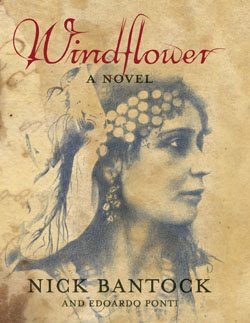
10. Windflower by Nick Bantock

Published in 2006 by Chronicle Books.

I was seduced, once. Part of that seduction was the gift of the incomparable Griffin and Sabine books, a multilayered, visually arresting collection of the correspondence shared by two extraordinary, magically-linked soulmates. Is it any wonder, then, that my heart skipped a beat when I spied the lushly-presented (Chronicle Books, hardcover) Windflower, nestled between two monotonous bestsellers at my local library? Since catapulting myself headfirst in love with Griffin and Sabine, I’d added everything Nick Bantock has ever written to my must-explore list. This was a book about which I’d been breathlessly excited, so I found a quiet nook of the library, and, Laura Marling crooning whisper-low through my headphones, I lost myself in another of Nick Bantock’s compelling—albeit decidedly less so—creative offerings.

Windflower is Ana’s story. She is a young woman, skilled in the cante jondo, who seeks to restore the life-preserving, nomadic spirit to her people, the Capolan, who have become distressingly landlocked, through choice, over the years. With none of her tribespeople, except her sage grandfather, able to discern that her impending marriage would be disastrous to her future dreams of rejuvenating the Capolan through dance, Ana flees her village. She runs to the seaport town of Serona, in search of Felix Bulerias, the man she’s been told can guide her in her quest to channel the inner fires of her dance. Instead, she encounters four very different men, each intoxicating and mysterious in his own manner. By turns enchanted, perplexed and emboldened by Serona’s exotic wares and compelling figures, and haunted by the dual burden-privilege of her responsibility to her people, can Ana discover herself in her greatest passion of all: her connection to the Eternal Dance?

I could not help but think of the plot progression of a Disney princess title, both as I read Windflower and as I revisit it now. This is not necessarily, perilously a bad thing, but the overall effect is far out of the orbit of my expectations. It isn’t that the novel isn’t good. Indeed, the work feels lovingly hewn in both design and thematic. Bantock has created all of the paintings and drawings that appear, as one continuous footnote-mosaic, in the novel from beginning to end. In the details of these elaborately compiled page-tiles, it is easy enough to discern traces of the artist’s eerily mesmerizing style. Alas, though strange and lovely to behold, nothing of this border-art compelled me beyond a calm appreciation, when what I’d hoped to do was clamour for more. In this case, more of the same would just have produced further demonstrations of cool regard.

To speak further on thematic and content, Bantock has crafted a story that must surely appeal to most, hence the Disney-esque charm, perhaps. There is pleasure in reading of the four men who entrance Ana:

♣ Boreos, a handsome, commanding businessman who incites a fever pitch of lust in Ana, while simultaneously leaving her in doubt of her autonomy in his presence

♣ the chivalrous, middle-aged man of means, Mr. Hamattan, who platonically woos Ana into teaching him the flute, and gets her closest to Felix Bulerias (but at what cost?)

♣ Zephyr, Ana’s animated fellow tenant and fledgling pilot, who lends wings to her spirit, but is unable to reign in his jealous suspicions of her other admirers

♣ Sirocco, the lean, mysterious foreigner who channels passion and purpose into Ana’s cante jondo, but wants her to dance to his beat above all others

Amidst the chasms and crests of her adventures with these four, Ana often turns to the lovely and worldly Halle, who becomes her co-worker, landlady, confidante and adviser. Though she struggles with finding her own voice, which often gets tangled up in the mire of others’ best intentions for her, nothing about our protagonist’s journey struck me as particularly tortuous. At most turns, Ana is surrounded by encouraging friends, a raucous yet pleasant workplace, and a quartet of attractive men vying for her attention.

Bantock does set obstacles in Ana’s path to self-actualization, yes. He does pepper the landscape of her many happy Serona days with doubt and trepidation, but I couldn’t help but think that Ana’s path was much more smoothly-paved than that of the average teenage runaway bride who flees to a city completely unknown to her, in which she knows no one, in which her people are routinely marginalized, in which she is a petite, unaccompanied young woman with a pocketful of dowry coin, ripe for the picking.

It is my expectation of ‘more’ that hinders a glowing review of this fine novel. The story is fine and well-rendered, in language that is fine, and on occasion, ascends to a sublimeness of expression. The resolution of Ana’s fate (and that of her people’s) was fine, in a satisfyingly foreseeable way. This is a fine book, truly, to add to any collection of Nick Bantock’s oeuvre, but I daresay it is not his best.

“No longer governed by her mind, her feet steered her body. The tune was not mournful, though it was melancholy. Never speeding, it gyrated within its solitude. She traced it around and around the rooftop until eventually the rain began to fall more violently and she could no longer hear any music, just water drops striking the tiles. Their staccato beat broke her hypnotic swirl, and she began to dance to the drum of the rain. Faster and faster she whirled until she lifted her face to the clouds and laughed out of sheer pleasure.”

British Books Challenge @The Bookette

For a while, I used to think of myself as more British in sensibility and temperament, than Caribbean. This is a feeling that’s been laid to rest with liberal helpings of common sense, perspective, and amazing West Indian food. (Just kidding about the food. It’s merely a bonus.)

Still, my love of phenomenal British literature abides, and so I could not resist from adding myself to the long list of participants in Becky (aka The Bookette)’s meticulously-organized and enthusiastically promoted British Books Challenge for 2011.

I’ll be entering in ‘The International Friend’ section, aiming to complete ‘The Royal Family’ challenge—that of reading 12 books by British authors. While doing up my final list, as with my Caribbean Writers Challenge ’11, I aimed to cover a wide range of genres, forms, concerns and literary voices.

The Challenge Shortlist (in no particular order)

{I will periodically update this list, as the books are read and reviewed.}

1. (Short Fiction) Books of Blood 1-3 by Clive Barker

2. (Novel) Under the Volcano by Malcolm Lowry

3. (Novel) Oranges are Not the Only Fruit by Jeanette Winterson

4. (Play) Indian Ink by Tom Stoppard

5. (Novel) The Eagle of the Ninth – Rosemary Sutcliff

6. (Novel) Gold – Dan Rhodes

7. (Novel) The End of Mr. Y – Scarlett Thomas

{Read and reviewed in April ’11, here.}

8. (Novel) The Golden Compass – Philip Pullman

{Read and reviewed in February ’11, here.}

9. (Novel) After the Fire, A Still Small Voice – Evie Wyld

{Read in September ’11, reviewed in October ’11, here.}

10. (Novel) The Golden Notebook – Doris Lessing

11. (Short Fiction) Free Love and other Stories – Ali Smith (one of the novels given in my Mother-Daughter Yuletide Exchange 2010.)

12. (Poetry) The World’s Wife – Carol Ann Duffy

[Official sign-ups are closed, but you can of course follow the challenge, if you wish!] This giveaway-packed challenge promises to be a pleasure, complete with far too many glorious cups of Earl Grey and (real or simulated) stormy-moor nights.

Caribbean Writers Challenge 2011 @BaffledBooks

CWC Challenge Link! Click me!Even before a dear friend of mine who runs a funny, tasty cooking blog (over at Can I Have it Like That?) recommended this challenge to me, I’d been feeling the lack of regional literature in my life. I am a Caribbean girl, despite the foreign impressions I might sometimes convey, and I love the words, and word-wielders, of my islands and my region, as surely as I can love good writing, wherever its source.

Lisa and K, who run the engaging book review blog, Baffled Books, seem to feel the same way. I couldn’t agree more with their estimation that “Caribbean writers are notoriously underrepresented even within the Caribbean, with only a small section of local bookstores dedicated to them, few on the school syllabus and the majority of the population having no clue who the supposedly prominent writers, that represent their islands, are.  In the wider world only particular literary groups take much notice and most people, again, are completely unaware that the Caribbean is a hub of literary enthusiasm.” Well said!

I’ll be aiming to complete and review 12 Caribbean books this year, putting me in the advanced category of the challenge. It is a trying task in and of itself to find authors who live and work entirely in the region, so some of the literary works I’ve selected do belong to the Caribbean diaspora collective. I do not think that this tampers with the spirit of the challenge, though – to discover and appreciate writing that is enriched by, and grounded in, a Caribbean sensibility, in regional aesthetics, languages, series of identities, landscapes and forms.

The Challenge Shortlist (in no particular order)

{I will periodically update this list, as the books are read and reviewed.}

1. (Novels) Either Anna In Between or Prospero’s Daughter by Elizabeth Nunez (Trinidadian-N. American)

2. (Short Fiction) Sections of an Orange by Anton Nimblett (Trinidadian-N. American)
{Read and reviewed in April ’11, here.}

3. (Novella/Short Fiction) How to Escape From A Leper Colony by Tiphanie Yanique (Virgin Islands-N.American)
{Read and reviewed in February ’11, here.}

4. (Novel) Texaco by Patrick Chamoiseau (Martiniquan)

5. (Novel) Raise the Lanterns High by Lakshmi Persaud (Trinidadian-British)

6. (Novel) The Year in San Fernando by Michael Anthony (Trinidadian)

7. (Poetry) The Predicament of Or by Shani Mootoo (Trinidadian-Canadian)

8. (Novel) Jonestown by Wilson Harris (Guyanese)

9. (Novels) Any one of the following from Andrea Levy (Jamaican-British): Never Far From Nowhere, Fruit of the Lemon, or Small Island
{‘Fruit of the Lemon’ – read in late January ’11, reviewed in February ’11, here. This review was first featured on Baffled Books.}

10. (Novel) Is Just A Movie by Earl Lovelace (Trinidadian)
{Read in August ’12, reviewed in September ’12, here.}

11. (Novel) No Telephone to Heaven by Michelle Cliff (Jamaican-N.American)

12. (Poetry) Yoruba from Cuba: Selected Poems of Nicolás Guillén (bilingual edition) by Salvador Ortiz-Carboneres (translator) and Nicolás Guillén (Cuba)

Lisa and K have since shelved this challenge, but by all means, sun-kissed, coconut and bullet-dodging, biche-breaking, wine-and-revelry reading, to all.

Novel Gifts between Mother and Daughter

This past Yuletide, I received ten books from my mother, who is the original (and still the best) literature-gifter in my life. She knows that books, not Blackberries, are the presents that truly delight me—and the feeling is bookwormishly mutual. I’ll explore the Yuletide novel cheer from both sides: first, my mother’s offerings of paper, ink and imagination to me, then mine to her. Without further ado:

Mother to Daughter

1. Diary of a Bad Year – J.M. Coetzee

My mother has been giving me Coetzee for years now. Perhaps 2011 will be the year in which I finally begin reading him in earnest. I remember tiptoing around his work as a young teenager, mortified, appalled and sickly compelled by the passages I couldn’t help steal glances of, out of Disgrace and Badlands. At 24, I can think of no better endorsement for a writer than work you just can’t get out of your mind or stomach, even if it’s just a distressing snippet that’s haunted you for years. (Perhaps especially if it’s such a snippet.) Diary of a Bad Year is a story of dubious morality, lust and avarice, told in three voices simultaneously. Yes, I am certain this is the year to read Coetzee.

2. The Known World – Edward P. Jones

The back jacket cover of this handsome edition (Amistad Deluxe, Harper Collins 2006) of Jones’ Pulitzer Prize-winning novel declares:

“He was thirty five years old and for every moment of those years he had been someone’s slave, a white man’s slave and then another white man’s slave and now, for nearly ten years, the overseer slave for a black master.”

From just this, I’m already intrigued. Any novel that compellingly and masterfully seeks to reorder, retell or critique the cruel and arbitrary assignations of merit decreed by history is a book I must read.

3. Lost in the City – Edward P. Jones

This collection of fourteen stories hinges on “the lives of African American men and women who work against the constant threat of loss to maintain a sense of hope.” There are stories within such a compilation, one feels instinctively, that cannot be denied. This is one of the most powerful elements to short fiction writing—the conveyance of entire lives in a matter of lines. You get the impression, just by leafing through the pages of Lost in the City, of the sheer immensity of scope and significance of the lives that lie within, waiting to intersect with yours.

4. Telex from Cuba – Rachel Kushner

I remember unwrapping Telex from Cuba, poring over its blurb, then declaring to it, “Well, you look original.” It touts itself as “the first novel to tell the story of the Americans who were driven out of Cuba in 1958”, ensuring that my interest is piqued, in a similar manner to my anticipation of reading The Known World. This seems like a gutsy, ambitious first novel, and I am always eager to sink my teeth into those.

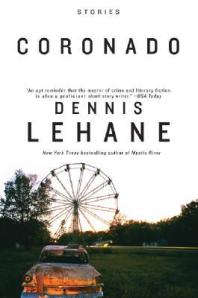
5. Coronado – Dennis Lehane

Lehane’s crisp, unflinching prose has fuelled some of the best and bleakest crime/suspense films in recent memory, namely, Gone, Baby, Gone, Mystic River, and Shutter Island. This collection offers an exciting look at the author’s short fiction, as well as a play in two acts. This is precisely the sort of fiction against which many people have accused me of being strongly biased. I am looking forward to reading it—and I will likely expound on my overall lack of enthusiasm for the genre of crime fiction (spoiler: so much of it is formulaic, snoozeworthy drivel) when I review Coronado, but I’ll probably spend more time talking about how Lehane exemplifies action/suspense writing done right.

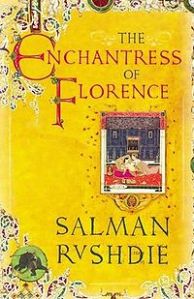
6. The Enchantress of Florence – Salman Rushdie

Having not yet read Midnight’s Children (gasp! the horror), The Ground Beneath Her Feet is my favourite Rushdie—it is a haunting story, exquisitely told, as one imagines, somewhat enviously, that only Rushdie can. The Enchantress of Florence includes the tales of an achingly beautiful princess, a mysterious conjurer bearing a missive from Queen Elizabeth I, and the story of many stories that explore the threads between East and West. Sounds like typical Rushdie, right? That’s particularly why I have high hopes for this book. We shall see if it will dethrone my current preference in the Rushdie-canon.

7. Free Love and Other Stories – Ali Smith

I’ve already read one of the stories from this first collection of Smith’s. Entitled “Text for the day’, it documents erstwhile-bibliophile Melissa’s rejection of her scarily over-catalogued life. She traverses locations with no apparent motive, tearing out the pages of books as she goes. The blurb of the collection attests that “the stories in Free Love are about desire, memory, sexual ambiguity and the imagination.” Having also read the titular story, I’m inclined to nod, respectfully, at that endorsement.

8. Like – Ali Smith

I haven’t pored over this one extensively, just yet. Here is what its blurb says:

“Ali Smith evokes the twin spirits of time and place in an extraordinarily powerful first novel. By turns funny, haunting and moving, Like soars across the hidden borders between cultures, countries, families, friends and lovers, and teases out the connections between people – the attractions, the ghostly repurcussions.”

It sounds like a whole lot of vague, spooky deliciousness, doesn’t it? I wonder if I will be amused, haunted and moved, as advertised?

9. Now is the Time to Open your Heart – Alice Walker
I feel rather gauche, since I wasn’t familiar with any of Alice Walker’s work apart from The Color Purple, when she’s got at least ten works of fiction to her name (not counting her non-fiction and poetry collections.)

Herein lies the story of the sojourner, Kate, who uproots herself from all vestiges of the familiar to embark upon a voyage of self-discovery. (Her lover simultaneously undertakes his own parallel, separate-though-inextricably-connected journey.) Do you believe that Alice Walker can turn out a tender and triumphant vision quest of a story? I do, even based on my solitary yet unforgettable past travels in her writing.

10. The Laws of Evening – Mary Yukari Waters

Arrestingly presented (Scribner trade paperback, 2003), this debut collection of short fiction would beg to me to rescue it from a bookshop shelf, and I am certain I would have answered. These are eleven “graceful, expertly crafted stories, set in Japan, (which) explore the grey areas between the long shadow of World War II and the rapid advance of Westernization.” As loath as I am to declare, unwaveringly, that The Laws of Evening promises to be a good read, I am entirely sure I will not be able to resist reading it for long.

I’d say that my mother has an eerily good sense of what appeals to me, bookwise, but there’s nothing eerie about it at all. She’s been the one feeding my voracious appetite for reading since the beginning of my beginning. Thankfully, I’ve gotten just as good at predicting what appeals to her, too. Here are the offerings from Literature-land I found for her (I find it fitting, somehow, that total turned out to be exactly half of what she gave me!)

Daughter to Mother

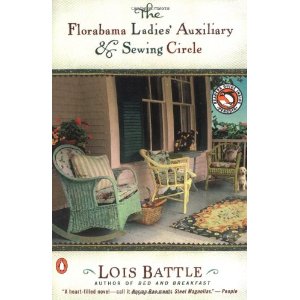
1. The Florabama Ladies’ Auxiliary & Sewing Circle – Lois Battle
Yes, I can see all you self-proclaimed readers of serious fiction furrowing your brows at the title of this one, but having perused it myself, I can attest to the fact that the writing is solid, substantial, and funny. It documents the travails of a group of recently-fired lingerie seamstresses as they cope with their suddenly unemployed status. My mother is currently reading this one, and her prognosis so far is positive. According to her, the plot is convincing enough (while at times sympathetic to a movie one might or might not spy on the Lifetime Channel), the characters are well-drawn and engaging,  and the overall effect (she’s midway in) is that of a band of middle-aged women trying to furnish their lives with purpose and re-empowerment.

2. Shepherds Abiding – Jan Karon

In this, book eight of her heartwarming, soul-food-esque Mitford Years/Father Tim series, I’ve got no doubt that Jan Karon delivers more of the same nostalgic and sentimental fare in this Christmas-themed installment. Of Shepherds Abiding, Karon herself says: “This Mitford story presented itself to me, quite unexpectedly, and asked to be told. I hope readers will find it a perfect refuge from the holiday frenzy.” I have thought, since encountering the Mitford tales, that they exemplify what is best about quietly contemplative, serialized offerings of their ilk – they are told with illuminating grace, love, and considerable talent.

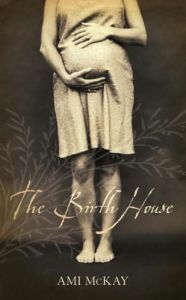
3. The Birth House – Ami McKay

A handful of years ago, novelist McKay came to inhabit a 20th century Nova Scotian birthing house, the historical details of which (specifically, details concerning the woman who managed the house, a pioneering midwife) eluded her. History did not sate her curiosity, or slake her imagination, so The Birth House is the product of McKay’s investigations and fictive ruminations on the legacy of birthing houses, midwivery, the conflict between holistic and scientific medicine, and the timeless, unassailable bonds of sisterhood.

4. Our Father Who Art in a Tree – Judy Pascoe

I confess, the intricately detailed drawing of a tree, as well as the quirky title, drew my hand toward this book, but the description convinced me to keep, and gift it. Having recently completed the novel, my mother found it sadly charming; life (and death) affirming: a brief, slow carousel ride of loss, of succumbing, coping, and finally, surpassing grief.

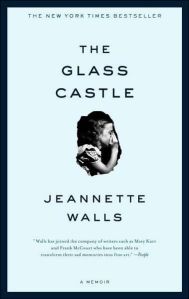
5. The Glass Castle – Jeannette Walls

The only memoir on our shared Yuletide list, I have heard The Glass Castle declared to be the sort of book that makes one profoundly glad for their upbringing, for the travesties of their youth and adolescence, which, when compared to Walls’ own oft-nightmarish background story, seem positively peachy. The memoir opens with Walls shamefacedly trying to ignore the sight of her mother, rooting through a garbage can, from the former’s vantage point in a comfortable city cab. One can only imagine the revelations—some bleakly humourous, some humourlessly bleak – that lie in wait.

There you have it, readers. With offerings like this to usher in a new year of reading, I get the feeling that 2011 will be brimful with good reads—and, let’s hope, some downright outstanding ones.