On a blood-blotted book launch: Featuring Bled by Jason McIntyre

“It will have blood; they say, blood will have blood.
Stones have been known to move and trees to speak;
Augurs and understood relations have
By maggot-pies and choughs and rooks brought forth
The secret’st man of blood. What is the night?”
Macbeth, (III.iv.121-125)

I’m a girl who’s down with particularly good horrific suspense… reading it, that is. Spare me the legions of chainsaw-wielding, lip-sewing stalkers of screens both silver and small, but if your writing can thrill me past any temptation of sleep, keep me pacing, prompt my fumblings for a totem of familiarity, or rip a gasp out my throat, then you’re good. The real question I ought to ask Jason McIntyre, author of Thalo Blue and The Night Walk Men, weaver of wickedly unsettling prose, then, is this: “Just how afraid should we be about your latest literary offering, Bled?”

Tell us, Jason… how much blood are we really in for? Should I be wielding my special anti-sanguinary parasol, for good measure? Here’s his response.

Why is blood so creepy?: discussing my new book, Bled

There’s no denying that there’s blood in my new book. After all it’s front and centre: the title is Bled, after all. And there’s a big dab of it right on the cover, hot red against stark white.

So what’s with suspense and horror writers’ fascination with the stuff? It’s visceral, I suppose. It’s the stuff we are all made of. Pumping in all our veins is this common material. Without it we would die.

And if we see some of it (or lots of it, as the case may be) it probably means we’re on the very cusp of dying. Or hurting. Since suspense is often about what it is to hurt, and horror is often about what it’s like to have hurt inflicted, it makes sense that blood would be bound up in these kinds of fiction.

But how much blood is in my new book Bled, anyhow? Is there just gobs and gobs of it? If you read this story, will you have to get on your waders and dive in?

I can tell you that it’s not gory for the sake of it. There are some difficult scenes but my catalogue would never be called gratuitous. Nor would Bled.  In fact, I would venture to say I’m not a horror writer at all. Bled is much more about the human condition, much more about facing imperious odds and seeing if one can come out alive. If there’s a lasting legacy with the story, if readers can remember something other than the bloody cover, I do hope it is this: people can push back when they’ve been pushed too far.

So, what do you think of the title and cover? Does blood make you squeamish? Does it excite you? If it does, I might be tempted say you do like horror. But I bet you’ll like this book anyway.

Ah, yes. That’s the sound of my parasol billowing open to meet the wind. While I wrestle on a spatter-resistant raincoat, have a look at this spine-tingler of a teaser trailer, then tell me you’re not all the more intrigued. I was.

If that made you hungry for more than a minute’s revelations, sink your teeth into this description.

Bled: About the Novella

She only wanted to leave. But he took that option from her. Now she wants it back.

Set on the same island as the reader favorite Shed, the latest literary suspense novella from bestselling author Jason McIntyre picks up the Dovetail Cove saga with this story of one lonely woman… trapped.

Tina McLeod is on the cusp of a new life. Extraordinary change is rare in her world but this newsflash means she can finally leave her small island town for good. No more pouring coffee for townsfolk in Main Street’s greasy spoon, no more living under the weight of her born-again mother. That is, until Frank Moort comes in for his usual lunch and dessert on an ordinary Friday in May.

Bled sees things turn backwards and upside down for each of them. Their encounter is prolonged and grotesque, the sort of thing splashing the covers of big city newspapers. Both are changed. And neither will come out clean on the other side.

A story about taking what’s not yours, Bled explores pushing back when you’ve been pushed too far. It paints in red the horrors from our most commonplace of surroundings: right out in the open where nothing can hide behind closed doors and shut mouths.

About the Author

Jason contemplates labelling all Bled proceeds as blood money.

Jason McIntyre has lived and worked in varied places across the globe. His writing also meanders from the pastoral to the garish, from the fantastical to the morbid. Vibrant characters and vivid surroundings stay with him and coalesce into novels and stories. Before his time as an editor, writer and communications professional, he spent several years as a graphic designer and commercial artist.

McIntyre’s writing has been called darkly noir and sophisticated, styled after the likes of Chuck Palahniuk but with the pacing and mass appeal of Stephen King. The books tackle the family life subject matter of Jonathan Franzen but also eerie discoveries one might find in a Ray Bradbury story or those of Rod Serling.

Jason McIntyre’s books include the #1 Kindle Suspense, The Night Walk Men, Bestsellers On The Gathering Storm and Shed, plus the multi-layered coming-of-age literary suspense Thalo Blue.

I’ll be reading Bled this weekend, garbed in all my protective gear, clot-resistant umbrella at the ready. Can I withstand the carmine-coloured assault and remain untouched? More importantly, why would I ever want to? Bring on the psyche-unravelling, spinal-tremor-eliciting, literary maelstrom.

You can purchase Bled directly from Amazon, here. Peruse the Bled feature over at Books, Personally, hosted by my dear friend Jennifer, hereStop by Jason’s website, The Farthest Reaches. Follow him on Twitter, and ‘like’ his Facebook fan page. With all that virtual love, perhaps his next book will be about fairies and unicorns, and blithe forest creatures of eternal light? No, probably not.

A free electronic copy of this novel was provided by Jason McIntyre to the reviewer.

“Come, turn the page with me…the best is yet to be (again)” – A Special Feature on Rereading.

Today, I finished The Lord of the Rings for the second time. (The last time I completed it, I was in my fresh-faced teens.) Today, as I closed the cover, placed it back on the shelf that holds my most treasured tomes, I knew that I would read it again, and again, until my fingers turn gnarled with the passing of time.

This feature is not devoted to a review of The Lord of the Rings, however.  (That challenge I shall save for a future time.) When I began this particular reread, it occurred to me that many readers dislike (and specifically avoid) any rendezvous with books. “Why should I do that?” I remember a distant friend retorting, when I pressed the issue, as part of a lively discussion. “There are so many other books in the world to read—if I enjoyed it when I read it the first time, then that’s all well and good, but I’m not going to waste the effort to go through it again.”

In turn, I posed the simple question, “What is your favourite book to reread, and why?” to a handful of my dear colleagues and bookish comrades. I am pleased to share ten thoughtful responses, ranging from the whimsical to the wistful, to the wise, in no particular order.

The Harry Potter series ~ J.K. Rowling

The Reader: NickRAWR

The Reason: “I’ve been an avid fan of the Harry Potter series since I was a kid. There’s no doubt that some will debate its legitimacy as an amazing series, but what cannot be debated is the impact it has had on pop culture as a whole. My  obsession with the series might have something to do with nostalgia, but for the most part it’s because the world and the characters that Rowling weaves are not only believable but a joy to delve into. The fact that the series is essentially seven years long means that I basically grew up alongside these characters. Everything about the Harry Potter series feels comfortable, like an old friend. That is the reason I constantly re-read the series. That is the reason I don’t get bored of it.”

NickRAWR can always be found on the online battlefield of Call Of Duty, making music or tap-dancing to aggressive heavy metal.

{You can read Nick’s original creative writing at his personal blog, Dusty Mindroads.}

The Discovery of India ~ Jawaharlal Nehru

The Reader: Sumana @ Books with a Cup of Coffee

The Reason: “In The Discovery of India, Nehru sets out on a voyage of self-discovery and offers a penetrating analysis of his own motherland. The book, first published in 1946, prompted Albert Einstein to write to Nehru: “I have read with extreme interest your marvellous book…It gives an understanding of the glorious intellectual and spiritual tradition of …India.” India’s past, her glory, her victory, her shock, her reminiscence, her philosophy, her geography, her fate, and her everything… This is a compelling read from the man who lead India in her darkest hour; the man who was chosen by destiny to enlighten the Indians, proves himself to be an enlightened soul when it comes to knowing her. The history is nothing like a research material, as it was intended to primarily ignite curiosity in a nine year old girl to know about her motherland. At times the book seems a little bit exaggerated, but it was written to make readers passionate about India.”

I am Sumana, a stay at home mother to 2 little boys. I am from India, but living in U.S. for 10 years now and I love, love and love to read. Why? Because…

{You can read Sumana’s insightful thoughts on books at her review blog, Books with a Cup of Coffee. She’s also amenable to Facebook friendships, here.}

The War of the Worlds ~ H.G. Wells
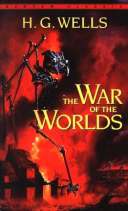
The Reader: Rae

The Reason: “Why do I keep going back for more? The War of the Worlds was the first sci-fi book I ever read. I’ve never been into sci-fi, even as a kid, but H.G. Wells painted a picture that lived on in my young mind. Gargantuan machines sent from Mars to enslave our Earth, coupled with the rich language of the Victorians; what was not to like?! It certainly made a refreshing change from Star Wars and Star Trek! Over the years, I’ve read and re-read this tiny book and, with it, my collection of Wells’ work has grown as has my love for this early version of science fiction. Star Wars? No thanks, I’ll take dirty, great machines from Mars please!”

When she’s not being the world’s most awesome events manager, Rae spends her days writing novels set in a Victorian world of sex, drugs and heavy metal.

{You can reach out to Rae, by befriending her on Facebook, here.}

Summer and Smoke ~ Tennessee Williams

The Reader: Pixxy

The Reason: “In high school (a long time ago!), I fell in love with Tennessee Williams’ works. It first started with buying The Glass Menagerie for my literature class. After reading it, I thought to myself that I had to have more! This desire led me to the very dear to my heart play, Summer and Smoke. My emotions and part of me became attached to that play; it felt like if the character Alma and I were feeling the same sort of self conflict at the same time, if that even makes sense. The main characters are Alma (who is my favourite) and Dr. John. Her angelic character of almost suffocating and debilitating purity is in love with the scandalous, drunkard, broken but almost fixable and redeemable Dr. John. One of the main reasons this play is irresistible is that people love this sort of love story; the characters are flawed but love each other so there is a possibility of ending in bliss, or their flaws can lead to utter destruction.”

Pixxy is a kind soul that devours dark chocolate, sips tea, loves pixies, gnomes and music.

The Complete Book of Marvels ~ Richard Halliburton
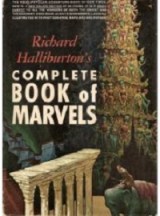
The Reader: Books, Personally

The Reason: “This was the book I came back to over and over as a child. I believe it was my father’s book when he was a child. Richard Halliburton was a world traveler back in the earlier half of the 1900’s, when travel was not so easy or so commonplace. His adventures took him to every exotic corner of the world, from which he compiled his travel stories and photographs. From the mountainous Tibet, where he met the Dalai Lama (then a child!), to the secret city Petra carved out of stone, to the ruins of Angkor Wat to the pyramids of Egypt, the places in this book so captured my imagination, I never tired of reading it. The book was quite old already when I came to love it, and by the end it was barely held together with tape.”

Jennifer of Books, Personally is a mom, avid reader, and blogger. Oh, and traveller, both in person and in armchair.

{You can read Jennifer’s thoughts on books of all sorts at her review blog, Books Personally. You can also follow her on Twitter, here.}

Ender’s Game ~ Orson Scott Card

The Reader: K @ Baffled Books

The Reason: “This is the first book I had to read for school and actually enjoyed enough to read it again. In those days I didn’t read very much, and the mere idea of having to read something for school automatically negated any chance of me ever actually enjoying it. However, I did enjoy reading it…I would like to say it is because I could relate to the main character, Ender Wiggins…but I’m no boy genius, and if an alien race called ‘the buggers’ had any designs on world destruction and they needed a brilliant strategist…I would certainly be the last person they would call. I think I enjoyed it because I was just a kid reading about another kid and I’m still that kid…just a bit taller with some facial hair…”

K is a Literature major who is looking that perfect job where all he does is read…which he does anyways!

The Hitchhiker’s Guide to the Galaxy ~ Douglas Adams
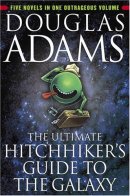
The Reader: Lisa @ Baffled Books

The Reason: “This is one of my all time favourite books. I don’t usually re-read books, and if I do, never too often, but this is one book that I always come back to! It’s the book I read when I can’t get into anything else and the audiobook I listen to if I can’t sleep. “Why?” you ask? Douglas Adams writes in such a friendly and outright silly style that never makes me fail to giggle (or snort inappropriately). His characters are sweetly dysfunctional and get themselves into the most ridiculous situations. Adams’ writing is so perfect and absorbing that I never stop to question some things that wouldn’t have made any sense in any other book: How on earth did we get onto this spaceship? Who knows! But something entertaining is going to happen next and no matter how many times I’ve read it and despite the fact that I know exactly what’s going to happen next, I can’t stop myself from laughing when it does happen! He even sneaks some very interesting philosophical questions in there. For example: Why do we do the things we do? Because the Earth was destroyed of course! I love this book, and the rest of the series, and it is the only book I ever come back to like this!”

Lisa has a very busy life trying to study philosophy and read enough to satisfy the cravings while six cats have a very busy life trying to stop her.

{K and Lisa co-engineer the eclectic book review blog, Baffled Books. You can also keep up with Baffled Books on their official Facebook fan page, as well as Lisa’s Twitter, here.}

The Little Prince ~ Antoine de Saint-Exupéry

The Reader: Liza

The Reason: “I first read The Little Prince in my seventh-grade French class in high school, and I have loved it ever since.  Most books intended for children are often overlooked as being unsophisticated.  However, this book not only presents social commentary on the absurdities of the adult world, it does so in plain and simple language.  And, in my opinion, a person or text that simplifies abstract concepts is more worthy than one that complicates.

The descriptions of the adults are silly and comical, but not written with malice or cruelty.  More like the honest reflections of a child observing something he doesn’t understand.  Whenever I need a little rest from the absurdities I see around me, and need to renew my faith in humanity, I pick up this book, and remember these words: “On ne voit bien qu’avec le coeur. L’essential est invisible pour les yeux” (“It is only with the heart that one can see rightly, what is essential is invisible to the eye.”)

Liza Kane is a full time reader, writer and dreamer, though she pays the bills as a store manager.  She shares her writing journey on her blog, Redeeming the Time and on Twitter, here.

What It Is ~ Lynda Barry
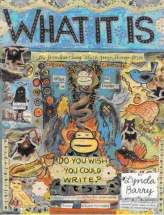
The Reader: Almah the Alchemist

The Reason: “I keep coming back to this book for more because I never really leave. I wander into a thicket of images and get caught in a tanglescape of memories. This densely, intensely illustrated creative guidebook shows and tells, every page a well. Through constellations of collage Barry offers a map for “writing the unthinkable.” She offers such lush permission to write, dream, remember, draw. But she does so elliptically, impishly. What it Is manages to be an irresistible invitation to create and a stirring meditation on the slippery, fugitive nature of what is.

Almah the Alchemist enjoys color, and is the director of the Institute of Imaginary Books. Friend her on Facebook, here, to receive the spectral book catalog!
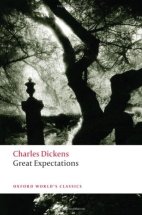
Great Expectations ~ Charles Dickens

The Reader: Andre Bagoo

The Reason: “I come back to this for its opening sentences: “My father’s family name being Pirrip, and my christian name Phillip, my infant tongue could make of both names nothing longer or more explicit that Pip. So, I called myself Pip, and came to be called Pip.” In other words the protagonist is in a battle between forging his own destiny and fate: between naming himself and being named. A few lines later we learn that the “father” of the first sentence is dead and just as his name has been cut short—both advertently by others and inadvertently by himself—so much of Pip’s life has also been cut short of prospect, of opportunity, of expectation. This is a miraculous opening for a miraculous book. While Great Expectations is heavy-handed, perhaps, in some of its symbolism, its miracle remains the fact that every single line Dickens wrote in it is pregnant with possibility. Whenever I go back I always see more.”

Andre Bagoo is a journalist and blogger with a crush on Foucault.

{You can – and should – follow Andre’s blog, ::: P L E A S U R E :::, here.}

My friends and rereading allies have made a brilliant case for novel and reader reunitings, so I will add only that it has been a pleasure to unearth a treasure trove of new and familiar titles through their eyes. Merry reading (and rereading) trails, to all.

Novel Gifts between Mother and Daughter

This past Yuletide, I received ten books from my mother, who is the original (and still the best) literature-gifter in my life. She knows that books, not Blackberries, are the presents that truly delight me—and the feeling is bookwormishly mutual. I’ll explore the Yuletide novel cheer from both sides: first, my mother’s offerings of paper, ink and imagination to me, then mine to her. Without further ado:

Mother to Daughter

1. Diary of a Bad Year – J.M. Coetzee

My mother has been giving me Coetzee for years now. Perhaps 2011 will be the year in which I finally begin reading him in earnest. I remember tiptoing around his work as a young teenager, mortified, appalled and sickly compelled by the passages I couldn’t help steal glances of, out of Disgrace and Badlands. At 24, I can think of no better endorsement for a writer than work you just can’t get out of your mind or stomach, even if it’s just a distressing snippet that’s haunted you for years. (Perhaps especially if it’s such a snippet.) Diary of a Bad Year is a story of dubious morality, lust and avarice, told in three voices simultaneously. Yes, I am certain this is the year to read Coetzee.

2. The Known World – Edward P. Jones

The back jacket cover of this handsome edition (Amistad Deluxe, Harper Collins 2006) of Jones’ Pulitzer Prize-winning novel declares:

“He was thirty five years old and for every moment of those years he had been someone’s slave, a white man’s slave and then another white man’s slave and now, for nearly ten years, the overseer slave for a black master.”

From just this, I’m already intrigued. Any novel that compellingly and masterfully seeks to reorder, retell or critique the cruel and arbitrary assignations of merit decreed by history is a book I must read.

3. Lost in the City – Edward P. Jones

This collection of fourteen stories hinges on “the lives of African American men and women who work against the constant threat of loss to maintain a sense of hope.” There are stories within such a compilation, one feels instinctively, that cannot be denied. This is one of the most powerful elements to short fiction writing—the conveyance of entire lives in a matter of lines. You get the impression, just by leafing through the pages of Lost in the City, of the sheer immensity of scope and significance of the lives that lie within, waiting to intersect with yours.

4. Telex from Cuba – Rachel Kushner

I remember unwrapping Telex from Cuba, poring over its blurb, then declaring to it, “Well, you look original.” It touts itself as “the first novel to tell the story of the Americans who were driven out of Cuba in 1958”, ensuring that my interest is piqued, in a similar manner to my anticipation of reading The Known World. This seems like a gutsy, ambitious first novel, and I am always eager to sink my teeth into those.

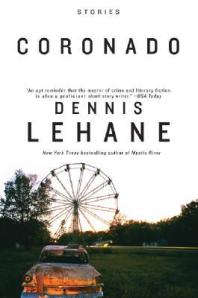
5. Coronado – Dennis Lehane

Lehane’s crisp, unflinching prose has fuelled some of the best and bleakest crime/suspense films in recent memory, namely, Gone, Baby, Gone, Mystic River, and Shutter Island. This collection offers an exciting look at the author’s short fiction, as well as a play in two acts. This is precisely the sort of fiction against which many people have accused me of being strongly biased. I am looking forward to reading it—and I will likely expound on my overall lack of enthusiasm for the genre of crime fiction (spoiler: so much of it is formulaic, snoozeworthy drivel) when I review Coronado, but I’ll probably spend more time talking about how Lehane exemplifies action/suspense writing done right.

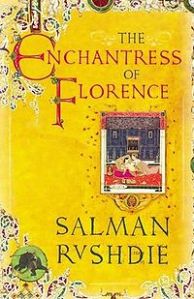
6. The Enchantress of Florence – Salman Rushdie

Having not yet read Midnight’s Children (gasp! the horror), The Ground Beneath Her Feet is my favourite Rushdie—it is a haunting story, exquisitely told, as one imagines, somewhat enviously, that only Rushdie can. The Enchantress of Florence includes the tales of an achingly beautiful princess, a mysterious conjurer bearing a missive from Queen Elizabeth I, and the story of many stories that explore the threads between East and West. Sounds like typical Rushdie, right? That’s particularly why I have high hopes for this book. We shall see if it will dethrone my current preference in the Rushdie-canon.

7. Free Love and Other Stories – Ali Smith

I’ve already read one of the stories from this first collection of Smith’s. Entitled “Text for the day’, it documents erstwhile-bibliophile Melissa’s rejection of her scarily over-catalogued life. She traverses locations with no apparent motive, tearing out the pages of books as she goes. The blurb of the collection attests that “the stories in Free Love are about desire, memory, sexual ambiguity and the imagination.” Having also read the titular story, I’m inclined to nod, respectfully, at that endorsement.

8. Like – Ali Smith

I haven’t pored over this one extensively, just yet. Here is what its blurb says:

“Ali Smith evokes the twin spirits of time and place in an extraordinarily powerful first novel. By turns funny, haunting and moving, Like soars across the hidden borders between cultures, countries, families, friends and lovers, and teases out the connections between people – the attractions, the ghostly repurcussions.”

It sounds like a whole lot of vague, spooky deliciousness, doesn’t it? I wonder if I will be amused, haunted and moved, as advertised?

9. Now is the Time to Open your Heart – Alice Walker
I feel rather gauche, since I wasn’t familiar with any of Alice Walker’s work apart from The Color Purple, when she’s got at least ten works of fiction to her name (not counting her non-fiction and poetry collections.)

Herein lies the story of the sojourner, Kate, who uproots herself from all vestiges of the familiar to embark upon a voyage of self-discovery. (Her lover simultaneously undertakes his own parallel, separate-though-inextricably-connected journey.) Do you believe that Alice Walker can turn out a tender and triumphant vision quest of a story? I do, even based on my solitary yet unforgettable past travels in her writing.

10. The Laws of Evening – Mary Yukari Waters

Arrestingly presented (Scribner trade paperback, 2003), this debut collection of short fiction would beg to me to rescue it from a bookshop shelf, and I am certain I would have answered. These are eleven “graceful, expertly crafted stories, set in Japan, (which) explore the grey areas between the long shadow of World War II and the rapid advance of Westernization.” As loath as I am to declare, unwaveringly, that The Laws of Evening promises to be a good read, I am entirely sure I will not be able to resist reading it for long.

I’d say that my mother has an eerily good sense of what appeals to me, bookwise, but there’s nothing eerie about it at all. She’s been the one feeding my voracious appetite for reading since the beginning of my beginning. Thankfully, I’ve gotten just as good at predicting what appeals to her, too. Here are the offerings from Literature-land I found for her (I find it fitting, somehow, that total turned out to be exactly half of what she gave me!)

Daughter to Mother

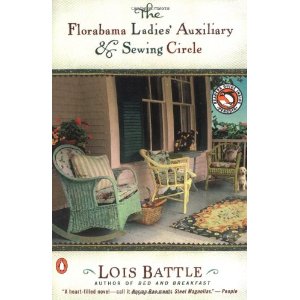
1. The Florabama Ladies’ Auxiliary & Sewing Circle – Lois Battle
Yes, I can see all you self-proclaimed readers of serious fiction furrowing your brows at the title of this one, but having perused it myself, I can attest to the fact that the writing is solid, substantial, and funny. It documents the travails of a group of recently-fired lingerie seamstresses as they cope with their suddenly unemployed status. My mother is currently reading this one, and her prognosis so far is positive. According to her, the plot is convincing enough (while at times sympathetic to a movie one might or might not spy on the Lifetime Channel), the characters are well-drawn and engaging,  and the overall effect (she’s midway in) is that of a band of middle-aged women trying to furnish their lives with purpose and re-empowerment.

2. Shepherds Abiding – Jan Karon

In this, book eight of her heartwarming, soul-food-esque Mitford Years/Father Tim series, I’ve got no doubt that Jan Karon delivers more of the same nostalgic and sentimental fare in this Christmas-themed installment. Of Shepherds Abiding, Karon herself says: “This Mitford story presented itself to me, quite unexpectedly, and asked to be told. I hope readers will find it a perfect refuge from the holiday frenzy.” I have thought, since encountering the Mitford tales, that they exemplify what is best about quietly contemplative, serialized offerings of their ilk – they are told with illuminating grace, love, and considerable talent.

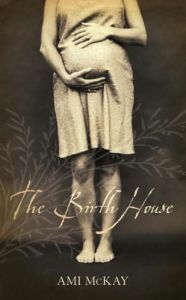
3. The Birth House – Ami McKay

A handful of years ago, novelist McKay came to inhabit a 20th century Nova Scotian birthing house, the historical details of which (specifically, details concerning the woman who managed the house, a pioneering midwife) eluded her. History did not sate her curiosity, or slake her imagination, so The Birth House is the product of McKay’s investigations and fictive ruminations on the legacy of birthing houses, midwivery, the conflict between holistic and scientific medicine, and the timeless, unassailable bonds of sisterhood.

4. Our Father Who Art in a Tree – Judy Pascoe

I confess, the intricately detailed drawing of a tree, as well as the quirky title, drew my hand toward this book, but the description convinced me to keep, and gift it. Having recently completed the novel, my mother found it sadly charming; life (and death) affirming: a brief, slow carousel ride of loss, of succumbing, coping, and finally, surpassing grief.

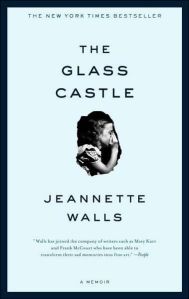
5. The Glass Castle – Jeannette Walls

The only memoir on our shared Yuletide list, I have heard The Glass Castle declared to be the sort of book that makes one profoundly glad for their upbringing, for the travesties of their youth and adolescence, which, when compared to Walls’ own oft-nightmarish background story, seem positively peachy. The memoir opens with Walls shamefacedly trying to ignore the sight of her mother, rooting through a garbage can, from the former’s vantage point in a comfortable city cab. One can only imagine the revelations—some bleakly humourous, some humourlessly bleak – that lie in wait.

There you have it, readers. With offerings like this to usher in a new year of reading, I get the feeling that 2011 will be brimful with good reads—and, let’s hope, some downright outstanding ones.

Welcome to my Bookish Blog!

I am Shivanee, and I will be writing about books here…those I love, hate, those that suck me bone-dry, those that keep me up at night and away from work, and out of sorts with myself and the world. I’ll be writing about the best books and worst books, and those that fall almost anywhere in between.

Why? Because I love reading…and I love sharing what I read. I love engaging bibliophiles and anti-bookworms alike on reading — and I’d love to be similarly engaged by *you*. Yep, you. Talk with me, blog-universe. Let’s chatter about literature, lore, limerick: anything that’s been scribbled or scripted by anyone, anywhere! Or let’s just talk about damned good reads.

My doors are officially open. First review forthcoming.

~Shivanee R.