
“On a Pair of Young Men in the Underground Parking Garage at fX Sudirman Mall” – Norman Erikson Pasaribu

2328337345_f808ecabac_b
Image: Subsequently, posted at Flickr by Thomas Hawk under a Creative Commons License.

Where does queer love go, when it’s corralled? Lovers outside of the binary have been seeking answers to that throughout history. The two men sharing furtive, hungry kisses in Norman Erikson Pasaribu’s “On a Pair of Young Men in the Underground Parking Garage at fX Sudirman Mall” are following an ancient prescription for sourcing queer shelter: you find it, and you take it, wherever you can.

The poem draws parallels to ancient histories of nonheteronormative longing: the martyrs and military saints Sergius and Bacchus craved each other in exactly this way (though some Christian scholars may disagree). Pasaribu cleaves to references from Christian and Roman Catholic orthodoxy to hammer in the longing; John Henry Newman, Aelred of Rievaulx, Thérèse of Lisieux: all are held to the half-light, half-shadow cast in these chambers of parking lots, in these unholy but nonetheless sanctified spaces where men may make love to men.

“Keeping watch as one / for security guards or janitors”, these intertwined homosexuals aren’t necessarily safe where they couple. They continue to feel the weight of the world’s censure, even at this vantage of remove: “A friend dismissed / their feelings as unnatural urges / but each of them knows who he is now.”

What I love best about Pasaribu’s poem is that it offers no consolation for the certainty of queer love. Who you are is not enough to save you, not from loneliness, not even as you entangle in the arms of another. We liberate love for ourselves wherever we can, particularly in those countries where queer love is illegal. We chase it in dimly lit stairwells of abandoned malls; in high-rise parking complexes after hours. We let it take from us even while we give everything we are to it. Just like the martyrs did, in their time, Christian or not.

Read “On a Pair of Young Men in the Underground Parking Garage at fX Sudirman Mall” here.
Norman Erikson Pasaribu’s first book of poems, Sergius Mencari Bacchus, was published in 2016 by Gramedia Pustaka Utama.
This is the twenty-fifth installment of Here for the Unicorn Blood, a Queer POC Poetry Reader which runs from June 1 – June 30. Historically, June commemorates the 1969 Stonewall Riots, heralded as the birth of the modern LGBTQ+ rights movement in the United States. #PrideMonth’s global significance, its unabashed celebration of queerness, its marshalling of non-heteronormative joy, resistance and tenacity, motivates this close reading series, which specifically engages the work of POC Queer Poets, in international space. People of colour have been vital to queerness before queerness had a name: this is one way to witness that, to embed my reading practice in it, and to raise my brown, queer fist in yes.

“There’s Something Wrong with the Conditions” – Dean Atta

203790463_a420c447f0_b
Image: she made a 4pm pedicure appointment, posted at Flickr by gadgetgirl under a Creative Commons License.

Some days, pedicures are more important than poems. Ask the speaker of Dean Atta’s “There’s Something Wrong with the Conditions”, who wants to make his feet supple and worthy of a good ravage: there’s a man, you see, who wants to kiss him, crown to toetip, a man smitten with him, and in the face of that, can’t a poem be written the day after?

Here’s what I like best about this piece: it’s no varnished version of reality. In it, we open strikingly, moribundly, with worms trying to escape the compost. Is it really Death, though, cradling the skull of this poem? The maggots, vehicles of decay, are fleeing the compost, not luxuriating in it. It isn’t always the grand, crashing waves of poesie that makes us want to commit to the act of living. Sometimes, honey, it’s a gorgeous man.

It’s the deep end of the pool, this human longing: nothing’s shallow about it. Atta makes the longing and elation plain, in short and bold declarations: “Did I miss a cruder implication / or should I take it literally? / I am besotted. He is smitten. / This is floaty and fantastic.” Oh, how we live with our hearts in our mouths for moments like this, no matter how much high art we’ve made and consumed.

Oh, the last lines of this poem: the frantic, panicked repetition of “something wrong”, percussing the soft brain tissue. See the way the poem ends unpunctuated, trailing into a void of unknowing. Darling, that’s where the maggots live. Darling, that’s the brink you pull yourself away from, day after heartbreaking day. It’s only fair that it’s not always the poem that saves you. Don’t be afraid to reach for the nail varnish, the Tinder app, the whatever it is that keeps you here, incandescent, breathing.

Read “There’s Something Wrong with the Conditions” here.
Dean Atta’s first book of poems, I Am Nobody’s Nigger, was shortlisted for the Polari First Book Prize.

This is the twenty-forth installment of Here for the Unicorn Blood, a Queer POC Poetry Reader which runs from June 1 – June 30. Historically, June commemorates the 1969 Stonewall Riots, heralded as the birth of the modern LGBTQ+ rights movement in the United States. #PrideMonth’s global significance, its unabashed celebration of queerness, its marshalling of non-heteronormative joy, resistance and tenacity, motivates this close reading series, which specifically engages the work of POC Queer Poets, in international space. People of colour have been vital to queerness before queerness had a name: this is one way to witness that, to embed my reading practice in it, and to raise my brown, queer fist in yes.

“Outcry” – Rajiv Mohabir

4775812785_f7f38c722e_b
Image: Parvati and Shiva, posted at Flickr by harminder dhesi under a Creative Commons License.

When I began reading the poems of Rajiv Mohabir, the image of myself grew, like a flame seeking similar fire. Think of what happens when a lit deya is joined by a trayful of others, before being taken out to the courtyard. I lit my own understanding of myself, and see myself illuminated in Rajiv’s work – where it reaches, what it teaches and dares. “Outcry” is a new, burning deya for me to hold.

Intimate partner violence is no stranger to Indian diaspora families around the globe. In the poem, a woman’s passage to Liberty Avenue has been paid by Prem, a man whose name means ‘love’. In coiled, taut language, in brief lines that snap and bite, the poem takes the tone of archivist, of document-keeper. The ledger being filled is an account of abuse. How important it feels to say that plainly, in the same plain and unembroidered truth Mohabir makes of “Outcry”.

For all that, don’t be surprised if your heart hurts in time to the syncopated brutality of the poem. The language shines without ornamentation, lighting itself to reveal a purplish skeleton narrative: cycles of abuse churning like the kala pani; a man “from whose breath / amber with rum, / a demon springs / into limb and shadow / and spits knives”. Be surprised at yourself if your heart doesn’t hurt.

A poem is always its own invention. In this case, Rajiv takes us to the immediacy of the news, to the woman turned into a bloody statistic by a man’s rage. In a real sense, the poem unstatistics Rajwantie Baldeo, gives her a habitation in text that goes beyond fact sheets and coroner’s reports. Those are their own uneasy poetry too, of course. This poem makes a permanence of her name, demanding you say it. Say Rajwantie Baldeo.

Read “Outcry” here.
Rajiv Mohabir’s second collection of poems, The Cowherd’s Son, was published in 2017 by Tupelo Press.

This is the twenty-third installment of Here for the Unicorn Blood, a Queer POC Poetry Reader which runs from June 1 – June 30. Historically, June commemorates the 1969 Stonewall Riots, heralded as the birth of the modern LGBTQ+ rights movement in the United States. #PrideMonth’s global significance, its unabashed celebration of queerness, its marshalling of non-heteronormative joy, resistance and tenacity, motivates this close reading series, which specifically engages the work of POC Queer Poets, in international space. People of colour have been vital to queerness before queerness had a name: this is one way to witness that, to embed my reading practice in it, and to raise my brown, queer fist in yes.

“Haircut” – Omotara James

2294956941_fdcc84cc56_o
Image: lisa’s scissors, posted at Flickr by Rena Tom under a Creative Commons License.

A childhood shearing is often a rite of passage. In Omotara James’ “Haircut”, it’s what the child passes into, while being shorn, that curls in a secret, sharp thicket at the centre of this poem.

Short, close-knit sentences build the poem in prose form. The only italics are a single line of bladed dialogue, issued by the mother holding a pair of scissors to her child: “I said don’t move.” Scent and sensation bubbles here, from the sizzle of the frying pan, the speaker’s longing for coconuts, the hot splattering of palm oil in the kitchen: this small, baleful domestic front builds itself in sensory strokes.

Trouble is the connective thread here. When the speaker thinks about laying her troubles on the tiled floor, of how she composes her limbs, she remembers being seven and shorn at the pubis by her mother. We receive the impression of vulva as flower, but not joyously petalling: “My girlhood, open as the morning / blinds, the light I wish was brighter. When Mom’s finished cutting, she / dusts the loose hairs like a janitor, underpaid.” In the world of the speaker’s present, her mother wants to know what her daughter does sexually with another woman. This is a gauntlet of incomprehension often faced by so many queer folk: to receive queer news, it must be yoked to sex. The poem blisters the underside of my tongue with this truth, white-hot as it is, honeysuckled with a warning: those who are ‘normal’ will always want to know how you work.

Your mother’s no exception. Hell, sometimes your mother’s at the front of the queue, brandishing a pair of long silver scissors, her hand steady. Sometimes we pay for the fruit of ourselves by these tithes of anatomy. The mother reaches into the daughter, pulling without permission.

Read “Haircut” here.
Omotara James’ chapbook Daughter Tongue appears as part of New-Generation African Poets: A Chapbook Box Set (Tano), published in 2018 by Akashic Books.

This is the twenty-second installment of Here for the Unicorn Blood, a Queer POC Poetry Reader which runs from June 1 – June 30. Historically, June commemorates the 1969 Stonewall Riots, heralded as the birth of the modern LGBTQ+ rights movement in the United States. #PrideMonth’s global significance, its unabashed celebration of queerness, its marshalling of non-heteronormative joy, resistance and tenacity, motivates this close reading series, which specifically engages the work of POC Queer Poets, in international space. People of colour have been vital to queerness before queerness had a name: this is one way to witness that, to embed my reading practice in it, and to raise my brown, queer fist in yes.

“The Name of the Poem is “Discovery”” – Deneka Thomas

947102492_c516190d6c_o
Image: Orion Sword, posted at Flickr by anttler under a Creative Commons License.

We’ve all dreamed of other worlds than these. In Deneka Thomas’ “The Name of the Poem is “Discovery””, witness how black queer longing vaults itself beyond the firmament of Earth. Witness how the voice yearning for more finds a foothold in the deepest reaches of (un)known space.

Listen, darlings. Space? It’s not just for white people. This poem knows it. This poem wants to “find the biggest dipper for the collection of any spillage. / Hurtle and orbit as close as it can to the sun”. What I like best about Thomas’ ambitions for the piece is that she isn’t afraid to cast the interstellar die far, watch it scatter into the slipstream of multiple possibilities, myriad ways of imagining (wo)man’s configuration with the fantastic, the speculative, the weird.

Topographically, the poem takes us from sky to sea, and the effects are vertiginous. If you were to map the physical progression of these verses, your drawing would take you to locations both celestial and maritime. It’s not haphazard: the clarity of desire here is its own astrological method. If the speaker of the poem, the one issuing it commands through an unnamed proxy, gives any indication of their own desires, then the evidence points to them being achingly similar: the speaker hungers, as the poem is instructed to do. The speaker, like the poem, perhaps needs the call of instruction, to touch herself.

“Tell the poem to spill its seabed loose. / Remind it of its defence.” In language as honed as a martial blade, suited to dethicketing purpose, Thomas clears a path to the stars, or the seas, or the land on which “a pack of wild African dogs” roams. If this poem is called discovery, what does it say about the expeditioner, galaxy-hearted, who has summoned it? Look heavenward, discoverer.

Read “The Name of the Poem is “Discovery”” here.
Deneka Thomas is the winner of the 2018 First Citizens National Poetry Slam – Trinidad & Tobago.

This is the twenty-first installment of Here for the Unicorn Blood, a Queer POC Poetry Reader which runs from June 1 – June 30. Historically, June commemorates the 1969 Stonewall Riots, heralded as the birth of the modern LGBTQ+ rights movement in the United States. #PrideMonth’s global significance, its unabashed celebration of queerness, its marshalling of non-heteronormative joy, resistance and tenacity, motivates this close reading series, which specifically engages the work of POC Queer Poets, in international space. People of colour have been vital to queerness before queerness had a name: this is one way to witness that, to embed my reading practice in it, and to raise my brown, queer fist in yes.

“Low Mountain Lake Song” – Lehua M. Taitano

6841468531_69145d59ff_b
Image: Given to Fly, posted at Flickr by Ana Lignelli under a Creative Commons License.

Go wild. Not with plastic beads and endless spirits — though, sure, do that if you want to. But after, maybe, when you’re working off the high, wanting to get into another kind of transcendence, go wild. Ask Lehua M. Taitano’s “Low Mountain Lake Song”. It’ll tell you. Better, it’ll take you by the hand and lead you down to the water.

Taitano’s poem could fit on the back of a postcard. It’s built from the kind of brevity I find illuminating in its capacity. A toehold in this poem grants the kind of purchase that allows you to take in the scenery, to sing with the bullfrogs, to observe the terrapin’s easeful gambol towards the rushes. Who says the pastoral’s got to be idyllic? You could go verdant and chatter-quieted into the bush of this poem, but that’s only one of its routes, only one of its ways of shaping itself on the page.

Witness the intention, here: drink in the precise, rounded grafting of each word, each clustering of images, onto the great tree of the poem-world. “At night, this side of things is settled without the memory of ache. / Even the shallows are pregnant.” In this way, the poem showcases an understanding not only of peace, but of the swell before peace, the bruise after it. We receive a diorama here, of a human struggle we’ve been taking to nature for all our brief, capricious lives. The poem traces the long, mottled cloth of all our grappling in the deep waters, rinses us without liberating us from our misdeeds.

I am at more than peace in this lake, knee-deep and shivering with light, cracked open and bleeding my nastiness incrementally into the wound of the world. So do we all. So too does the world accept us, mercifully.

Read “Low Mountain Lake Song” here.
Lehua M. Taitano’s Inside Me an Island is forthcoming in 2018 from WorldTech Editions.

This is the twentieth installment of Here for the Unicorn Blood, a Queer POC Poetry Reader which runs from June 1 – June 30. Historically, June commemorates the 1969 Stonewall Riots, heralded as the birth of the modern LGBTQ+ rights movement in the United States. #PrideMonth’s global significance, its unabashed celebration of queerness, its marshalling of non-heteronormative joy, resistance and tenacity, motivates this close reading series, which specifically engages the work of POC Queer Poets, in international space. People of colour have been vital to queerness before queerness had a name: this is one way to witness that, to embed my reading practice in it, and to raise my brown, queer fist in yes.

“Grace of Wonder” – Angelique V. Nixon

38698771460_c1385ed3cd_k
Image: Grace Jones, posted at Flickr by Bruce under a Creative Commons License.

If I came to the end of all things, and found a Black Woman at the throne designated for God, no part of me would be surprised. Neither would the narrator of Angelique V. Nixon’s “Grace of Wonder”, in which a Roseland, NY performance by The Queen of Gay Discos prompts a reflection on black womanhood, ancestry and the dancing power of mothers.

I love that early on, this poem names the mother, makes her singular: Kim Grace Louise, “a cabaret dancer with starry dreams, / young single mother, growing up as she raised me / to be defiant like saltwater and strong like moon tides”. The poem’s speaker traces lineages, not of blood, but of audacious, battleborn ideology, between mother-Grace and diva-Grace. One of these women, she muses, saw in the other the need to be unfuckwithable, to declaim of love and lust and longing in the public square of the heart’s desires. No, this isn’t a paean to hero(ine) worship. Rather, “Grace of Wonder” maps our miraculous relationships to our icons: how they can propel us, or our mothers, to the uncharted heights of ourselves. How the sight of an undaunted black woman, elevated to dizzying zeniths in the world’s adorations, moves a mother to make a miracle of her own present, activated flesh.

What a tactile, fevered ode Nixon bestows on us: it is an alert, dancing thing, trading in language that’s incandescent and vaulting. In skin of dark vibrancies, in feminine divine fyah, in “hurricane force winds, escaping from restraints of mind body control”, the poet doesn’t give us a martial tune for parades, but an invitation to riotous dance.

The poem raises a brown, storm-licked fist to the heavens, or to the concert stages where a new pantheon of women emerges, their boots striking the celestial floors.

Read “Grace of Wonder” here.
Angelique V. Nixon’s art and poetry collection, Saltwater Healing – A Myth Memoir and Poems, was published in 2013 by Poinciana Paper Press.

This is the nineteenth installment of Here for the Unicorn Blood, a Queer POC Poetry Reader which runs from June 1 – June 30. Historically, June commemorates the 1969 Stonewall Riots, heralded as the birth of the modern LGBTQ+ rights movement in the United States. #PrideMonth’s global significance, its unabashed celebration of queerness, its marshalling of non-heteronormative joy, resistance and tenacity, motivates this close reading series, which specifically engages the work of POC Queer Poets, in international space. People of colour have been vital to queerness before queerness had a name: this is one way to witness that, to embed my reading practice in it, and to raise my brown, queer fist in yes.

“Museum of Anagapesis” – Nicholas Wong

January Embers I
Image: Heart, posted at Flickr by Jo Christian Oterhals under a Creative Commons License.

We often cook the blood of other creatures, pronounce it a delicacy. What would we say about eating each others’? In Nicholas Wong’s “Museum of Anagapesis”, we come to a richer, more oxygenated understanding of the heart’s strength (and weakness), by considering it in animal terms.

The poem tells us,

“The Chinese eat animal viscera, shapes

supplementing shapes. Grilled duck hearts
on skewers, each a pendant, edible
confinement.”

From this, I untangle strings of cartilage, pillows of fatty tissue, to peer into the roasted heart’s recesses. From this, I can almost hear the satisfying tactile crunch of beast-heart between human-teeth. Look at it from several angles, and the action in Wong’s poem is one of devouring. What happens when we’ve consumed the richness, the culinary toxicity, of any heart? We create a void, an absence. Any good museum thrives on absence, on the curation not merely of the object that exists before a selfie-snapping tourist, but of all the countless other objects that once kept it company. You couldn’t think of one terracotta warrior without imagining the legion.

“Leave the heart to the past and the past / to a museum”, says the poem. In these corridors and cloisters of emotional transcription, all the savaged hearts can roam free, hearkening to each other in “systole”, the contraction of the vessel. These wounded organs, weighing 350g each, must take up residence somewhere: where better than a museum?

The earliest directive of the poem asks us to consider living without a heart, prompts us to further theorize that without it, the body might slough onwards, other vital organs picking up the slack. These are contemplations as ruthless as they are vulnerable, as feral as they are domesticated, each corresponding to either a frying pan, licked with oil, or a windowless display, archived forever.

Read “Museum of Anagapesis” here.
Nicholas Wong’s first collection of poems, Crevasse, was published by Kaya Press in 2015.

This is the eighteenth installment of Here for the Unicorn Blood, a Queer POC Poetry Reader which runs from June 1 – June 30. Historically, June commemorates the 1969 Stonewall Riots, heralded as the birth of the modern LGBTQ+ rights movement in the United States. #PrideMonth’s global significance, its unabashed celebration of queerness, its marshalling of non-heteronormative joy, resistance and tenacity, motivates this close reading series, which specifically engages the work of POC Queer Poets, in international space. People of colour have been vital to queerness before queerness had a name: this is one way to witness that, to embed my reading practice in it, and to raise my brown, queer fist in yes.
“some call it a comeback” – SA Smythe

11382838743_ed4bdd97fa_k
Image: Day 288 – Kentville Clock Time Travel, posted at Flickr by Rodger Evans under a Creative Commons License.

Doctor Who isn’t going to save us. At least, that’s what “some call it a comeback” might tell you. The speaker in SA Smythe’s poem is less concerned with blue police boxes oo-wee–ooing through space, than they are with rewinding the timeline of their own personal history. Who would they reach out to, if they could? Would what they have to say prompt a rippling chain reaction, echoing back into the present?

Time, even at its most manicured, is a chaotic concept. I love that the poem charges into this head-on, spilling dates like scattered revelations, or minor bombs. Look at the way they float, seeming-rudderless, interacting with the blank space around them. Nowhere else is the poem this loosely arranged, and the choice connotes shapelessness, with fixed points of destination hurtling through the void. Don’t we all have dates like that in our personal and family calendar? Sites of mercy, ground zeros of no return?

“i will have gone, sweating panting racing
through throngs of dark young men
in wide-brimmed hats & too-long neckties
queued up along the kingston docks”

Like this, with desperate conviction, would the narrator have chased their yet-to-be-grandfather, urging him with the poem’s most arresting, stop-and-gape line: “the future
is always already here.” The poem doesn’t make any promises about whether or not this timeline jumping works, from father to mother to grandfather, pleading with each of them to stay, or else, to flee. The urgency that ripples in the spatial waves that move these lines: it’ll take your breath and send you rummaging for your own time traveller’s shoes. Better than that, it’ll race you out the door, barefoot and keen to save your ancestors, or at the very least, to provide them with better counsel than any that leaked from heaven during their youth.

Read “some call it a comeback” here.
SA Smythe‘s poetry has been published or is forthcoming in phren-Z, the nines, Johannesburg Salon, Strike!, Critical Contemporary Journal, okayafrica, and elsewhere.

This is the seventeenth installment of Here for the Unicorn Blood, a Queer POC Poetry Reader which runs from June 1 – June 30. Historically, June commemorates the 1969 Stonewall Riots, heralded as the birth of the modern LGBTQ+ rights movement in the United States. #PrideMonth’s global significance, its unabashed celebration of queerness, its marshalling of non-heteronormative joy, resistance and tenacity, motivates this close reading series, which specifically engages the work of POC Queer Poets, in international space. People of colour have been vital to queerness before queerness had a name: this is one way to witness that, to embed my reading practice in it, and to raise my brown, queer fist in yes.

“Wet Nurse” – Mary Jean Chan

5896916586_55b052d737_b
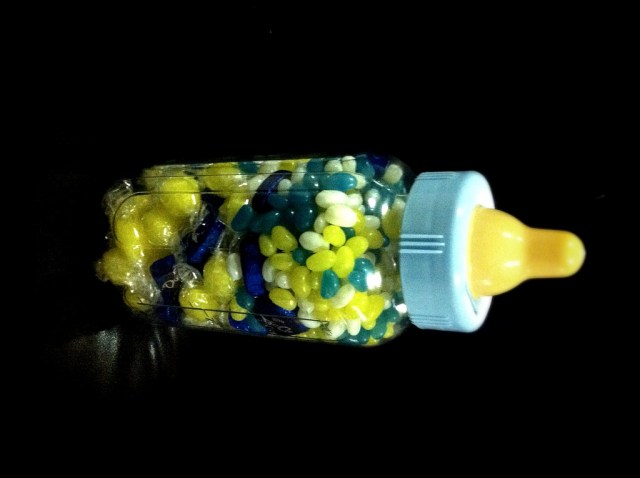
Image: Day 288 – how many sweets in the baby bottle?, posted at Flickr by Steve.tothe.j under a Creative Commons License.

What feeds on us may redeem us, may cause us to go hungry. In Mary Jean Chan’s “Wet Nurse”, a woman nurses a baby who is not her own. Her child has been consigned to the indifferent metropolis, “ninety-seven days and eight hours since / the city swallowed my flesh and blood, / leaving behind a carcass of memories.” The poem makes it plain: the wet nurse has forsaken her own child. The poem leaves you to draw your own conclusions, doesn’t attempt to school you in notions of good, or bad motherhood. What’s more vital to the machinery of this poem, which is at once both subtle and brutal, is that every baby needs feeding.

There’s more than one child in this poem, of course. There is the child fed by the wet nurse, beloved and born into a large family. This baby doesn’t mind the difference between suckling mother, and mother who goes out into the streets to preach the gospel. As the poem declaims, quietly-wisely, the girl-child sees no difficulty in embracing two mothers. Then there’s the ghost baby, the abandoned one the wet nurse cannot outrun, the one whose breathless lips brush against her nipple, in tandem with a gum-and-spittle clasp. How this moves me, chills me to the sockets of my hair. Not because it’s a horror story, but because it’s true.

The density of pain is compacted, stirring like waking fish under the thawing ice of Chan’s poem. The language used here is economic but expressive, and everywhere there is liquid: wrists are cut to leak forgiveness; freed nipples spray tributaries down skin. Crack the surface of “Wet Nurse” and what flows forth is a breathless mirror of love and loss: the poem places it there so we might see ourselves in the brittle, reflective glass.

Read “Wet Nurse” here.
Mary Jean Chan‘s first full length collection is forthcoming in 2019 from Faber & Faber.

This is the sixteenth installment of Here for the Unicorn Blood, a Queer POC Poetry Reader which runs from June 1 – June 30. Historically, June commemorates the 1969 Stonewall Riots, heralded as the birth of the modern LGBTQ+ rights movement in the United States. #PrideMonth’s global significance, its unabashed celebration of queerness, its marshalling of non-heteronormative joy, resistance and tenacity, motivates this close reading series, which specifically engages the work of POC Queer Poets, in international space. People of colour have been vital to queerness before queerness had a name: this is one way to witness that, to embed my reading practice in it, and to raise my brown, queer fist in yes.